I wrote of the Scampanata in my last post, “Anghiari Through the Ages.” It is now May 2, 2021 and the latest Scampanta is scheduled for this month, though whether the Covid conditions will allow it is uncertain. However, this recently published article from the TeverePost describes a modern day version of the tradition and its beginnings.
Apologies for the transition to Italian text but hope you enjoy the English version as far as it goes. If Terry and I are able to witness this bit of craziness this year, I will report the experience!
The ancient town of Anghiari sits on a spur of land elevated between two river valleys, that of the Tiber to our east, and to the west the valley of the Sovara, which runs along the boundary of the town.
Map showing the Tiber River on the east and the Sovara on the west
From our little balcony, we look east over the Valtiberina, the Tiber Valley, which today looks like nothing so much as a lake bed. And, as I have discovered, it actually was in times long past. Water, of course, is a feature essential to life and prosperity and any settlement no matter how small relies on the availability of water. Fortunately, for ease of access, Anghiari is also replete with springs which still provide water for the community.
Anghiari is located at the very top of the Pleistocne Lake. The only remaining portion lies at the southernmost tip. Human manipulation of the waters and natural forces have eradicted most of the lake
Exactly when the first people decided this piece of land between two rivers was suitable for sustaining life is uncertain, but it is well understood that the pre-Roman Etruscans occupied the area from at least 900 BC. However, the Etruscans, though known through physical evidence, produced only scanty written material and that difficult to interpret. In time, though, the Anghiarese did begin to document the goings on in their village and these records have been preserved in museums and other municipal offices.
From those records we know that Anghiari was established at least by 384 AD when its first named ruler, Barnardo di Lucio, was in power, reigning until 404 AD. Not many years later, 485 AD, Ostrogoth forces moving into Italy attacked Anghiari, gaining another victory in their quest for expanded territory. For the next five hundred years Italy was subjected to invading forces and episodic transitions of power until the Holy Roman firmed its hold on Italy after the Hungarian invasions of the ninth and tenth centuries.
But these are just the major, documented events. Skirmishes with nearby forces happened with some regularity and were destructive even if historical consequences were not as great. The buildings of wood with thatched roofs were easy to burn and destroy with weapons of the time, leaving residents to repair and rebuild after each attack. In an attempt to thwart the periodic invasions, a stone wall was built around the town by the late twelfth century, a precursor to the wall that still surrounds Anghiari.
Shoring up of its defenses was not the only indicator of Anghiari’s move toward a more stable and promising future; in the same period the feudal system was coming to an end and a closer affiliation with the leading city of the area, Arezzo, was developing. This in spite of an earlier (1175) attack by forces from Arezzo destroying the castles of Anghiari. Religious and political institutions were also set in place, imposing greater structure on the social system in which the Anghiarese lived. The village now had Counts and castles and monasteries and monks shaping the lives of the commoners.
In this more orderly environment, citizens of Anghiari and Sansepolcro undertook the challenge to change the course of the Tiber River, bringing it closer to Sansepolcro to give its residents better access to water. In the process, Anghiari gained an additional two miles of flat and no doubt fertile land. Not many years later, (1228) the waters of the Tiber were diverted to form a canal between Anghiari and a nearby hamlet, Citerna, in order to provide water for mills. These are the earliest documented, though hardly the last, efforts to change the course of the Tiber to benefit local populations. Here in the Valtiberina, not far from the Tiber’s source, these and later manipulations have caused the Tiber to behave like a creek meandering gently across the landscape before it becomes the full and swift river coursing through Rome.
Unfortunately, life does not follow a pattern of inevitable progress and 1234 brought to Anghiari and all of Europe “the great cold,” known as the Little Ice Age. The frigid weather not only directly caused the deaths of many Anghiarese but ruined the grape harvest as well, causing a serious downturn in the economy of the region. A lament that “weddings had to be celebrated by water,” is only a sidebar to the hardship suffered, but gives insight to the smaller inconveniences within the disaster. And, as such cycles go, eventually an overabundance of the grape crop caused the price to drop, inciting another economic loss owed to the fickle nature of growing grapes.
In 1385 the Anghiari Vicar, Bartolomeo di Ser Gerello, accompanied by a select committee, petitioned the leaders of Florence for help and support to preserve the often struggling town. An evaluation by Florentine experts determined that the castles of Anghiari were critical to the defense of the area and should be restored. The agreement between Florence and Anghiari included the stipulation that any building constructed after 1310 would be required to be rebuilt of stone and topped with a tile roof. The order not only ameliorated the immediate problems associated with fire and other disasters but produced a built environment that has withstood the ages–Anghiari’s ancient houses still remain centuries after being built.
Across the next half century Anghiari continued to build and to develop institutions that reflected the intellectual and economic benefit of their connection with Florence. But in 1440 the Anghiarese proved their reciprocal value to the Florentine Republic. The Battle of Anghiari, fought between Milanese forces challenging Florence for dominance and Florentine troops protecting their Republic, was waged at the foot of the long hill leading out of Anghiari. The battle remains the predominant point of historical interest for this still very small town and virtually any internet search for Anghiari will mention the Battle.
Fought on June 29, 1440, the battle, according to the writings of Machiavelli, lasted only four hours and resulted in a single casualty when a knight fell off his horse and was trampled. However, Machiavelli wrote that description some hundred years after the battle and his premise has been challenged by a consortium of British and Italian scholars who draw a picture of a much larger event. The Milanese forces arrived outside of Anghiari with 1100 troops and recruited 2000 more from Sansepolcro. In contrast, the combined forces of Florence and Venice were comprised of at least 9000 troops. With their greater power, the Florentines eventually forced the Milanese soldiers into retreat and secured not only Anghiari but the Florentine hegemony. Rather than a single soldier having died, the British historian Michael Mallett postulates 900 troops gave their lives to the fight with more injured or taken prisoner.
The battle is often regarded as only a footnote to history. However, according to Angelo Ascani in his book Anghiari (Citta di Castello 1973), it caused great excitement thoughout Italy, a plausible assertion given the political forces involved and the consequent balance of power. Today the Battle of Anghiari is mostly remembered because of a fresco painting in Palazzo Vecchio in Florence. Leonardo da Vinci was commissioned to commemorate the battle but his fresco began to deteriorate almost immediately and da Vinci abandoned it to take on more promising tasks. Today his work is hidden by a wall built over the fresco. 1
Even in much beleagured Anghiari, where wars small and large, fires, plagues and earthquakes created periodic havoc, new buildings and expanded institutions led Anghiari further along its path to the future. Markets thrived, schools and a hospital were built as was a public wash house and, continually, churches were either newly built or expanded. Roads that had been dirt were laid with brick or stone and the city wall was repaired or rebuilt whenever necessary. A city council headed by a mayor, or Podesta, formed Anghiari’s government, adding a more or less secular structure to the town. In the interest of maintaining good order, it was this body that determined that the harlots of Anghiari, “who were in good numbers,” must reside in one place, and so a brothel was established in the Via Vecchio in 1466. Unsurprisingly given the religious tenor of the times and perhaps to counter the harlot activity, the Virgin Mary appeared before a twelve year old girl in the valley of the Savora River on the eleventh of July 1536 and continued to be seen for the next several days.
As Anghiari’s citizens became more worldly they enjoyed a permanant new theater built in the late sixteenth century and decorated with the works of prominent artists. Villas were built in Anghiari and its environs as prosperous citizens joined the hatters, butchers, pasta makers and other workers who made up the population of the town. Among the new citizens of this increasingly prosperous village was Benedetto Corsi who once lived in nearby Citerna. In 1797 he began to build a palazzo on Anghiari’s main street, tearing down Medieval houses to make way for the Neo-Classical structure.
Corsi palazzo facade
The palazzo extended at the rear to include a large garden, a chapel, theater and coffee house. The slideshow below shows the plan of the Corsi garden and the rear facade of the palazzo, followed by a photograph of the garden in front of the theater and finally, the piazza as it is today.
At the time Benedetto Corsi was building his palazzo, Anghiarese received their first notice that the Italian heritage was under threat. Inspired by, and indeed assisted by, the ideals of the French Revolution, Napoleon led forces to claim territories for what would become the French Empire. Although France had not yet conquered Italy in 1797, soldiers of the French army moved into Anghiari that year. Initially they took over the top floor of a palazzo owned by the Busatti family, merchants who had lived in Anghiari since 1755. In time, the soldiers extended their quarters to include the basement and ulitimately claimed the entire palazzo.2
Unless a personal diary hidden away somewhere describes reaction to the presence of enough soldiers to fill a palazzo, one can only specuate about their affect on the town’s population. In any case, Anghiarese had no choice in the matter and by New Years Eve 1807 were part of the French Empire, celebrating the coronation of Napoleon with fireworks in the main piazza. But, as we know, Napoleon’s reign was relatively short and when he was deposed in 1815 Anghiari reclaimed its Italian roots, and the palazzo was returned to the Busatti family.
Life in Anghiari was not always beset with difficulties; human beings have a habit of seeking entertainment to offset the daily grind and leisure time was plentiful in the past. Not only were there numerous religious holidays, but people didn’t live by the clock as we do now. Anghiarese used to gather in Piazza Baldaccio to play the “Game of the Goose,” a popular pastime with a long history in Italy. Eventually, however, the game was banned from the piazza, leading me to believe it must have been a rough and raucous physical game, possibly dangerous to players or bystanders. Instead I found it was a simple board game appealing to both children and adults, including royalty–a game was once sent as a gift from Francesco de Medici to the King of Spain. Objection to it in Anghiari’s main square may have been based on the gambling it inspired. It is still played today, though not in Piazza Baldaccio, and whether used as a betting opportunity or not it can be purchased online.
Poster reproduction of a Game of the Goose board
Other games enjoyed by residents, male residents that is, were also banned from Piazza Baldaccio and relegated to outlying areas. One of these was Ruzzola a della forme, a game still played in Italy, as is its derivation, Cacio al Fuso, played primarily in Tuscany. In Ruzzola a wheel of cheese weighing from two up to five kilos is thrown by competitors, all vying to see who can reach the greatest distance with the fewest number of throws. The game Cacio al Fusa, played with a smaller cheese wheel, is a bit like Curling with success measured by the ultimate placement of the cheese within a circle.
Playing Ruzzola della Forma Photo credit Gino Martino
Another banned game called “Balls, Balls and Bullets,” sounds like a game clearly needing to be removed from the town square in the interest of public safety. A check of the internet did not yield a description or set of rules but I suspect that rather than the violent activity suggested by its name, it was simply a game played, as Bocce and Petanque are, with larger and smaller balls. In both, the larger ball is thrown at the smaller target ball and points determined by proximity to the target. Still, space is needed to play and could be disruptive in a town square. The game was allowed to continue on the road to Fusaiolo, presumably a country road with little traffic.
Not a game but an entertaining tradition, the Scampanata is an event first documented in Anghiari in 1621. Every five years during the month of May, the local Societe della Scampanata meets in Piazza Baldaccio on Thursdays and Sundays at 6:00 a.m. Anyone who doesn’t show up on time is dragged from his home by society members, loaded into a cart decorated with fish and wheeled through the town. Townspeople gather along the streets to jeer the humiliated miscreant and, in the past at least, might throw eggs and flour at him. Originally improvised noisemakers- think pots and pans- added to the din but today it is more likely that a band will follow the cart. This strange custom dates to Roman times when public embarrassment was punishment for those violating the rules or mores of a town and so was a means of maintaining social order. The next Scampanata is scheduled for May of this year (2021).
Of course not everyone is interested in playing competive games or engaging in rowdy community events. By 1830 Anghiarese choosing more sedate entertainment could take a late night stroll in safety under newly installed street lights. A short walk it would have been though for there were only two such lights in the town. And these burned only on nights when there was not a full moon to light the streets. Still, one can imagine that street lighting would have been considered a great boon and a welcome sign of modern times in the village.
With the end of the nineteenth century approaching and the twentieth about to dawn, Anghiari enjoyed a relatively quiet period of continued prosperity and improvement. A new, major street was built connecting the provincial road circling the town to the town center itself. The new road, now named Viale Gramsci, climbs a gentle hill leading to and crossing the area where the Corsi garden had been. In 1887 a gallery was added providing covered access to Anghiari’s major street, Via Garibaldi. (Now Matteotti)
As one passes through the space once occupied by the Corsi garden it would be impossible to miss seeing the former Corsi chapel, dedicated to the family’s patron saint. Purchased by the city of Anghiari in 1900, it later became a votive temple dedicated to soldiers killed while serving in war.
Chapel Tommoso di Villanova in Piazza IV Novembre Anghiari Italy
. In 1913 a marble plaque honoring Giuseppe Garibaldi, (1807-1882), Anghiari’s most famous citizen, was installed at the side of the building. Garibaldi was an accomplished and admired military leader, commanding troops not only in Italy but in France and South America. He was even offered a commission by Abraham Lincoln to serve in the Civil War, which Garibaldi turned down. Garibaldi is sometimes referred to as the “Father of Italian Unification” and he did play an essential role. His conquest of southern Italy brought these states under the jurisdiction of the Savoy monarch Victor Emmanuel III, establishing him in 1861 as the first King of Italy.3
Marble plague memorializing Giuseppi Garibaldi and those who served with him
In spite of modernization and the benefits it brought to daily life, events of the early twentieth century were about to destroy the tranquillity of the previous years. In the period between 1914 and 1919 both World War I and the great flu pandemic of 1917-1919 appeared in Italy as it did in much of the western world and beyond. In Italy alone, hundreds of thousands died during that time and families in Anghiari would not have been spared. Adding to the misery, an earthquake hit Anghiari in 1917, causing considerable damage in Piazza del Popolo where Anghiari’s government offices are located. A relatively peaceful respite followed these difficult years but war was not finished with Italy yet. And unlike World War I, much of which was fought in northern Italy, World War II came to Tuscany and to Anghiari itself.
End of Part I
***********
Endnotes
1 Leonardo’s lost “Battle of Anghiari” is primarily known through a description by the Florentine artist and historian Giorgio Vasari. There are, in addition, sketches made by da Vinci, a copy of the work painted not long after da Vinci abandoned the project, and a well known painting of the scene by Peter Paul Rubens. No one can actually see da Vinci’s famous work, however, because the ruined painting was soon covered by a second wall onto which Vasari painted his “Battle of Marciono.” In the last 40 years investigation into the possibility of recovering Leonardo’s fresco is in its own right a battle and fascinating story. For further information go to:
2The Busattis arrived in Anghiari in 1755 and set up a general store, selling everything from fabric to food. Across the following centuries the business evolved, responding to economic circumstances, and today occupies a niche market of high end fabrics and linens. Still based in Anghiari, its products are sold across five continents. Visitors to Anghiari can tour the palazzo, once occupied by Napoleon’s forces, to see the original weaving factory with its looms still in place and many visitors cannot resist buying a piece of Busatti goods to take home from their travels. An interview with some of the Busatti family members describing how their business has remained viable for so long can be seen at:
I hope you enjoy the interview with these exceptionally nice people who we are lucky enough to have as neighbors.
3Unified Italy of this period was not the Italy we know today. Not only have physical boundaries changed, but its political structure as well. A new, democratic government came about in 1946 after a referendum rejected the monarchy, ultimately leading to the modern Republic of Italy. A full account of Italy’s political history is complicated and beyond the scope of this post.
I mentioned in an earlier post that the day following our arrival in Italy we rested our weary selves by turning on the TV and watching cooking shows for an afternoon. We have since discovered that there is a plethora of them on Italian TV. Italians love to cook and eat–no surprise as Italy is known for its hearty, good food ranging well beyond the popular spaghetti, ravioli or lasagne so familiar in the U S, though these are popular in their homeland as well.
Watching Italian TV shows is supposed to be helpful when learning the language so I see cooking shows as mini language lessons. The particular benefit of this genre is its combined oral and visual reinforcement; we hear the cook name the ingredients as we see them added to the dish of the day. Further, the pace of the commentary is slower and more deliberate than the normal breakneck speed of Italian speech. True, the vocabulary is limited to a small compartment of my life, but it is helpful when buying or preparing food to know how to say or read words such as uovo (egg), zucchero (sugar) or farina (flour).
One of the most omni-present productions is a straight out how-to-cook offering by Benedette Rossi whose show, Fatta in Casa Per Voi (made at home for you) monopolizes late afternoon television. Once a waitress, she parlayed her interest in food into a successful career as a cooking show hostess and cookbook author along with distributing a line of food products sold in grocerty stores.
Benedette Rossi
Ms Rossi is, in fact, Italy’s Martha Stewart. She not only offers step by step instruction for cooking Italian favorites, but also occasionally demonstrates how to make handicrafts or offers bits of homemaking wisdom while sitting on a bench outside her country home in the province of Le Marche.
Fatta in Casa Per Voi was only a beginning of our food show exploration, though, and Benadette lost me as a regular viewer the day she roasted and sliced a beef brisket, then smothered it with a tuna/mayonaise sauce poured over the top. In my view this taste combination was unappealing, but I saw the same dish in the prepared food section of a local supermarket and recipes for it online, so it may be popular with Italians looking for an alternative to the many pasta or soup dishes of Italian cuisine.
We next discovered 4 Ristauranti, a show hosted by the shaggy haired and ebulliant Alessandro Borghese.
Alessandro Borghese
Although born in San Francisco, he eventually embraced his father’s Italian roots, working primarily in Italy as a chef, food connoiseur and TV star. His current show, 4 Ristoranti is just one of a number Borghese has hosted. As the program opens, Alessandro loads four restauranteurs into his black, 4 Ristoranti van, transporting them to each of their restaurants in turn where their job will be to appraise and rate location, service, food and cost.
Once seated, the three visiting chefs and Alessandro order an array of appetizers, primo or first course, secondo, main course, and desserts, all to be passed around and shared so each particpant can form an opinion. Commonly, one of the group will be something of a curmudgeon, expressing dissatisfaction with a shake of his/her head or a dismissive push of the plate, sometimes accompanied by an emphatic “no!” On occasion, a plate will be returned to the kitchen and Alessandro himself may leave the table to question the kitchen staff about the source or freshness of one of the offerings. One has to wonder to what degree the competitive nature of the show plays a role in the reactions for there is a cash reward, and of course plaudits, for earning the greatest number of points.
Terry and I often judge the quality of the food by its presentation since we can only see and not taste. But we also look at some of the same criteria as the participants; are the walls burdened with tchotchkes? Is the table set with appropriate linen? Is there a view? Does the bill seem too high, or low? How was the service? As viewers, we see the scores through the course of the program, but the participants only learn how well or poorly they have done after all of the restaurants have been visited. Following the discovery of their sometimes disappointing results, they load back into the van, now with windows blackened so their route to the restaurant of the winner doesn’t give away the result. As the chosen restauranteur alights from the van he or she is greeted by happy employees throwing confetti and hugging everyone in sight. Alessandro beams and hands over a check for EU 5,000.00 and even the curmudgeons applaud.
Alessandro is also sometimes host to a program that pits cooks from Italy’s different regions against each other, Cuochi d’Italia ( Cooks of Italy). Chefs representing Italy’s various regions try to prove their culinary superiority in a series of challenges. They are sometimes required to prepare unfamiliar dishes, perhaps even work with unfamiliar foods, using a combination of ingredients chosen first by one then the other of the competitors. Each team races against time to complete a dish that will be judged by two prominent chefs, Gennaro Esposito and Christiano Tomei.
Left Gennero Esposit, Center Contestant from Sardinia, Right Christiano Tomei
Esposito is a trained chef from the Naples area who has been awarded two Michelin stars at his acclaimed restaurants. Tomei, based in Tuscany, is self-taught but highly regarded and a bit less confrontational than Esposito. After tasting the offerings of each contestant or team, the judges award points for each to determine the winner, who will then go on to the next round of competition.
Because its emphasis is on regional cooking, this show is a lesson in specialties of each of the provinces of Italy. Esposito once asserted that Tuscany alone lacked a regional specialty. Why would Tuscany be an exception? Perhaps because it is such a popular destination for expats who have brought their own culinary preferences with them. However, one can disagree that Tuscany lacks regional distinction although it may be best represented in small pockets where food traditions have been maintained.
The most obvious variation in Italian regional specialties reflects proximity to the seas that surround the country. Not surprisingly, cuisine in coastal provinces focuses on frutta di mare and above all it seems to me, a taste for squid. Squid, squid, squid and more squid. In Italy squid is not limited to the breaded and deep fried rings of calamari that we Americans like to order as an appetizer, but rather the full body of this exotic sea creature. It seems that suctioned-cupped legs sprawling across a plate look as delicious to an Italian aficianado as they appear revolting to me. The squid mantle or body, too, is a popular dish, usually stuffed and baked then presented in slices as a main course. Although most often served in coastal regions, squid is appreciated all across Italy so whether it is Fatta in Casa por Voi, 4 Ristoranti or any of another of the popular food shows, squid plays a large role in Italian cooking.
The show, L’Italia a Morsi, ( Italy in little bites) also features regional variation but particularly emphasizes cooking in the home or preparation of specialties by small, independant businesses. The hostess, Chiara Maci, a tall and beautiful former lawyer, seeks out local food producers to learn how regional specialities are made, but spends the greater part of the show in the kitchen of a local homemaker.
Chiara Maci
Chiara mostly assists with chopping, pouring or mixing but intermittantly tastes the food, nodding positively or rolling her eyes heavenward in appreciation for the tidbit, effectively sending the message of deliciousness across the ether to viewers. Ultimately, the hostess will have prepared a number of dishes comprising an entire dinner with Chiara’s help and observations. As dinner time approaches, an additional guest or two arrive to join the party and all sit down to enjoy the featured meal together.
My favorite show is one we watch in re-runs when we feel like relaxing in the mid-afternoon, Courtesie per gli Ospiti (Courtesies for Guests). This is a long running show, aired since 2005 and at one time included the inevitable Alessandro Borghese as a judge. It ranks as my favorite because it is broader in scope than most food shows with a trio of experts evaluating the notion of hospitality. Each of them bring their particular skills and talents to the show: Diego (Thomas), architect and interior designer, Csaba (dalla Zorza) a graduate of Cordon Bleu in Paris , writer and food show hostess, and Roberto (Valbuzzi), highly regarded chef of Crotto Valtellina, a restaurant in Lombady. For the show they join two pairs of contestants, who will each prepare and host a meal served not only to the experts but to the opposing team.
Left Diego, Center Csaba, and Right Roberto
As the judges arrive at the hosting home, Diego excuses himself to walk through the house or apartment, evaluating its plan and decor as viewers follow. Csaba meanwhile examines the table setting. Is the cutlery misplaced or misused (is that really a coffee spoon substituting for a dessert spoon?) Has the floral centerpiece added to or detracted from overall appearance? Are the dishes and tablecloth too obtrusive or poorly co-ordinated? The third member of the team, Roberto, evaluates the food itself as the meal proceeds. Taste is not the only criteria–texture is important too so sticky spaghetti or limp salads don’t pass muster. Nor do foods that prove in some way difficult to eat with the available utensils.
Viewers watch as each team in turn prepares four courses to be served to the competing team and the experts. Viewers “join” the hosts and experts as the dinner proceeds to watch reactions, usually subtle as dictated by good manners, but not always. For more candid views, camera cut-aways let the viewers in on the private critiques made not only by the experts but by the opposing team. After both dinners, the experts gather to debate which team was better when all categories are considered, subsequently appearing before the contestants with a veiled trophy. After a “thank you” and “good-bye,” the experts disappear, leaving the contestants to uncover the trophy and discover the winner.
I like this show for its range but also because it doesn’t always default to the obvious. The homes of particpants chosen for the program are by no means always showcase dwellings; one may be a small apartment belonging to young adults on a limited budget, the other a quite fabulous home occupied by a more worldly couple. And Diego’s evaluation does not always favor the more expensive home, but rather focuses on the coherency and overall impact of the decor and plan. Csaba also sometimes counters expectations because, though viewers have watched as she finds flaws, in the end she may forgive shortcomings to give a positive rating to a table that did not perfectly meet her high standards. Roberto, though, either likes the food or not, although it may be an opinion that is relative based on the situation. Both Csaba and Diego share their reactions to the food as well, but Roberto holds sway in the category of rating the food quality and presentation.
Departing from the norm, the program Camionisti in Trattoria (Truckdrivers in Trattoria) features small restaurants patronized by truckdrivers, who, it is often said, know where to find good food at reasonable prices. The host Gabriele Rubini, popularly known as Chef Rubio, is a trained chef so able to bring a professional assessment to the food, but places importance on a friendly atmosphere and reasonable bills as well.
Chef Gabriele Rubini (Chef Rubio)
Chef Rubio travels to the favorite trattorias of three truck drivers in a given area, where they sit down for a meal, a very hearty one, as befits the truck driver image. Perhaps revealing my own bias, I found the program to be rather unsavory as the truck drivers and Chef Rubio shoveled large portions of food into their mouths and often eschewed a napkin in favor of the back of a hand to wipe away residue. I considered that the tenor of the show was a sort of “shtick” but it was simply not for me, especially as the camera zoomed in for closeups. Moreover, Chef Rubio often seemed to be bored or even insolent, which was offputting, expressing a certain disregard for both participants and viewers.
But, as I prowled the internet looking for information about Chef Rubio, I discovered that he is a complex individual and fairness required a broader scope. As a youth he showed talent as a rugby player (as did his brother, an acclaimed rugby player in Italy). Rubio played on a semi-professional team in New Zealand and it is there that he discovered his culinary interests while working in a restaurant to support himself. In time he decided to become a professional chef and attained a degree from the well known Alma International institute, where students focus on Italian cuisine.
Even as he became famous as a TV food show host, Rubini not only maintained an attachment to his sport but also found time to dedicate himself to humanitarian causes. He affiliated, for example, with the non-profit organization Never Give Up, which focuses on treatment of eating disorders, a somewhat ironic cause for a chef to embrace. He also collaborated with the State Institute for the Deaf, and served as cook for the 2016 Paralympics in Rio. For some time he volunteered his services to Amnesty International, but that association was suspended after Rubio publicly expressed some opinions unacceptable to the organization. Rubio has, in fact, earned a reputation for his outspoken and sometimes offensive remarks, so while he is dedicated to working for humanity at large, his regard for individuals and groups seems at times to be at odds with more laudable aspects of his nature.
Did I say he seemed bored in his role as guru of truckstop dining? It seems he was for he left the program after three seasons. By then Rubio’s negative view of Israel’s occupation of the Gaza Strip was well known so it wasn’t surprising when he joined the group Gaza in Freestyle to help bring some normalcy to Palestinian citizens by establishing sports and cultural opportunities in their limited territory. Utililizing an interest in photography, learned during his travels, he is documenting the difficult conditions he witnesses.
So although my initial reaction to the show was negative, and perhaps justifyably so, I have to acknowledge that in spite of some rough edges chef Rubio’s humanitarian interests provide a certain balance, even amelioration of his more abrasive qualities. There are numbers of attractive, competent and amiable cooking show stars in Italy, but the world would be a much worse place without the efforts of people like Gabriele Rubini. That he comes in a mixed package makes him a bit of a challenge, but those who benefit from his good works surely care little for the side they do not see
If you are interested in learning more about this many-faceted individual you can go to his website at: http://www.chefrubio.it/chef-rubio
Preparing for an international trip, while exciting, can be laden with unforeseen hitches. Double, triple or quadruple that when the trip is not simply a vacation abroad, but relocation, as in our case. Since we had no confidence that we would be granted long stay visas, our assumptions had rested on the prospect of a three month stay in Italy and return to our Hickory home sometime in the Spring of 2021. We were thrilled, of course, to learn that our Elective Residency visas had been approved, but the good news forced us to transition to a wholly different approach to our departure and the subsequent indefinite but lengthy time away from the U S. In the new scenario our townhouse could be, and was, leased long term as an unfurnished space and our recently purchased car needed to be sold rather than left to sink into entropy while sitting in a parking lot for extended periods of time.
As we spun into high level activity, Murphy’s Law of course threw a few barbs into the process meting out a leaky toilet, suddenly altered and now inconvenient appointments, and my developing case of bronchitis. Still, with only a week’s notice we were able to empty shelves of unused food and deliver it to local food banks, get covid tests, sell the car, strip our townhouse down to bare walls and floors and collapse onto beds at the local Days Inn the evening before we were to leave for Atlanta.
On the day of our flight we arrived at the airport looking forward to eating a meal to offset a couple of days of breakfast, lunch and dinner comprised of snacks. Unfortunately in our terminal nothing was open except a bar, so we staved off hunger with an exhorbitantly priced alcoholic beverage. We anticipated that our meal on the overseas flight would be a bagged lunch waiting in our seats as had been provided when we flew back to the States in the Spring. But, thankfully, Delta had resumed regular food service and we were able to enjoy a hot and actually quite tasty meal for the first time in two days.
Because our departure from Atlanta had been delayed for an hour, the layover time for our second flight was reduced to thirty minutes during which we had to go through security again. Rushing through Charles De Gaulle airport, burdened by heavy carry on luggage and an anxious dog scrabbling his way along the highly polished floors, we huffed and puffed our way to the departure gate where we were greeted with, “Are you the people from Atlanta?” Yes we were, and the other passengers, already seated, waited patiently while we found our seats and stowed our carry-ons. Minutes later, we were on the way to Florence.
Not surprisingly, our luggage did not make the connection to Florence, but otherwise our arrival was quick and smooth and we were soon in our rental car, on the way to Anghiari. As we drove into the familiar territory around Arezzo, about 45 minutes away from home, we found ourselves stalled by an horrific accident blocking the road taking us to Anghiari. Neither our navigation system nor locals could direct us to an alternative route so for an hour or so we drove around or waited in parking lots for the road to be cleared. When we eventually resumed the trip and passed the accident site, our mood was somber, thinking of the unfortunate person or persons who had suffered a devastating, possibly terminal event, and feeling very fortunate to have been merely inconvenienced.
And, at last, we drove up to our home in Anghiari. Even Django knew exactly where he was, trotting up the steps to our door as if he had just left the day before. Of course, the house was cold, very cold, with the thermostat set at an energy saving fifty degrees. And we had a toilet leak–a toilet leak! Our trip had been bookended by recalcitrant toilets on both sides of the Atlantic. Still, homecoming was all that we had waited for–Hickory already seemed like an irreality now. Later when we went to the local cantina to grab a pizza for our dinner, the owner greeted us with, “It’s about time you got back.” Yes.
Although we faced the challenge of initiating the Permesso process after the weekend, we luxuriated in the absence of pressures on our first full day back, lolling in front of the tv watching cooking shows, recuperating and simply enjoying being in Anghiari, only needing a glance out the window to remind us where we were. Monday morning, though, we trekked to the post office to pick up our “kit” with forms to fill out, starting the process of becoming residents. There were some confusing, seemingly contradictory, instructions to stumble over but we completed that phase of the process by Wednesday morning and were given an appointment at the Questura in Sansepolcro for just two weeks later.
Now, a week after we arrived, the toilet is fixed, the luggage here and having only mundane concerns feels like pleasure. There is still mail to sort, ceilings, walls and floors to clean, and supplies to be purchased but if it doesn’t happen today, it can be done tomorrow, or the day after.
The week before Christmas 2020, we received an email from the Italian Consulate with the good news that Elective Residency visas for Terry and me had been issued and were being mailed that very afternoon. While we had hoped for that outcome, we lived in doubt through the months of preparation that it would become a reality. Now, though, here we were with a new future promised–to live in Italy for extended periods, returning to the States occasionally, but not obligated to leave every ninety days.
“I can’t believe it!” resounded through our house the rest of that day and in the evening we celebrated with the dinner of King Crab Legs and glass of Prosecco that we had promised ourselves should we actually get the visas. For the couple of days across the weekend as the visas made their way to our front door, we simply exulted in the long hoped for turn in our lives that was about to take place. But along with that, I had an eye on the job ahead of us as we worked through the remaining step for gaining Italian residency, the Permessodi Sorggiorno.
While considered more certain to be awarded, the Permesso process generates complaints and frustration from those who have gone through it. It is in fact, a Minotarus Labyrinth of Italian bureaucracy, a system well known for its convoluted and incessant requirements, bemoaned even by Italians. The film in link below portrays a humorous but more or less accurate account of the experience:
One of the first “how to” articles I read about applying for the Permesso starts with, “The paperwork in Italy is never done. No. Really. Never done. In five years, I have never written about how to get a permesso di soggiorno because just thinking about it gives me chest pains.” (How to Get a Permesso di Soggiorno in Italy; posted on Permesso di Soggiorno Elettronico; Natalie, author of the blog “An American in Rome.” )
Within eight business days of arriving in Italy, the Permesso challenge begins with a trip to the post office where one picks up a kit containing the initial form to be filled out, in Italian. The completed form then will be taken to one of the post offices identified by the sign Sportello Amico, translated as “friend door,” and one can only hope that it is. Along with the filled out form, applicants must bring a bollo, a stamp purchased at a local tobacconist shop. Why a tobacconist? Who knows, but these small businesses offer a variety of services beyond the selling of tobacco and have been considered essential during the pandemic.
For the visit to the Sportello Amico we will need not only the filled out form and bollo, but a complete copy of our passports, proof of health insurance, and all data pertaining to our reason for being in Italy. Once all papers are confirmed to be in order, an appointment date is set for the final step in the process, a visit to the chief governmental office for the region, the Questera. For us, that will be in Arezzo, a city some forty-five minutes from our home in Anghiari. At that appointment, we will present not only the paperwork generated by and for the post office visit, but all the same documentation required to obtain the Elective Residency visas, eg financial records, proof of a domicle, marriage or co-habitation agreements and so forth, along with four passport sized photos of each of us. If all goes well, we will be given a receipt verifying that an application has been filed, more or less sufficing to establish that we are a residents-in-waiting until the official document reaches us in three to six months. The Permesso must be renewed each year so by the time the residency permit arrives it is nearly time to begin the process all over again for the next year.
In addition to gathering the required documents for the Permesso, we have a plethora of tasks to be done before flying to Italy. Now knowing that we would be away for a considerable time, we decided to sell the car we had purchased only a few months before. In the past week I got quotes from CarMax and Carvanna with the actual sale and transfer to take place just a couple of days before departure, co-ordinated with picking up the rental car we will drive to the Atlanta airport.
We also adjusted plans to rent our townhouse to include the possibility of long term rentals in addition to the short term leases we had planned on. Given the longer period we would be in Italy, we revised our ideas of what to take with us and what to leave behind, weighing the exhorbitant cost of shipping to Italy with what we considered esssential to take to our Italian home. In particular we wanted to ship a few pieces of the art works that had been such a pleasure to create while in Hickory. While most can be simply bubble wrapped, boxed, and sent off, one of the Lakshmi collages challenged Terry to engineer a specially designed case to protect areas that were raised or extended beyond the edges of the canvas. It was a complicated and time consuming process and I’m sure Terry is grateful that the other two pieces of the triptych only need to be wrapped and laid on top of clothing in a suitcase.
Renting, like selling a home, means that potential tenants must take a look at the premises and even as all the sorting and packing goes on the house needs to be kept spotless and attractive in the hopes of appealing to a good and reliable renter. As you can see, our packing room does not meet that criteria so everything in it, except the furniture, will be shoved into a closet whenever we get an alert that someone has scheduled a viewing.
And then there is traveling with Django. Flying abroad with a pet requires that a health certificate be completed by our veterinarian within ten days of our departure and then sent off immediately to be signed by an official from APHIS, the ultimate governmental agency issuing permission to take a dog from the U S to Italy. The signed papers must be returned to us in time for our departing flight, requiring express mail in both directions.
A few other forms pertaining to Terry and me also have to be filled out, though thankfully without the additional verification required for Django. Most important of these is the Autocertification, describing the reasons for having arrived in and driving through Italy while pandemic restrictions are in place. For us, returning to our home in Italy and the need to apply for the Permesso within eight days of arrival satisfy the requirements.
Due to the Covid pandemic, additional certification is required to verify that we have received a negative Covid-19 non-rapid (PCR) test within 72 hours of our flight to Italy; without it new arrivals have to quarantine for ten to fourteen days. I was surprised to learn that, at least in our area, CVS pharmacies and Urgent Care centers only test people who are symptomatic or have been exposed to Covid-19 because the numbers of testing kits are limited. So we will rely on the health department, which offers tests for asymptomatic persons but does not take appointments. Instead one simply shows up for a drive through test, on one of the two days a week they are offered, to wait in line until your turn has come. And then hope that the results will be returned in time for our flight, though that is by no means guaranteed. We would also like to get a rapid test on our arrival at the airport in Florence but cannot be certain that will happen. With so much to do immediately after reaching Anghiari, quarantining is not a viable option so our fingers are crossed in hopes that we will receive timely documentation showing that we are Covid free.
In the past months Italy, like the U S, has been experiencing a surge of Covid cases. Across the holiday season the Italian government imposed a strict lockdown in an attempt to control the numbers of new cases. The lockdown, paired with predictions in the U S for a significant up-tick in victims, means we will be traveling in conditions even more dire than when we came to the U S in May. But Anghiari beckons. We long to be back within the sights and sounds of our home in Italy–the view across the Tiber Valley from our balcony, the ringing of church and clock chimes throughout the day, the weekly market in our piazza, seeing our friends again, and simply walking through our beautiful little village.
The challenge ahead is strenuous, but the reward is great.
Terry recalls his first reaction to the beauty of form and color as he looked at the lights of the family Christmas tree when he was a toddler. He pictured himself within the decorated tree. moving through it, absorbing the colors, being transported by them. Though powerful enough to remember vividly still, he was not motivated by the experience to pursue the arts as a child. Instead, during most of his childhood and teen years he immersed himself in various sports, especially golf, which he played most days during the summer months.
Sensitivity to the world of art bloomed later while pursuing a medical degree at the University of Bologna, Italy. Then, as he explored the streets of Bologna, Florence and his chosen residence in Montebeni, he discovered the exquisite beauty of Italian art and architecture and began to photograph the scenes that surrounded him. Once opened to the possibilities of art, he began to draw as well. After a day of classes and study, he sat at his kitchen table in Montebeni, just outside of Florence, and sketched small studies of Italian vistas or human subjects. Many years later we discovered these early drawings in a box of his memorabilia and compiled them in booklets to protect and save them.
Terry’s Uncle Ed was a professional artist and no doubt an inspiration, though he worked within the boundaries of realism. But Terry’s memory of his early Christmas tree adventure still resonated, inspiring him many years later to explore the possibilities of form and color. The abstract works of Italian artist Alberto Burri further influenced Terry to focus on non-representational art. So in spite of his strenuous schedule Terry produced a significant number of paintings during his ten years in Italy, mostly non-representational but occasionally diverting to realism or quasi-realism in representations of the Italian landscape. These remained in Italy, dispersed among people he knew there, due to the stringent restrictions against shipping artworks out of the country. I was delighted to see some of them when we visited the home of his long time friend, Elga Pasquini.
Across the past several decades, while carrying on his medical practice in the U S, Terry spent leisure hours painting, often late into the night, and we now have 170 of his works either stored or hung in our house in Italy. A couple of them are shown below.
MexicaliNightfall
We attempted to ship a few select paintings back from Italy to Hickory but were foiled at the last minute so when we arrived it was sans a single painting to hang. The expansive, empty walls of our townhouse cried out for art and, fortunately, a lower level area was available where Terry could store his supplies and paint with abandon.
Terry’s Studio
It was not ideal as he normally attached canvases to a wall where he could stand before them to work, but here the walls were finished and not suitable for the possibility of exuberant smears of paint onto their surface. Instead, he lays a canvas on the floor and must kneel and crouch as he works. In spite of the awkwardness Terry continues to produce art work and we now enjoy his new paintings hung on our townhouse walls.
The first of his Hickory paintings hangs in our living room.
“You Might Get In But Then What?” 70″x60″
Titles Terry gives to his works are always engaging. The convuluted lines of this painting suggest a maze of sorts and, indeed, if you were to get in, then what? I was surprised to see a very similar work posted on an online site describing this year’s increased use of color in home design–it was so similar, in fact, that the painting shown could have been done by Terry or his alter ego. For a number of reasons I couldn’t post a photo of it but imagine the same all over curvilinearity and color tones, varying in the composition but little more.
Terry’s second painting replaced my attempt at abstract painting in the entry way hall and makes a much greater impact than my meager effort did.
“Opening Lines of a Poem” “60×42”
Although abstract, you can intuit the birth and development of a poem here. Terry has a propensity for imaginative titles reflecting his inspiration, but he feels that they act as a guide for a viewer as well.
For a long time Terry talked about wanting to paint his reaction to the night we met. Now we have that painting.
“The Night We Met” “60×44”
He referenced me explicity by incorporating collage, my new hobby. When I asked him what he wanted to express in this work, he answered that it depicts the rush of vibrant new color into his life. It hangs in the landing of the stairway to the second floor, where it can be appreciated from above and below.
And now he is at work on his latest painting.
Marguerita’s Orchard Under Sunlight
This painting is a work in progress, something artists usually don’t care to reveal. A pastel and rather abstracted orchard is taking shape on the canvas and, like all art works, as it develops becomes itself a platform for inspiration. In this work Terry felt a sense of Spain in the elements of light and in the form of the trees. Thus, “Margaret’s Orchard” became “Maguerita’s Orchard”. Now, for me, this lovely, pastel painting brings to mind the beautiful “Concierto de Aranjuez” by Joaquin Rodrigo, inspired by the gardens of Aranjuez, Spain.
And below, the final version of Margeurita’s Garden, now rolled up and put away as we anticipate our departure. We still have another month in our Hickory townhouse, but our plans to rent it while we’re away demand that the spaces where we worked on art be cleared for viewing by potential renters.
Marguerita’s Garden, completed
The cleared lower level can now suggest the possibiliity of a ping-pong table, or any other use imagined by a new occupant. My upper floor art space has reverted to an office, its original intent. We are saddened to abandon the possibility of another painting, another collage, as we begin a final month in Hickory preparing to return to Italy. The stretch of time in Hickory, and indeed the pandemic, led us to indulging in our hobbies on a regular basis. Now these works, these pieces of our life, will be left behind as we transition to our other home in Anghiari. Hickory’s motto is, “Life. Well Crafted,” and we are grateful that, yes, our time here was, overall, well crafted.
PostScript–Working Together
Terry and I had long discussed working together on a painting or creating companion pieces; these two collages brought that idea into being.
“Where the Birds Once Flew: and “Saturday Afternoon Ruminations”
Though quite different, they were conceived to complement each other. We decided to use collage since I was now working in that medium and Terry wanted to try his hand at a form not very familiar to him.
The upper collage, mine, is inspired by the work of Spanish photographer Xavi Bou who digitally maneuvered sequential flights of birds to create patterns across the sky. While it looks like a painting, it is created entirely from paper. Terry’s collage below is paper superimposed on painted canvas. He cut each paper element freehand and simply arranged them to create a non-representational work expressing the idea of free floating ruminations.
Although we had talked before of working together, this is our first effort, a treat for us to do and, who knows, maybe there will be others. In our Italian home, Terry has a studio, which heretofore has been his alone. Now there is the prospect that I will join him there with my paper, scissors and glue.
Like so many people across the world, we are in a holding pattern. Covid-19 cases are rising dramatically not only in the U S but across Europe, including Italy where we hope to go before many more months pass. Large Thanksgiving gatherings are discouraged, possibly Christmas as well with phone calls, texts, emails and Zoom meetings taking their place. It is a time to find a way to substitute or reorganize life to fit with our current condition. For Terry and me, that became delving into whatever creative impulses we have in order to give more direction to our daily lives. Although I have addressed this subject in a previous post, here I will expand on it to describe the processes and inspiration behind our works.
With Terry’s encouragement, my first project was a simple painting, veering to abstraction in contrast to past efforts. While it now hangs in the living room I regard it as simply an exercise, like an etude in the world of music and I haven’t been moved to try another. Rather, as I’ve mentioned in a previous post, I returned to a past interest in collage, abandoned when I wasn’t satisfied with my first results. Now, though, it seemed a good time to try again.
Fortunately, our third bedroom, originally cast as an office, gave me a workspace with good light in which to play with my newly rediscovered art form. Here, away from the main living spaces of our townhouse, I can store materials I want to have close at hand while I work. Although cluttered, the room is substantially less messy than when I am in the throes of creating a new piece when scraps litter the worktable, computer top and floor.
As I developed my first collage, I became aware that, for me, collage was “painting” with paper rather than combining collected objects to create an artwork. Many collage artists have done this skillfully and to good ends, but I never considered working that way.
First Attempt-“Opus I”
This first project was simple and quickly done. Construction paper and wrapping paper were the primary materials, with a couple of leaves added to bring interest to the lower corner. Even in this first project I was drawn to three dimensional components; while not very obvious in the photo, the narrow rectangular piece in the center projects out of the circular opening and is edged with a fringe. Below, a fold in the paper formed a pocket into which I tucked the leaves. As I was to do with subsequent collages, I first covered a pre-stretched canvas with sheets of colored paper before pasting the compositional features onto them. Glimpses of these background sheets add color to the black and tan striped wrapping paper. Although I was to give a title to subsequent collages, this one is only identified as “Opus I.”
The Lakshmi triptych was my second project, inspired by the Indian bedcover in our bedroom. I learned of Lakshmi while traveling in India and decided to depict this Hindu “goddess of love” by referencing some of her many attributes in abstract form.
Lakshmi Triptych # 1
Now considering myself a little experienced, having finished one collage, I ventured further into three dimensionality.The draped material of Lakshmi’s sari was formed by cutting slits into the flat paper then lifting the cuts away from the glued edges. Gold spirals represent coins referring to Lakshmi’s association with financial wealth. The watery blue and white section I made by dripping bleach onto blue construction paper to represent the ocean from which Lakshmi was born.
The underlying colors are comprised of tissue paper, which, though I loved it for its colors, I quickly discovered was very tricky to work with. It tears easily as soon as the moist glue touches it so I learned to be very sparing with glue to prevent further problems. Still, too much pushing and stretching of even carefully glued tissue paper will lead to a bit of a disaster so I decided to like the little creases rather than try to remove them. For quite a while this piece lacked the Hindu word ‘love’ that is in the upper right hand corner, and the composition only felt complete when I eventually added this major component of Laksmi’s character.
The second in the Lakshmi triptych featured an elephant, one of Laksmi’s major attributes and the source of one of the variations in her name, Gaja-Laksmi. That association may be a reference to her immortal husband, Vishnu, the elephant god.
Lakshmi Triptych # 2
Lakshmi is virtually always shown with a lotus and is commonly referred to as “she of the lotus.” The lotus petals in the lower left corner have a small piece of tissue paper pasted in the center and the petals are folded into a point at the tip so that they project into three dimensional space against yellow tissue paper. On the right, rain formed from narrow strips of white ribbon falls onto mountains signifying the productivity of natural forces, a form of wealth. Orange tissue paper wedged into the mountain ridges highlights the nearer range while a suggestion of distant mountains looms beyond.
The final portion of the Lakshmi triptych forcused on the lotus.
Lakshmi Triptych #3
Owls, representing wisdom, alternate with discreet lotus petals to form the upper register, leaving the main body for the depiction of a full lotus blossom. Petals extend beyond the edge of the underlying canvas and rise from the surface into three-dimensionality. To achieve that, I glued the foreground petals at their tip and base, pushing the body of the petal into a curve. Lakshmi has four arms, here forming the receptacle of the lotus, centered by a simple glob of dried gold paint, which I had retrieved from a scrap of wastepaper.
And the Triptych altogether
Following the completion of the Lakshmi triptych, I wanted to return to the notion that inspired my original attempt at collage–deconstruction of the circle. When I was a student, deconstruction, that is breakdown or alternate use of a known item, was a popular theoretical stance–popular with the public as well as seen in the re-creation of Pieter Mondrian’s paintings in clothing. It seems that these many years later I remained interested in its possibilities. This project would also be a triptych but now I wanted to turn away from vivid colors and work primarily in black, the absence of color, against a light gray background. Only an occasional red circle would be added as an accent. Below is the triptych, “Deconstruction of the circle.”
The circle is perhaps the most ancient of symbolic shapes, inspired by obvious natural objects like the moon and sun. The earliest houses were circular due to the ease of their building and the simple materials required and even today these qualities inspire some architects to return to this basic form. Given our human tendency to attribute meaning to the world around us, the circle also came to symbolize wholeness, completeness and spirituality–a shape without a beginning or end. These essential qualities, and many others, placed the circle foremost in my pursuit of creating collages based on geometric forms.
Not surprisingly, the square was the second most obvious shape to turn to as I delved into experimenting with geometric forms. Like the circle, the square has long been imbued with symbolic meaning. If the circle represents spirituality, the square with its four equal sides, represents physicality in its sense of solidity and strength. Again, human interpretation added elements from nature to underscore its integral nature–fire, earth, water and air as well as the four seasons. A building using the square as its basis incorporated all of these symbolic meanings as well as providing a solid structure meant to last for centuries.
In creating a collage built around the square, I returned to a more colorful, playful, representation. Since the square easily transforms into rectangles, triangles and cubes, all of these would play a role.
“The Square Explores its Possibilities”
While this work stood in our basement waiting for paint to be applied around the edges, we experienced a pounding rain through the night, which left water across the floor, unfotunately damaging the piece along its lower edge. In art, though, correction is almost always possible, so I returned to my little art space to remove and replace the water-stained areas. Although I liked the first version better, I was able to more or less recreate the lower portion including a series of triangles along the bottom edge of the collage.
And, inevitably, I was bound to do a collage featuring the triangle. Like the circle and the square, the triangle with its three sides is imbued with significance. Three is the number representing spirituality–think of the triple nature of our Christian deity, for instance, but also representing human experience such as birth, life, death or past, present, future. And, of course representing good luck in the form of 777 as the winning number on slot machines. There are so many manifestations of the significance of the number three that a full discussion is a monograph in itself; I had challenge enough in working through the best means of representing the triangle in collage.
I had in mind a simple composition on a white background, an easy project I assumed. But the more I considered the triangle, the more I wanted to feature two difficult triangular designs–the Valknut, made up of interlocking triangles, and the Penrose triangle, often called the impossible triangle. Both of these are difficult to draw let alone create in pieces of paper to form a collage. I spent two days simply learning how to draw the Valknut.
The Valknut Triangle
Sometimes called “Odin’s Triangle,” this image is thought to have originated in Norse mythology. Ancient runes show it in scenes depicting a slain warrior surrounded by his fellow soldiers, emphasizing the interdependance of men in battle. The interlocking triangles remain a powerful symbol of connection and apparently is a popular tattoo in the modern world where it’s expression of connectivity lends itself to a wide range personal interpretations . My own experience with it and therefore my own interpretation, is that something which appears simple may in fact be complex.
The Penrose Triangle was actually easier to draw, but a greater challenge in rendering it in paper.
The Penrose, or Impossible, Triangle
The Penrose Triangle is credited to Oscar Reutersburg, a Swedish artist who developed it in 1934 when he was only eighteen years old. It is a curiosity since, though it looks plausible, it cannot exist in reality given its different planes. Reutersbur went on to spend a lifetime drawing 3-D objects that were physically impossible, including the Penrose Triangle but equally well known for his “Impossible Stairs,” in which a series of steps would only lead one to remain on the same level. It is thought that Reutersburg may have been dyslexic, possibly contributing to his fascination with rendering the impossible.
The Triangles in our Kitchen
Entering the world of triangles inspired me to explore them beyond the equilateral triangles that form the basis for these two collages. A conception has begun to form for the next work, already given a theme: The Triangle Struts its stuff.” I have yet to begin the project and am just beginning to think of ways to best play with the images. Moreover, it’s time to turn to “Part II,” Terry’s works, which have both inspired and encouraged me.
My primary motive in writing this blog was to offer a cautionary narrative for others planning to apply for Italy’s Elective Residency visa, alerting them to the pitfalls that are likely to impede a successful outcome. Now, after the many months spent describing all the perambulations that followed the failure to gain residency in our first attempt, I circle back to my original purpose as we pursue our second application for the ER visa. Those who have been following my blog will know that the Italian consulate in Philadelphia recently informed us that they were once again able to process visa applications. I immediately set to work gathering the documents needed and sent our information off to the consulate. Having already learned that this consulate was far more amiable than the one in Miami, FL, we had high hopes that the decision would this time be in our favor.
However, we recently received an email from the consulate telling us that their preliminary review found our income insufficient for granting the visas. Disappointing and perplexing news, since we had felt confident that our income was more than adquate based on the published criteria, exceeding by a good amount the figure posted on all consulate web sites. But giving us the opportunity to try to improve our standing, the staff at the consulate asked whether there were any additional sources of income such as rental properties that would bolster our financial position. Well, yes, sort of; our intent had always been to rent our townhouse in Hickory while we were away, but until we are able to return to Italy it is our home and unavailable to prospective renters.
With hopes for the long stay visa now draped with a fair amount of pessimism I nevertheless contacted a leasing agent to discuss renting, which I had planned to do soon in any case. And because the previous owner of our townhouse had used it as a rental property, I asked him for information as well and within a few days had the data we sought and an appointment with the leasing agent. In truth, of course, the prospect of leasing rather than a current lease is probably unlikely to pass muster as reliable income in the view of the consulate staff. This I understand, but with no other option I am willing to try to stretch the possibilities.
The consulate also requested a better copy of the registration of our house in Italy. Dear dependable Marta, our Anghiari realtor, forwarded the document immediately even though it was 9:00 p.m. in Italy when she received my emailed request for the registration. Lastly, the consulate wanted more detailed financial information and separate documentation for Terry’s and my incomes. Although I thought I had fulfilled all requirements already, I dug deep into my big picture mind to see how I might further explicate our finances.
Having gathered all the information I thought relevant, I now had to scan the documents to email hoping they would fill in the missing pieces the consulate sought. But as computers sometimes will, mine now seemed determined to confound the process. After loading multiple pages of financial detail into the feeder, I hit scan to email and waited for the information to show up in my inbox to be checked before forwarding to the consulate. It arrived almost immediately, but with every page a blank. Thinking that perhaps I needed to flip the documents I turned them over and repeated the process but again received blank pages. A computer savvy person may have been able to solve the problem, but being technologically limited I simply laid the individual pages on the face of the computer and pressed scan to email for each one. Thankfully the documents came through perfectly, but I now had fourteen attachments to send. Although far from ideal I sent off the email with apologies to the consulate staff for the plethora of pages to open and read.
When I checked to verify that they had been sent, I discovered a typo, and then a further one in an another email to the consulate. Yikes! Why didn’t I have Terry proof read these emails, knowing the frazzled state I was in as I rushed to provide the requested information? Now I could only hope that the errors would be overlooked or received with a benign forgiveness. Terry was dismayed when I told him what had happened, saying, “well that ablutes everything.” Ablutes? Of course he meant ‘ablates,’ but the meaning was clear–typos make for sloppy communication and may work against a positive outcome.
A week or so after sending the requested information, I received an email from the consulate reminding me that they are allowed to keep our passports for ninety days and letting me know that we owed an additional $15.20 because the application fee went up beginning October 1, the day after they received our application. “Could I send a personal check?” I asked. “No”was the answer, the consulate only accepts money orders and so we must make a trip to the post office for a paltry fifteen dollar money order. This, and all of the other issues I have described, illustrate that however straightforward the Elective Residency requirements may seem to be, the process itself becomes a trial through the little glitches that inevitably arise.
While we wait for further communication from the consulate, we are going forward with arrangements to rent our townhouse, which will be a boon for us whether we get the ER visa or not. We will need to make a few purchases– a chest of drawers for the second bedroom, extra towels to supplement the meager supply we have, a few inexpensive pictures to replace the Lakshmi triptych, and maybe an automatic coffee pot in case a tenant doesn’t like the French press we prefer. Our home will become, with luck, someone else’s home for a while and we want them to be as comfortable here as we have been.
Meanwhile, Terry and I discuss our options, which unhappily include selling the house in Anghiari. If we do so, there will be tax penalties due both to our lack of residency and to selling before five years from the date of purchase, penalties that will be unavoidable and costly. Reluctantly, but given the constraints we face, I have asked Marta to review the real estate market in and around Anghiari, though I already know it is pretty dismal. Now we’ve become more than ever aware that the exuberant “leap before you look” approach to making major life changes is likely to have saddled us with an unfortunate outcome.
Our other and better option is to simply accept the 90 day limit for non-resident visits to Italy, keeping our Italian home but returning to the U S every three months. That would still give us a half year in Italy, albeit in stages and require two fairly arduous and expensive trips back and forth each year with dog in tow. Though not the outcome we had hoped for, we remind ourselves that such a problem would be considered enviable for many, especially those who have suffered much more than we have during these strange and difficult times.
For now, we are in limbo, watching the course of the Covid-19 pandemic here and in Italy and, of course, awaiting final word from the Italian consulate. A smidge of hope remains in spite of the more rational expectation that we will return to Italy without the visa we need to apply for residency. Still, Italy is Italy and we look forward to being back in our Anghiari home whenever and however that becomes possible.
On September 15, we received word from the Italian Consulate in Philadelphia that they were once again able to accept applications for the Elective Residency Visa, the essential first step on the road to residency in Italy. Now though, due to the Covid-19 pandemic, all required data would have to be sent by mail instead of presented in person. Actually Terry and I were pleased to learn this as it eliminated the need to fly to Philadelphia on a crowded plane, hire a dog sitter and spend a night in a hotel.
The welcome news prompted a flurry of preparation, mostly a repeat of what I had done when originally applying to the consulate in Miami, FL a year and a half ago. Moreover, I had begun to prepare last spring for an early summer application, never fulfilled due to Covid related consulate restrictions. But I still had to update financial information, and prepare for the new requirements we faced. We would need, for instance, a notary public to verify our signatures on the application since we could not sign in the presence of a consulate official as was normally done. We were most disconcerted, though, at having to send our actual drivers licenses in with the application. Formerly, that is, pre-covid, applicants presented their licenses to a consulate official during the application appointment to prove residency in the appropriate jurisdiction. Now, in lieu of a real license, we would be driving with a mere copy for as long as it takes the consulate to process our visas. May the saints, minor gods and all the furies spare us from traffic stops for the next several months. And, of course, our passports would be held too, leaving us without these two most precious documents.
After downloading and printing the most recent financial documentation, the next step was to get our International driving permits. Since, as I understood it, we would have to present our drivers licenses in order to get the permits, it needed to be done immediately, prior to our sending the drivers license off to the consulate. Thanks to the internet, I found an address in Hickory for AAA, the issuing entity for International permits, so off we went in the afternoon to take care of this relatively simply task.
Normally when visiting a new location we rely on guidance from our phone’s navigation system, but the AAA office was located on a major street in Hickory so easy enough to find, we thought. But when we started seeing street numbers in the 1800s it was clear we had driven well beyond the 300 block where the office was located. So, turning around, we headed back in the direction we came from, eventually arriving in the right area where we sighted a plaza of small businesses. We pulled in hoping to find the AAA office, and, yes there it was. But the sign over the door said, “AAA Blind Service,” offering window dressings, not International Driving Permits.
Ruing the wasted time and effort of our misadventure, we returned home and reviewed the information, now realizing that unless we were to drive to Charlotte, we would need to apply by mail. Thankfully, in that case only a copy of the drivers license was required, leaving our originals to be sent to the Italian consulate in Philadelphia. It seemed we had entered the world of “everything has to be done twice,” which we had experienced when applying for the ER visas the first time.
Although purchasing travel insurance was not necessary when we applied to the Italian Consulate in Florida, the office in Philadelphia did require it. So, repeating what I had done in preparation for the early summer foiled applications, I re-applied and bought the travel insurance that would cover expenses for hospitalization and, dismal thought, repatriation of our bodies should the Italian medical system fail us.
Next there would be a day of visiting various agencies beginning with the UPS office where we should find a notary to witness the signing of our applications. Unfortunately, we learned when we arrived that the notary who worked there was ill and unlikely to return to work in the next day or two. The next possibility was a local bank. Bank lobbies are not open these days so we swung into a drive through lane then were instructed to circle the building and pull up in the “slow” lane next to the window so that we could actually be seen signing the papers. When the notary eventually appeared she told us she could not serve us as something was missing; given the masks, the distance and the panes of glass between us and her, exactly what was missing was not clear, but the denial was.
Now it was late afternoon so we put off until the next day any further errands, in spite of being aware that tomorrow our area would be battered by heavy rain as the remnants of Hurricane Sally passed through. The next morning I located a UPS office where I could make an appointment and indicate whether we would need other staff to act as witnesses–perfect. Cautious after the denial of the day before, I checked the internet to see what additional papers might be needed, but found nothing conclusive. Not until we arrived at UPS did we learn that in North Carolina, the document verifing the notary’s name and bearing her/his stamp has to be provided by the applicant, and can only be secured from the Secretery of State’s office. However, the notary was well aware of the problem this posed for the uninformed and provided us with the papers even through, as she told us, she was not legally allowed to do so. Experience had taught her almost everyone would show up lacking those critical papers.
With that task completed, we headed for the post office to purchase money orders to pay the visa application costs along with the stamped, Express Mail envelopes that would be used to return our passports and, hopefully, drivers licenses. The envelopes would have to be self addressed, using our names and address as both recipient and sender as we had been instructed to do in our last visa go-around. The logic behind that is to ensure that, should there be a hitch in the delivery, the envelopes would be returned to us rather than to the sender, that is, the consulate in Philadelphia. Nevertheless, the PO employee serving us was skeptical to say the least and insisted we follow the usual method of addressing the envelope. Advice we ignored and, yes, I did verify that it was acceptable via the internet.
Glad to return home and be out of the rain, I left all remaining paperwork to be completed the next morning leaving us free to return to the post office in the early afternoon to mail our package. Instead of the two or three hours I had anticipated, it took the entire morning, culminating with a desparate search for the two stamps, $26.00 each, which were not inside the envelopes where I had placed them the day before. After multiple and futile checks inside the envelopes and through various papers, we decided perhaps the stamps had fallen out of the envelope into the trunk of the car. Not so….but miraculously, Terry spotted them lying on the sidewalk leading to our door–thoroughly soaked by the rain of the day before. After carefully peeling away the backing and applying a dab of stick glue, I pasted the stamps on the envelopes, packed the application notebook into a box and, finally, all was ready to be sent.
Of course, the very important package that it was deserved to be sent Priority Mail so that the consulate would receive it, we hoped, immediately following the upcoming weekend. That would be Monday at best, perhaps Tuesday by our calculations. Instead, daily checking of the tracking number told me that our package remained sluggishly in transit between Hickory NC and Philadelphia PA, spending what I thought was an inordinate amount of time in Greensboro, NC. Thinking of the news photos of stacks of boxes languishing in post offices due to a shortage of funds and new restrictions, it seemed nearly inevitable that this stage of the application process would be glitch-laden like so many other steps along the way. But, finally I received an email letting us know that our oh-so-important package had been delivered to the front desk of the reception area at the Italian consulate in Philadelphia at 2:45 p.m. Friday afternoon, a week after it had been sent. Relief and hallelujahs.
Italian consulates warn, with very good reason, that the Elective Residency visa is the most difficult visa to obtain. Those who apply have not been hired to work in Italy, are not enrolled in a school there, are not planning to reunite with family or serve as a missionary or diplomat– they simply want to live in Italy. To apply for the ER visa could be considered, not unreasonably, a form of building castles in the air. Still, dreamers that we are, we maintain hope that by the end of this year or the beginning of next we will be celebrating success and packing our bags to return to Anghiari.
When Terry and I decided to better fill our time while “Lingering in Limbo,” painting on canvas was the first activity we turned to. For Terry, it was a resumption of his long dedication to the visual arts first explored while a medical student in Italy. Terry’s paintings today are large scale and abstract, vastly different from his long ago sketches of everyday scenes drawn while sitting at his kitchen table after a long day of classes. In time he discovered and fell in love with the works of Alberto Burri (1915-1995) who created abstract art in a variety of media. Influenced by the great Italian artist, Terry began to incorporate abstraction into his own works and has for many years now dedicated himself to abstract interpretations.
Below is his first painting done in Hickory and its place in our living room. Terry’s titles for paintings are as intriguing as the work itself; this one is called, “You might get in, but then what?” A friend suggested it could be titled, “Terry’s and Margaret’s life for the past eighteen months.”
I had never been a fan of abstract art but that began to change as I learned of its possibilities from Terry. A trip to the Burri museum in Citta di Castello, Italy furthered my enthusiam as we toured the collection of Burri’s large and fabulous non-representational works there. In my initial foray into better using our lacuna of time in the States, I painted an abstract composition for the first time. It’s not really a stellar effort, but now hangs in the entrance of our Hickory townhouse, justifying its presence by providing a light, rectantular contrast against the expanse of brown walls.
First abstract attempt by Margaret
Painting, though, no longer offered the experience I now wanted; I felt, my hands felt, the need for a more tactile creative form. I began thinking of collage–again.
I had recently read, at a friend’s recommendation, “On Paper: The Everything of its Two-Thousand-Year History,” ( Nicholas Basbane; Alfred A. Knopf/ New York, NY 2013) and, boy, was it everything. An exhaustive account of the manufacture and use of everything made of paper from blueprints to toilet paper to the beautiful hand made papers created by skilled artisans across the world. It was a particularly apt recommendation because for a short period a number of years ago I decided to experiment with paper making. I didn’t aspire to create the delicate and wonderful paper of experienced papermakers; rather I wanted to make a rather rough, thick product that I would use for collage. I spent a few months making if not reams of paper, then multiple batches of it, all the while planning its transformation into collage.
Although I drew constantly as a child and painted sporadically as an adult, I had never attempted collage; now I was drawn into it by papermaking. I imagined a series based on the theme of deconstruction of geometric shapes. Think of cutting a circle in half, quarters, strips or spirals–deconstruction. I was entranced with the idea, loved the process of bringing it to fruition, but in the end was disappointed with the result so buried it in a box stuffed at the back of a closet. And said good-bye to papermaking.
Collage came into being, or at least prominence, in the early 19th century as George Braque and Pablo Picasso expanded their Cubist ethos into creations that added dimension, however slight, to the works’ surface. Inspired by the new form, Dadaist artists began to utilize found objects in their collage–magazine photos and other two-dimensional representations but frequently three-dimensional objects as well. Today, collage encompasses both techniques and, like the early practioners of the art, today’s collage artists often add words or a splash of paint or ink to the compositions for added interest or personalization.
My own interest in collage completely eschewed the use of found objects whether two-dimensional or three. Inevitably there is an element of three dimensionality in collage due to the layering of materials, but trinkets, screws, book covers and other three- dimensional objects did not interest me nor did photographs or magazine advertisements even if shredded into unrecognizability. Really, what I was seeking was painting with paper.
To that end, we made another trip to Michael’s where I bought papers for the anticipated projects–the simple construction paper used for grade school projects as well as wrapping paper of various types. Nothing fancy, no expensive artisan papers, which would in any case have to be purchased on line. I added prestretched canvases, glue and a variety of brushes to the cart, and was ready to take on my new projects.
Rather quickly, I put together my first attempt using wrapping and construction paper with a few swipes of paint added. The leaves tucked into the paper pocket at the bottom of the collage are, I concede, found objects but I excuse them for their reference to the natural world. Placed on the mantle of our fireplace in the den, it passed muster, however simple, and seemed at home in this much used and casual room.
Nearly as soon as I finished my first effort, I began to plan the second. This one would be less spontaneous, more well thought out–a series based on the Hindu goddess, Lakshmi, a prominent goddess and probably the major female deity of Hindu cosmology. Lakshmi is rather like Venus or Aphrodite of the western Pantheon but much more exotic. She, for instance, has four arms and is typically shown with a variety of attributes including elephants, owls and the beautiful lotus flower. Like Venus, she is associated with love and prosperity; moreover, both were born from the sea, and both are consorts of major gods of their individual cultures–Mars in the case of Venus and Vishnu, the major god of Hindu mythology, for Lakshmi. Both goddesses also have additional but less prominent associations, probably added over time to adapt to the needs and beliefs of followers.
My goal was to include references to Lakshmi’s attributes in a more or less abstract composition, while maintaining a somewhat naturalistic appearance for each component. Again, I used simple papers and paint.
Lakshmi
Above is the first Lakshmi collage. She is virtually always shown wearing a red sari, which is referenced here. The gold spirals on her sari signify material wealth in the form of gold coins. The blue and white section cites the ocean from which Laksmi was born and in the upper right hand corner, the all important word “love” in Hindi script.
Lakshmi
In the second of the series, focus is on the elephant, one of Lakshmi’s most prominent attributes. The petals in the lower left corner are a reference to the lotus, signifying Lakshmi’s purity and virtually always a feature of her representation. The segment on the lower right shows rain falling over the Himalyan mountains, promising a good crop and sustenance for a healthy life.
Lakshmi
This is the last of the series to be done, and my favorite. It is, of course, a large depiction of a lotus, so large it has to extend beyond the borders of the canvas. Lakshmi’s four arms create the receptacle of the flower, centered by a glob of dried gold paint. The owls, representing wisdom, alternate with more lotus petals in the upper register.
Lakshmi series
And finally, the three collages hung on the wall of our bedroom. The bedcover is a patchwork quilt of Indian sari fabric, and doubtless it inspired me to look to a theme from India. As I well know after a memorable trip there some years ago, India is an “assault on the senses,” as Judy Dench’s character exclaims in “The Best Exotic Marigold Hotel” (2011). Yes, it is, and without a doubt the most interesting, significant and most appreciated trip I have ever made. Now I have the Lakshmi series to pull me back, refreshing memories of India whenever I glance their way.
And so on to more adventures in collage. As the title to this post says, “Something New…Again.” I think of returning to the idea of geometric shapes and deconstruction, which perhaps I never completely abandoned. And equally, I look forward to Terry’s next painting. More than just a way to pass time in limbo, the pleasure of creating brings life to our lives.
In the past week I have found out that the Italian Consulate in Philadelphia remains closed and unable to honor our appointment of July 17, when we planned to submit our application for the Elective Residency. The appointment calendar has now been taken down altogether and it is currently impossible to make an appointment for a future date. Moreover, the coronavirus pandemic in the U S continues to have rising numbers of new cases ensuring that the EU’s ban on travel from America to Italy will continue. Although I have been aware for a while that the European Union will not admit American travelers I have recently learned that Italy has extended its emergency status until the end of December, 2020 virtually guaranteeing that we will not be able to travel there this year. Clearly, we will not be able to return to Italy any time soon–perhaps not until New Years Day has passed and we have entered the year 2021.
And, since we are powerless to alter any of these conditions, we have to accept that our time in the U S will stretch into months beyond our original plan. Now we need to hit the reset button–moping and watching the news constantly hoping for a positive turn while waiting for the months to pass doesn’t pass the carpe diem test.
Our first step was to buy a car. Originally we planned to rent one for a few months until we returned to Italy. But facing the likelihood of half a year of $1000.00 monthly rental fees did not make financial sense if we could buy an inexpensive car–one we would not fret over when we did eventually go to Italy, leaving the car in our parking lot for an extended period of time. So after a day or two of online searching we scheduled two appointments to see and test drive the selected vehicles. We arrived at the first appointment a few minutes before our scheduled time; fifteen minutes and one test drive later we were signing on the proverbial dotted line, abandoning our second appointment. Good-bye rental car, hello Ford Fiesta.
Ok, mobility problem solved. But what about living life? For the past year as we contended with ever changing circumstances, Terry and I both had put aside activities that enriched our lives in the past. Now that we see we will be in Hickory for an apparently lengthy time, we need to return to those hobbies that used to be a regular and pleasurable part of our daily life. Petanque, which we both enjoyed, seems to be on hold at the moment, so we needed to dig a little deeper to reconnect with former hobbies.
For Terry, that means painting. Our lower level is set up now to function as his studio: paints lined up against one wall, canvas laid out on the floor, paint clothes in place, a rocking chair for him to use as he consults his muse–all just waiting for the mood to strike. And I am a little tempted to join him, reaching very deep into a time in the past when I found painting to be enormously satisfying.
Since I had enjoyed a broader range of activities than Terry, it was easy for me to identify those that I would like to resume: mah jong, needlework, and gardening for starters. We are fortunate that in our townhouse complex all owners can plant a stretch of property extending a few feet from the exterior walls but we also have an extended space at the rear of our townhouse that is badly in need of attention. We had already planted a few things there before we learned that in doing so we had failed to properly request approval from the Homeowners Association–mostly a formality but necessary. Our desire for an attractive back yard, though, is not just a political problem, but a physical one.
Gardening here, while benefiting from an ideal climate, is a challenge with its heavy clay soil, sticky enough to be modeled into a little bird; and the ground bakes into a yard-sized brick in the heat of summer.
little clay bird
Not only is the soil very hard, but it is riddled throughout with rocks and roots, making digging holes and planting difficult to say the least.
almost unbelievable
Not only is the soil very hard, but it is riddled throughout with rocks and roots, making digging holes and planting difficult to say the least.
And it’s pretty big–the pictures below show just the lower end of the yard
Still, all these problems can be overcome: diligent care, lots of soil amendment, and choosing plants suited to grow on a mostly shady slope are only a few of the challenges but if we want to improve the area behind us we must accept them all–and hope for a compliant HOA.
Mah Jong: What great fun this game has brought to my life, not only because the game itself is interesting and challenges the brain, but also because it was an opportunity to gather with good friends whenever we played. During a recent Zoom gathering that included some of these friends, I learned that they had found a good online option-RealMahjongg.com-and I have begun to visit the site. After more than a year of not playing, I chose the “Slow” game and played only against the computer, not with human players, but after a couple of days feel that I’m beginning to regain some my former skills. Below is my winning hand of this morning, shown at the bottom of the screen shot, followed by congratulation from the computer.
Needlework: There was a time in my life when not a day went by that I didn’t engage in some form of this ancient craft, usually while drinking a morning cup of coffee and listening to NPR. I had abandoned the habit for the last several years but now my hands are itching to resume it and I’m imagining an afghan we can use to keep warm as the days begin to chill. Today, Terry and I will drive in our new/used car to the local Michael’s where he can find the one more paint color he needs and I can peruse pattern books, yarn and needles.
Afghan-to-be
And finally, I have been very negligent in learning Italian. Before leaving for Italy over a year ago, I lined up several language aids including a CD set with workbook, on line instruction with Duolingo and the ItalianPod.101 word of the day, all designed to bring me to at least beginner level in Italian. In the beginning I was a pretty regular student of Italian on Duolingo, the language course favored by those of us who want to dip into another language in short, easy sessions. Duolingo not only keeps learning simple, but encourages students with a brassy fanfare each time a goal is achieved-Ta Da!-or a cartoon character cheering you on at the slightest success. And I continue to receive the ItalianPod.101 word a day via email, which includes a picture of an object and an audio pronunciation. Sometimes these are easy; delizioso not surprisingly means delicious, but who could guess that gara means competition, even with a picture of two women leaping hurdles to illustrate its meaning? As for the CD set–it’s in Italy waiting for me to return.
In spite of the language tools, once we were settled in Italy, I let Terry take over any real communication because he was so adept and I was so appallingly ignorant. In time I became comfortable with a few polite phrases, but far from able to have a conversation; my most complex sentence was asking my neighbor, “what is the pink flower?” When we learned that we had not been granted residency and would have to leave the country for ninety days out of every hundred and eighty, motivation fell away quickly. Though prospects for residency remain very much on hold at present, there yawns before us time, lots of it, to pursue whatever challenges we ignored in the past. I really can in good conscience no longer ignore Italian, even if I might prefer knitting, mah jong or gardening. We do, after all, own a house in Italy and presumably will spend at least six months of every year there. Almost as if making a resolution for a New Year, the time to make or renew a commitment seems to be now.
So, these are the projects I not only want to do but need to do. In order: The Garden–how much can we improve this difficult plot of land? Mah jong–will I speed up my game enough to play against human players, not just the computer? Painting–can I actually produce a work that can be hung without embarrassment? Knitting–I’m pretty confident I will produce an afghan, but how long will it take and will it be attractive enough to lay casually across the back of the living room sofa? Learning Italian–I will keep trying; that’s all I can count on–how well I will succeed, or if I succeed remains to be seen.
*******
Lingering in Limbo
Part II
Caio tutti! Come va? Yes, I have been practicing Italian on Duolingo and have acquired for my effort five lingots. I don’t know what these are or what benefit they are to me but they apparently signify success. Mostly I’ve been reviewing words and phrases I learned a year ago before losing interest when our Elective Residency visa was denied. Now, though, our move to North Carolina places us in the jurisdiction of a different consulate and the possibility of gaining residency in Italy after all inspires a renewed interest in the language,
In truth, come va and caio tutti are terms of greeting that one learns almost immediately in moving to Italy, and by no means indicate that I have furthered my skills to any great degree. But, I am learning, actually re-learning, the personal pronouns and their appropriate verb forms, eg the dreaded declension challenge. So, linguistically at least, He, She, You, We, They and I can all eat an apple, a fried egg, or a grape and drink water, wine, beer or milk in Italian while reading a book or newspaper. Again this is mostly re-learning but with the addition of a few unfamiliar words to add to my vocabulary.
Mah jongg, I have to admit, occupies a bit more of my time than it should as I squeeze a few games in between other obligations or in moments when nothing is pressing. I compete only against a computer, not with human players, and am still most comfortable playing the “slow” game, though it certainly doesn’t seem slow to me. As my speed and familiarity with the system improve, I will venture into, first of all, the “normal” pace of the game and if I survive the effort, will think about playing against real people, first of all my friends who have been on the Real Mah Jongg website for a while.
Ah, the knitting project. With all of my knitting materials left in Italy, I headed for the Michael’s store to purchase the yarn, needles and patterns needed to make an afghan. Finding a paucity of selection due to the problem of shipping and supplying as a result of the coronavirus, I opted for a chunky yarn, a pattern book with limited options, (which ultimately I ignored to create my own design) and the circular needle called for in the pattern books.
I soon learned that using chunky yarn on a circular needle produces a very heavy product, almost like a rug instead of an afghan. With the yarn crowded thickly onto a circular needle, I find myself constantly tugging, pushing and adjusting, essentially in a wrestling match with the ever increasing mass of the afghan. Moreover, in a Ruth Rendall mystery I read recently, a circular needle was used to garrote the murder victim, an idea that constantly intrudes as I wield the needles: Could that instrument of murder really work? Wouldn’t the thin plastic strand connecting the needles cut into the flesh of the neck? Why would a murderer choose such a weapon? As I work I speculate that between the wrestling and thoughts of murder, the afghan may have bad karma knitted into it.
I’ve also joined Terry in our ground floor studio where he had already begun a large painting. Normally he would tack the canvas to a board placed on a wall and work from a standing position. Here, in order to avoid damaging the walls, he laid the canvas on the floor where he had to paint while kneeling or squatting. Not surprisingly, he was frustrated by the effort and decided to stretch the canvas in order to lean it against the wall, so that he could attack it from a more comfortable and familiar position. Now he is meeting with his muse to finish the work.
For me, since I have few expectations of producing something wonderful, it was a pretty easy task to spread some colors over a pre-stretched canvas and call it my painting. A few more strokes to tidy up and it will hang on the wall.
And here is Terry’s painting, now hanging in our living room. Terry always gives intriguing titles to his paintings; this one is named, “You might get in but then what?” He thinks I should title my painting as well, though I cannot imagine coming up with something as inventive as his would be–perhaps I should give him the task of naming mine.
But the garden–now that is the project occupying most of my time, effort and money. In my view, having the opportunity to dig and plant is the single greatest virtue that Hickory offers over Italy. There we have no outside space beyond our tiny balcony and anything we plant has to be in a pot. Here we have an area both in front of our townhouse and in back. The front space had been mostly filled by the previous owner, but I added some herbs and a few impatiens to the already nicely planted beds. A small pleasure, but nothing like the greater challenge of the back yard, seen in its raw state in the photos of Part I.
Nonetheless, while this soil is the worst I have ever encountered, developing a garden in it was not only possible, but, except for the backaches, highly rewarding. The shoes and gloves below testify to the stickiness of North Carolina’s red clay earth.
After a couple of hours in the garden
The change from the barren and unsightly view of our backyard is notable in the first set of slides below. Terry and I both are pleased by how much its appearance has already been improved by adding a few plants and some “hardscape.” I lugged or dug the stones for the rock garden from nearby open spaces, working in the dim light of very early morning to avoid being seen, just in case harvesting stones from beyond our townhouse might be frowned upon.
The second group of slides show additional plantings–hydrangeas and a laurel bush now fill out the space on the right side of the garden. While the first few plants looked skimpy and inadequate in the mostly empty yard, bringing in just a few more suddenly made the plot look like a garden. There’s more to be done and some of these plants simply need to Grow to create the lush scene of my imagination, but we have a start and look forward to a backyard we can enjoy in the future.
As we adjust to living in Hickory, our minds returned to Italy this morning when we received an email from neighbors in Anghiari. They assured us that our house was just fine and that the plumbago in a large pot was blooming. Of course they wonder when we will return and little knew when asking the question that we are wondering too. It is good to know that while we are away there are those who are not only watching our house, but are interested in what is happening here and anxious for our return. We are making a life in Hickory, but Italy is our home.
In previous posts, I have mentioned Valdese, NC primarily as a link to playing bocce ball. Valdese has an active group of players and in normal years hosts an annual tournament bringing competitors from a wide area to test their game against other aficionados. In early searches for housing in the Hickory area we checked what was available in Valdese but didn’t find a property that suited us. When we drove to Valdese several weeks after settling in Hickory we found a town much too small to offer what we were looking for and with a ‘whew’ agreed that it was good fortune not to have been enticed by an irresistible listing. However, a couple more trips to the tiny town of 4,500 and a few searches on the internet revealed that the community has a much more interesting character than we realized during our cursory first visit.
Valdese is distinguished by the celebration of its Italian heritage and in particular to settlers of the Waldensian sect. (Valdese is the Italian form of Waldensian) The Waldensians were a pre-Reformation Ur-Protestant sect living in the southwestern Alps, the Cottian Alps, between France and Italy. The group dates back to the 12th century and, until it was legitimized in the middle of the 19th century, followers were regularly persecuted and even murdered for the faith they practiced outside of the Roman Catholic Church. After centuries of suffering the wrath of those who opposed their faith, the Waldensians ultimately were forced by poverty rather than religion to seek a better life in the New World. The largest group of Waldensians settled in Valdese anticipating a more prosperous and peaceful life there and thus bequeathed the town with an identity unique in the North Carolina Piedmont. While the demographics may have altered over time – only 5.07 %, of Valdese residents are Italian – the town makes much of its origin as a settlement for the original Waldensian immigrants who arrived in 1893.
The heavy clay and rocky soil of the area was not conducive to farming so the late nineteenth century settlers turned to industry. Initially two commercial enterprises developed–the Hosiery Mill and a local bakery that delivered bread by horse and buggy or wheelbarrow to Valdese residents. Both businesses continue today with the Hosiery Mill weaving fabric for home furnishings and the small bakery evolving into Bimbo Bakeries U S A. If you have ever bitten into the buttery goodness of a Thomas or Bays English muffin, or chosen an Entenmanns doughnut over more fat and sugar laden alternatives, or used a Boboli as a pizza crust, you have enjoyed a product of Bimbo Bakeries. Along with these well known brands Bimbo’s produces and distributes other popular baked goods such as Sara Lee, Brownberry and Arnold breads to name a few.
It is no surprise if you find the name of the company, Bimbo Bakeries, somewhat amusing since in the U S at least, ‘bimbo’ is a word associated with a young woman who has crossed the line between proper and decidedly, perhaps flagrantly, improper. In Italian, though, the word simply means baby with ‘o’ at the end specifically referring to a male baby. However neither of these meanings has any relevance to the company name and its origin is hazy. Bimbo Bakeries is a Mexican company established by Bimbo Grupa in 1945 that eventually expanded to become the largest bakery company in the world. For a time the Mexican flag flew over the bakery in Valdese though in a nod to changing political attitudes this banner of foreign ownership has been removed.
Valdese also boasts a winery, Waldensian Winery, which specializes in sweet wines but offers a few dry table wines as well. The inspiration for producing wines in Valdese developed from the Peach Bellini, an Italian drink invented by Harry’s Bar owner, Giuseppi Cipriani in Venice. Originally white peach puree mixed with Prosecco, in Valdese the first iteration was a frozen slushy of peaches mixed with sparkling water, a perfect warm weather refresher. The Waldenisan Wineries website offers many variations such as the Peach Sangria below:
3 oz club soda
1 oz peach mix
1 crushed mint leaf
1 slice orange
1 slice lemon
2 oz sweet wine, red or white
The peach mix referred to is made and sold by Waldensian Wineries but a simple puree such as used in the Italian Peach Bellini should be wonderful as well when a slushy, peachy refresher appeals to your taste.
But the gustatory piece de resistance in Valdese has to be Myra’s. Myra’s cannot be missed as you drive down Valdese’s Main Street. A gaudy 50’s style conglomeration of diner plus a few loosely related enterprises, Myra’s felt like the center of town as we drove up and is, in fact, pretty much in the center, physically dominating Main Street.
Here is Myra’s–soft ice cream, sandwiches, drinks, french fries–all that you might expect from a diner resurrected from the 50’s.
The interior of Myra’s diner maintains a fifties look with booths and stools, ready for a Happy Days crowd or perhaps a former Happy Days crowd of senior citizens. Near the rear stands a masked Marilyn Monroe atop a fan ready to blow her skirt up to emulate the famous photo of the 50’s sex symbol.
What you might not expect until you parked or walked around to the side is that Myra’s didn’t settle for just serving quick lunches or snacks.
.”Myra’s Cruise In,” promoted in the sign on one side of the building, is a gathering of vintage and classic cars roaring, sputtering, or rumbling softly as they pull into Myra’s parking lot on Friday evenings during the summer. Owners and viewers alike arrive to admire, talk car talk, trade resources or simply to socialize. The link below will take you to the Cruise In of June 19, 2020.
Across the way, walk past Myra’s Little Italy offering pizza and spaghetti, and you will find Myra’s Antiques, where we spent a half hour browsing the goods.
Another of Myra’s enterprises
Inevitably one wonders–who is this imaginative and enterprising woman named Myra? But on asking I learned that Myra herself never owned any of these businesses. Rather she was the now deceased aunt of the current owner, memorialized in the commercial kaleidoscope that dominates downtown Valdese.
But Valdese has much more to celebrate that mere food and drink; for most months of the year, visitors can easily access the Trail of Faith near the center of Valdese and follow its curving path through various structures and monuments recounting the long and difficult journey of the the Waldensians that led eventually to their arrival in Valdese. A video can be seen at the Visitors Center before starting on either a guided or self-guided tour of fifteen structures and monuments replicating important sites and events associated with Waldensian history.
One of the most interesting of these, and an indicator of the early organization of the sect, is the Barbi College, an exact replica of the seminary attended by young men of the Cottian Alps who were taught to be evangelists spreading the faith, often suffering persecution and attack as a result. Their teachers were know as Barbas meaning Uncle in contrast to the Roman Catholic Father. Within the community, because reading and owning bibles was prohibited in Roman Catholic countries, each family was charged with memorizing a segment of the bible so that the community as a whole retained the full teachings of their holy book. Perhaps inspired by such long standing efforts to preserve the holy script, Waldensian adherent Pierre Robert Olivetan published the first translation into French of the Hebrew and Greek texts of the bible, known as the Olivetan Bible (pub. 1535).
In addition to The Trail of Faith the Old Colony Players of Valdese stage “From This Day Forward” in an outdoor amphiteater on Church Street, portraying the difficult history of the Waldensians. The play was written by Fred Cranford, a local talent, and is performed by residents of Valdese. First offered in 1967, the play runs Fridays and Saturdays during the last two weeks of July and first two weeks of August.
While “From This Day Forward” is staged annually, the Old Colony Players also present a variety of productions through the year and, if conditions permit, will offer “”Psych,” “Crucible,” and “Elf the Musical” in Fall of 2020. Many of its performances take place in the beautiful Old Rock School, a building included on the National Register of Historic Places. Active as a school until the 1970’s the building is now a community center with a 500 seat auditorium where concerts and plays can be performed. In addition, the center has two art galleries, rooms to rent for special occasions and is the home to a few non-profit organizations and businesses.
Old Rock School in Valdese NC
And then there is, of course, bocce ball. Valdese, with what might be considered a heavy dose of hubris, claims to be the “Bocce Capital of the World,” and in spirit it may be so. Originally the bocce ball club, Les Phare des Alpes, meaning “beacon of the Alps” was an organization providing insurance to local citizens, later developing into a service club. Inevitably perhaps, the men in the group were drawn to bocce, the boules game favored by Italians and the game, now also played by women, became a focus of the club’s activities. Over the years, members built a clubhouse, a communal bread oven made from native stone and a trio of covered bocce courts. Recently a marble slab, once used by the Waldensian Bakery to roll out dough for loaves of French bread, was donated to the club and converted to a sign inscribed with the club name, Les Phare des Alpes. Each summer during the Waldensian festival, the club hosts the Regional Bocce Tournament drawing players from around North Carolina, eager for the chance to compete and no doubt to enjoy a piece of bread baked in the communal oven.
As with petanque, we have yet to play bocce here. All things are on something of a hold as North Carolina’s COVID-19 cases continue to rise and we revert to a more strict interpretation of staying safe. Can we assume that life will return to normal before we forget what normal is? Or do we simply adjust to the “new normal?” Whatever and whenever that is, we do hope it will include bocce, petanque and Italy.
In previous posts, I have mentioned Valdese, NC primarily as a link to playing bocce ball. Valdese has an active group of players and in normal years hosts an annual tournament bringing competitors from a wide area to test their game against other aficionados. In early searches for housing in the Hickory area we checked what was available in Valdese but didn’t find a property that suited us. When we drove to Valdese several weeks after settling in Hickory we found a town much too small to offer what we were looking for and with a ‘whew’ agreed that it was good fortune not to have been enticed by an irresistible listing. However, a couple more trips to the tiny town of 4,500 and a few searches on the internet revealed that the community has a much more interesting character than we realized during our cursory first visit.
Valdese is distinguished by the celebration of its Italian heritage and in particular to settlers of the Waldensian sect. (Valdese is the Italian form of Waldensian) The Waldensians were a pre-Reformation Ur-Protestant sect living in the southwestern Alps, the Cottian Alps, between France and Italy. The group dates back to the 12th century and, until it was legitimized in the middle of the 19th century, followers were regularly persecuted and even murdered for the faith they practiced outside of the Roman Catholic Church. After centuries of suffering the wrath of those who opposed their faith, the Waldensians ultimately were forced by poverty rather than religion to seek a better life in the New World. The largest group of Waldensians settled in Valdese anticipating a more prosperous and peaceful life there and thus bequeathed the town with an identity unique in the North Carolina Piedmont. While the demographics may have altered over time – only 5.07 %, of Valdese residents are Italian – the town makes much of its origin as a settlement for the original Waldensian immigrants who arrived in 1893.
The heavy clay and rocky soil of the area was not conducive to farming so the late nineteenth century settlers turned to industry. Initially two commercial enterprises developed–the Hosiery Mill and a local bakery that delivered bread by horse and buggy or wheelbarrow to Valdese residents. Both businesses continue today with the Hosiery Mill weaving fabric for home furnishings and the small bakery evolving into Bimbo Bakeries U S A. If you have ever bitten into the buttery goodness of a Thomas or Bays English muffin, or chosen an Entenmanns doughnut over more fat and sugar laden alternatives, or used a Boboli as a pizza crust, you have enjoyed a product of Bimbo Bakeries. Along with these well known brands Bimbo’s produces and distributes other popular baked goods such as Sara Lee, Brownberry and Arnold breads to name a few.
It is no surprise if you find the name of the company, Bimbo Bakeries, somewhat amusing since in the U S at least, ‘bimbo’ is a word associated with a young woman who has crossed the line between proper and decidedly, perhaps flagrantly, improper. In Italian, though, the word simply means baby with ‘o’ at the end specifically referring to a male baby. However neither of these meanings has any relevance to the company name and its origin is hazy. Bimbo Bakeries is a Mexican company established by Bimbo Grupa in 1945 that eventually expanded to become the largest bakery company in the world. For a time the Mexican flag flew over the bakery in Valdese though in a nod to changing political attitudes this banner of foreign ownership has been removed.
Valdese also boasts a winery, Waldensian Winery, which specializes in sweet wines but offers a few dry table wines as well. The inspiration for producing wines in Valdese developed from the Peach Bellini, an Italian drink invented by Harry’s Bar owner, Giuseppi Cipriani in Venice. Originally white peach puree mixed with Prosecco, in Valdese the first iteration was a frozen slushy of peaches mixed with sparkling water, a perfect warm weather refresher. The Waldenisan Wineries website offers many variations such as the Peach Sangria below:
3 oz club soda
1 oz peach mix
1 crushed mint leaf
1 slice orange
1 slice lemon
2 oz sweet wine, red or white
The peach mix referred to is made and sold by Waldensian Wineries but a simple puree such as used in the Italian Peach Bellini should be wonderful as well when a slushy, peachy refresher appeals to your taste.
But the gustatory piece de resistance in Valdese has to be Myra’s. Myra’s cannot be missed as you drive down Valdese’s Main Street. A gaudy 50’s style conglomeration of diner plus a few loosely related enterprises, Myra’s felt like the center of town as we drove up and is, in fact, pretty much in the center, physically dominating Main Street.
Here is Myra’s–soft ice cream, sandwiches, drinks, french fries–all that you might expect from a diner resurrected from the 50’s.
The interior of Myra’s diner maintains a fifties look with booths and stools, ready for a Happy Days crowd or perhaps a former Happy Days crowd of senior citizens. Near the rear stands a masked Marilyn Monroe atop a fan ready to blow her skirt up to emulate the famous photo of the 50’s sex symbol.
What you might not expect until you parked or walked around to the side is that Myra’s didn’t settle for just serving quick lunches or snacks.
.”Myra’s Cruise In,” promoted in the sign on one side of the building, is a gathering of vintage and classic cars roaring, sputtering, or rumbling softly as they pull into Myra’s parking lot on Friday evenings during the summer. Owners and viewers alike arrive to admire, talk car talk, trade resources or simply to socialize. The link below will take you to the Cruise In of June 19, 2020.
Across the way, walk past Myra’s Little Italy offering pizza and spaghetti, and you will find Myra’s Antiques, where we spent a half hour browsing the goods.
Another of Myra’s enterprises
Inevitably one wonders–who is this imaginative and enterprising woman named Myra? But on asking I learned that Myra herself never owned any of these businesses. Rather she was the now deceased aunt of the current owner, memorialized in the commercial kaleidoscope that dominates downtown Valdese.
But Valdese has much more to celebrate that mere food and drink; for most months of the year, visitors can easily access the Trail of Faith near the center of Valdese and follow its curving path through various structures and monuments recounting the long and difficult journey of the the Waldensians that led eventually to their arrival in Valdese. A video can be seen at the Visitors Center before starting on either a guided or self-guided tour of fifteen structures and monuments replicating important sites and events associated with Waldensian history.
One of the most interesting of these, and an indicator of the early organization of the sect, is the Barbi College, an exact replica of the seminary attended by young men of the Cottian Alps who were taught to be evangelists spreading the faith, often suffering persecution and attack as a result. Their teachers were know as Barbas meaning Uncle in contrast to the Roman Catholic Father. Within the community, because reading and owning bibles was prohibited in Roman Catholic countries, each family was charged with memorizing a segment of the bible so that the community as a whole retained the full teachings of their holy book. Perhaps inspired by such long standing efforts to preserve the holy script, Waldensian adherent Pierre Robert Olivetan published the first translation into French of the Hebrew and Greek texts of the bible, known as the Olivetan Bible (pub. 1535).
In addition to The Trail of Faith the Old Colony Players of Valdese stage “From This Day Forward” in an outdoor amphiteater on Church Street, portraying the difficult history of the Waldensians. The play was written by Fred Cranford, a local talent, and is performed by residents of Valdese. First offered in 1967, the play runs Fridays and Saturdays during the last two weeks of July and first two weeks of August.
While “From This Day Forward” is staged annually, the Old Colony Players also present a variety of productions through the year and, if conditions permit, will offer “”Psych,” “Crucible,” and “Elf the Musical” in Fall of 2020. Many of its performances take place in the beautiful Old Rock School, a building included on the National Register of Historic Places. Active as a school until the 1970’s the building is now a community center with a 500 seat auditorium where concerts and plays can be performed. In addition, the center has two art galleries, rooms to rent for special occasions and is the home to a few non-profit organizations and businesses.
Old Rock School in Valdese NC
And then there is, of course, bocce ball. Valdese, with what might be considered a heavy dose of hubris, claims to be the “Bocce Capital of the World,” and in spirit it may be so. Originally the bocce ball club, Les Phare des Alpes, meaning “beacon of the Alps” was an organization providing insurance to local citizens, later developing into a service club. Inevitably perhaps, the men in the group were drawn to bocce, the boules game favored by Italians and the game, now also played by women, became a focus of the club’s activities. Over the years, members built a clubhouse, a communal bread oven made from native stone and a trio of covered bocce courts. Recently a marble slab, once used by the Waldensian Bakery to roll out dough for loaves of French bread, was donated to the club and converted to a sign inscribed with the club name, Les Phare des Alpes. Each summer during the Waldensian festival, the club hosts the Regional Bocce Tournament drawing players from around North Carolina, eager for the chance to compete and no doubt to enjoy a piece of bread baked in the communal oven.
As with petanque, we have yet to play bocce here. All things are on something of a hold as North Carolina’s COVID-19 cases continue to rise and we revert to a more strict interpretation of staying safe. Can we assume that life will return to normal before we forget what normal is? Or do we simply adjust to the “new normal?” Whatever and whenever that is, we do hope it will include bocce, petanque and Italy.
When we were looking at potential places to live whenever we weren’t in Italy, North Carolina was the first, and last, place we considered. Though there are a number of good reasons for that–the weather, the scenery and a number of desirable cities–the popularity of petanque there was a major draw. I have mentioned the game in a few previous posts, but why would this rather obscure game be a significant factor in deciding where to settle?
Petanque is a game of boules, like Italian bocce or the British Lawn Bowling. Petanque developed in the south of France and evolved into the game we know today when one aging player could no longer take a few running steps prior to releasing his boule. In order to accommodate his handicap, his fellow players established a new rule requiring that players throw with their feet planted and today a plastic circle is used to define the area in which to stand; stepping outside of the circle before completing the throw disqualifies that throw. While the game can be played on any surface, an official petanque court is a gravelly, flat area fifteen meters (49 feet) long and four meters (13 feet) wide.
I became aware of the game when it was brought to Amelia Island, FL by Phillipe Boets, a Belgian national who eventually settled in our little corner of the world. In a short time he had interested a few locals in the game and within a few years the Amelia Island Boules Club grew to be the largest in the country. The international Amelia Island Petanque Open, also initiated by Phillipe Boets, further established Amelia Island as one of the foremost locations in the U S for petanque. The annual tournament brings amateurs from around the world to Amelia along with many of the top professionals.
I first saw the game during the 2010 tournament when curiosity took me to the courts to see what the game was all about. I followed the play of a team from New York and saw that each member of the two person team had a particular role to play–a player known as the pointer rolls or tosses the steel boule toward a small, wooden target ball, the cochonnet, followed by a member of the opposing team trying to “outpoint” or leave their boule closer to the cochonnet thus claiming the point. When the opposing team holds the point with a well placed boule, Team I may point again trying for a better position or the team’s designated shooter will attempt to knock the offending boule out of place. When all players have thrown their boules a count of those closest to the cochennet determines the winner of that round or “end.” The first team to have accrued thirteen points wins the game and although this seems like a small number, closely matched teams may take an hour to reach a final score. Although Petanque can be a singles game (tete a tete) it tends to be more often played in teams of two or three players. Tournament play is always designated tete a tete (singles), doubles or triples exclusively, not a mix of the three.
Although simple at base, petanque fascinates because it incorporates a plethora of intricacies in both execution and strategy–the list of rules for the game is twelve pages long, describing play in all its details. There are many videos of professional petanque games on YouTube–you can see an example at:
After I was widowed one of the first activities I decided to pursue was the game I had so briefly seen a year and a half before. I showed up at the courts one Saturday morning to watch and when Phillipe saw my interest he handed me a set of boules and found a game for me to join. Beginner’s luck prevailed and I was able to place my boule much better than I had expected so my first experience left me pretty pleased with myself–maybe I could be good at this game, perhaps even really good. The following week, in my second game, I saw my points landing short, long or wide of the cochonnet more often than not and by the time I had played three times, the self-satisfaction of my first experience had disappeared. Now I understood that the “success” of my first day of play had more to do with low expectations than talent and knew that there was a long way to go before I could claim any expertise. But I was hooked and continued to play every week and more often if there was a game.
Along with discovering a new game, I met new friends, many of whom would become best friends. As time went on more players joined the group and my circle of friends expanded, becoming the core social group of my life. A few newly arrived residents quickly became highly motivated players who brought greater intensity to the games along with increased play so eventually a game could be found virtually any day of the week. We were all challenged to raise our skill level when Frosty Sabo, an experienced and talented player from Sonoma, California moved to Amelia, expressly because our little island offered some of the best opportunities to play in the United States.
Frosty shooting
A few years ago, I arrived early at the courts one day to practice a bit before others showed up to play. Before long, a tall, tousle-haired man rode up on a scooter, unloaded his boules and began to practice a few courts away. Since I didn’t recognize him, it was obvious he was a new player so I invited him to join us when play began. He thanked me and continued to practice alone for a while before approaching me to say, “Hi, I’m Terry.” And with that a new phase of my life began. Initially we saw each other only during petanque games but in a few months we were seeing each other regularly beyond the courts and now we are life partners. The path our lives has taken since that first meeting never fails to amaze us; we have purchased a home in Italy, spent three months in the Balkan countries, lived through coronavirus in Italy then returned to the states to become residents in a new city and state together.
Now that we are getting settled in Hickory, we want to resume the game and hope to play together in a few tournaments when these open up again. We both played competitively in the past but with other partners so competitive petanque is not new to us but we have yet to fine tune our play together. A few photos below from past tournaments celebrate good times with other partners:
On the left, John Bonvouloir and Julie Brown; on the right Margaret with partner John Robeson-“BoulaBoula was our team nameTerry and partner Song Keating playing as “Picasso Bull”Terry assessing his shot
Happily, my partner, John, and Terry’s partner, Song, joined forces at the 2019 Amelia Island Open with great success, winning their division. They are a strong team and I hope they have many more wins in their future.
As for Terry and me, we have yet to see where petanque will lead us in this latest chapter of our peripatetic adventure. Surely with only part of the year in the States it won’t have the prominence in our lives that it had previously. Not only do we anticipate fewer opportunities to play in Hickory than we had enjoyed on Amelia, but there will be even less when we return to Italy. Bocce reigns there and we know of no petanque near Anghiari. We had a brief lesson in bocce last winter before COVID-19 struck and we hear that there are bocce players in Valdese, NC not far away. It appears that our lives may be split not only between two countries, but two games as well.
When we realized that staying in Italy full time would not be an option since we hadn’t been awarded long stay visas, we began to consider the options available for a home in the States. We had good friends and a wonderful life in Fernandina Beach on the coast of Florida, but housing there is very expensive and our resources demanded a less costly alternative. We looked first to North Carolina because we knew of the active petanque clubs there and after studying a number of areas settled on the small city of Hickory.
We have been delighted with what we have seen as we drove through the city on our way to the many errands associated with settling into a new town. It is a wooded place reminding me of northern Michigan, my native state. In the distance we can see foothills of the Blue Ridge Mountains, part of the Appalachian chain that extends through western North Carolina. Just north of Hickory the Catawba River flows eastward from its source in the Blue Ridge Mountains crossing the Piedmont before continuing east and south to end in South Carolina. Named for the Catawba tribe who lived along the river, in their own language these Native Americans called themselves Kawahcatawbar, “people of the river” As a means of flood control the river has been managed into a series of reservoirs and forms part of Lake Hickory just a few minutes from our home. I lived next to the Atlantic Ocean for many years, was surrounded by the Great Lakes in Michigan, so it seems fitting that another kind of watery body is close by.
The practical requirements of the move have meant that the fun stuff, discovering what Hickory and the surrounding areas offered, had to be delayed. We are eager to play petanque and to meet others who enjoy the game. We would like to stand on the banks of Lake Hickory and take Django for a walk there. Normal summer activities of downtown Hickory have been suspended due to COVOID-19 but we were curious nevertheless to see the center of this old city. The “SaltBox,” a complex of science and art museums, the library and home of Hickory’s chorale group and symphony beckons but we haven’t found the time to visit. Though we walked through one of Hickory’s parks last week, there are still several more to see.
First on our agenda though, since our new home was entirely vacant, was to buy every single item a household required; from forks to beds, we had a lot of shopping to do and to do as quickly as possible. With big box stores easily supplying all the kitchen and bath equipment we needed, our major task was to buy furniture for our townhouse–fortunately easy to do in Hickory.
In the early twentieth century, Hickory became a center of furniture manufacture and remains a destination for people from all over the U S and beyond seeking to furnish their homes. The main draw for those coming from out of town is the Furniture Mart, a conglomeration of stores and outlets and filling four stories and taking up a million, yes a million. square feet. If that sounds daunting, you can connect with a design specialist to guide you through the process. The Furniture Mart is not for the budget minded, but Hickory has numerous other options including outstanding consignment stores where we purchased much of our furniture.
Along with the furniture industry, knitting mills based in Hickory flourished in the early part of the twentieth century before outsourcing brought them to a standstill. Today these now defunct mills have been converted to offices or other businesses, a great example of adaptive reuse. Their simple brick construction, cubes pierced by large windows, were designed to provide large spaces and good light for workers, but contemporary appreciation for industrial design gives these buildings a modern vibe. Every time we drove through the manufacturing area on the edge of downtown Hickory we were newly impressed that the mills were preserved for other uses and not simply bulldozed as so often happens.
We often found ourselves driving by or through Lenoir Rhyne University as well. A small, private college, Lenoir Rhyne is also located near downtown providing an academic beat to central Hickory. The presence of an educational center is an advantage to any population fortunate enough to live close by. Like most colleges and universities Lenoir Rhyne benefits the community by offering year round activities such as concert and lecture series or athletic events open to the public.
Lenoir-Rhyne University in Hickory NC
Terry and I finally put essential but often tedious tasks aside after settling in for a couple of weeks and headed downtown to see what the center of Hickory offered. While still in Italy, we had seen photos of the pedestrian area online and now there it was before us, a long, paved area holding tables and chairs, including rocking chairs–perfect for this southern town. Laid out between the train depot, now a restaurant, and a street of retail stores, the pedestrian area hosts markets and musical events but is on a daily basis a gathering place where residents can enjoy a drink or meal with friends.
The town center was somewhat smaller than we had anticipated, with most of the stores circling around a two block area. The architecture was primarily in the quasi-Victorian style of many early 20th century towns, interspersed with later additions, but there were a few office buildings built in neo-classical and art deco designs. We were mostly curious, though, about what was inside these buildings and as we strolled the streets we came upon restaurants, clothing stores, a shoe store, a billiards parlor, law offices, a music store–clearly this was a town serving those who lived in Hickory, not just a tourist destination filled with shops designed to appeal to visitors passing through.
Best of all, we found a very good art gallery with plentiful space and a variety of media including glass collage, sculpture and jewelry. But we were most interested in the paintings, particularly the abstracts. While Terry wandered through the gallery to get an overview, I was captivated by an exhibit of small abstracts painted in brilliant colors by a pair of former art professors from nearby Piney Mountain. The volunteer on duty saw my interest and filled me in on the careers of the now elderly couple whose compelling works belie the affects of advancing age. The exhibits change regularly promising a new experience with each visit. There’s a lot of talent in this town and we expect to return often to see what the ever changing exhibitions have to offer.
We decided to have lunch while downtown and when we passed by a sandwich shop, the owner, who was delivering food to an outside table, assured us that the restaurant served delicious sandwiches, touting the always fresh ingredients. Easily persuaded, we went in to order a bar-b-que sandwich for myself and one made with brisket for Terry–our first sampling of these southern specialties. And both were, just as the owner promised, delicious, mine topped with spicy sauce and Terry’s with sweet, each with a scoop of coleslaw and a couple of pickle slices sitting atop the filling. We resisted the “best banana pudding you’ll ever taste” since we were more than satisfied by the hearty sandwiches.
As we drove around the block on our way back home, we saw the mural our neighbor had described to me, depicting “The Miracle of Hickory.” Painted by local artist, Hunter Speagle, it is a scene drawn from a challenging period in Hickory. The town was especially hard hit by polio in 1944 when the first case on June 1 had become six within 24 hours and continued to increase rapidly. The hospital in Charlotte had no more beds for polio patients, so Hickory citizens quickly commandeered the Lake Hickory Health Camp to set up a treatment center. At first made up of tents, then wood huts, once an architectural plan was in place, a substantial hospital was built in fifty-four hours, ready to house the young victims. Four hundred and fifty-four patients were treated across the next nine months until the hospital in Charlotte could provide beds for polio patients. (see http://www.ourstate.com/the-miracle-of-hickory/ by Philip Gerard in “Our State” Decades Series for the complete story).
The “Miracle of Hickory” mural in downtown Hickory-Artist Hunter Speagle
Hickory’s motto is “Life. Well Crafted,” a reference to its history of furniture manufacture and knitting mills, but with allusions to the quality of life here. Our brief time in this city has barely exposed us to all the ways the motto may apply to our own lives in this new, part-time home. While we are still in the throes of settling in here along with preparing to re-apply for Elective Residency visas, and, of course, limited by COVID-19 restrictions, we can only edge into life on this new and unfamiliar path. But what we have seen of Hickory confirms it to be a good choice as we adapt to the pleasant challenge of living in two countries separated by an ocean, a language, and a political system.
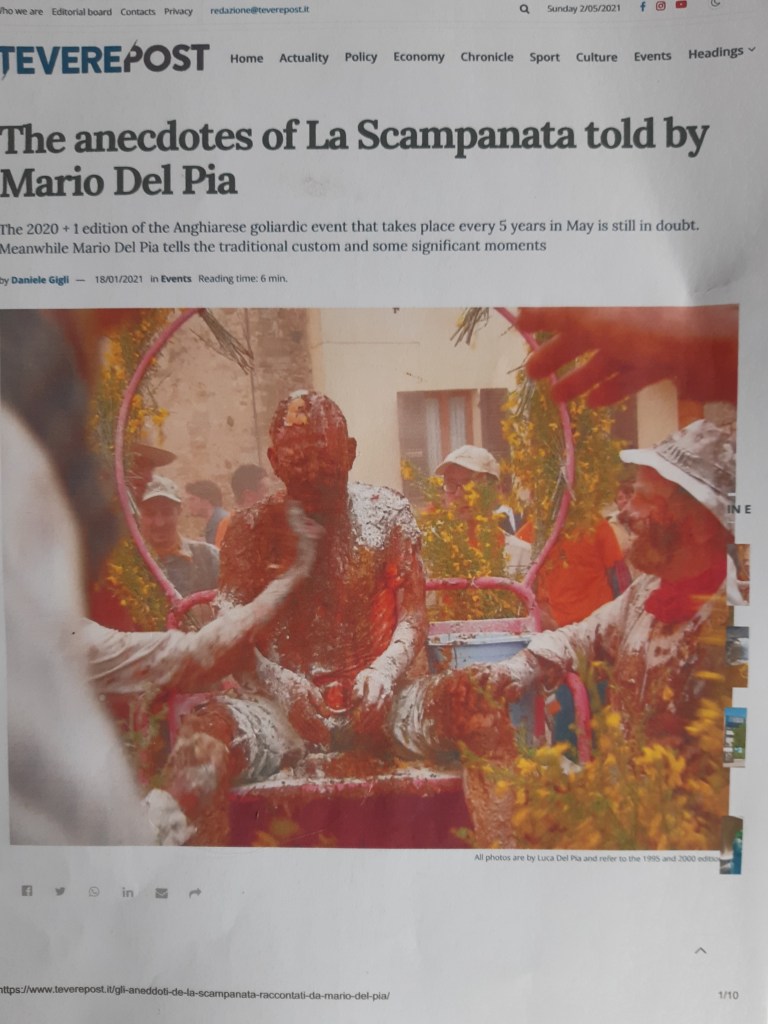
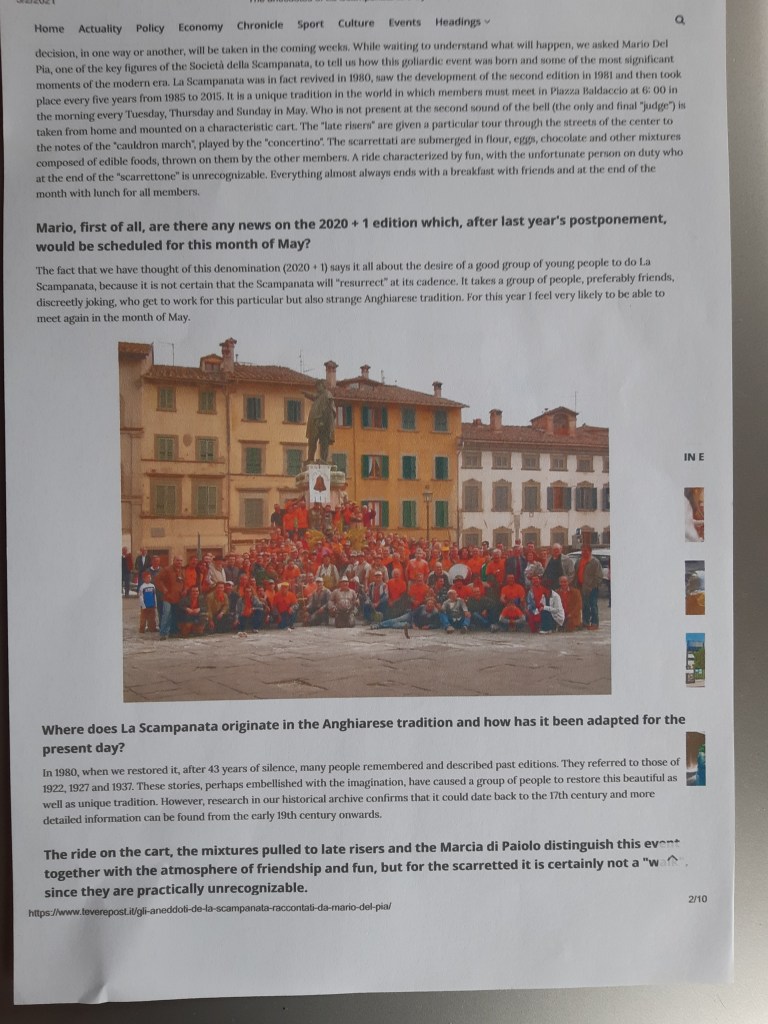

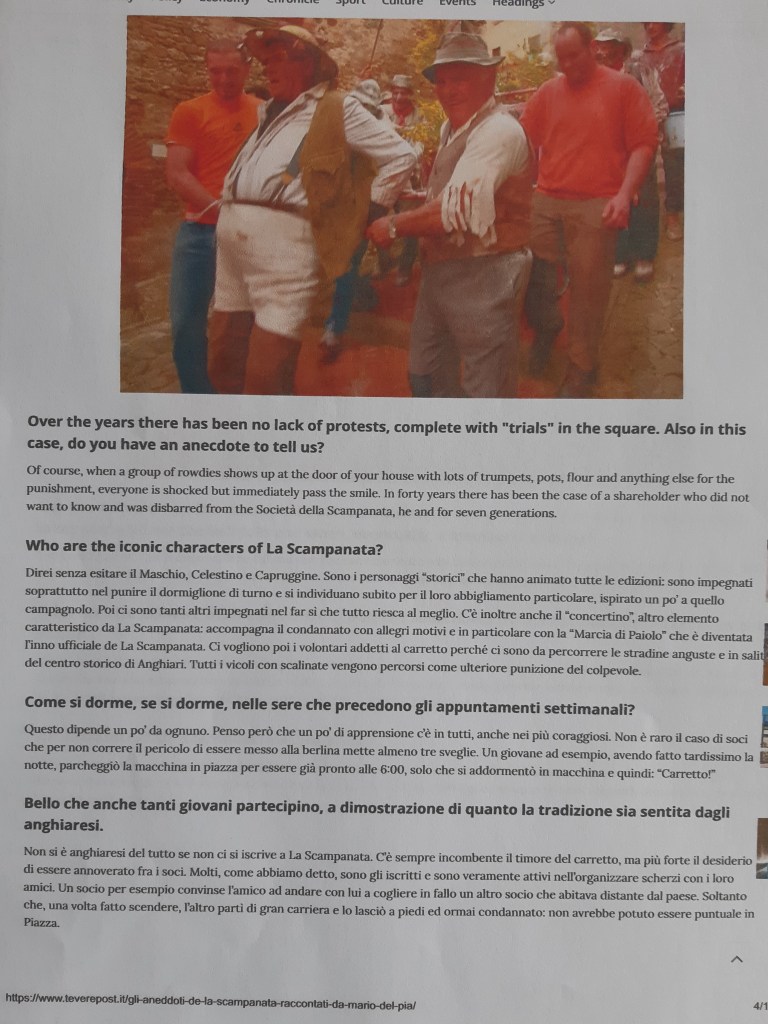

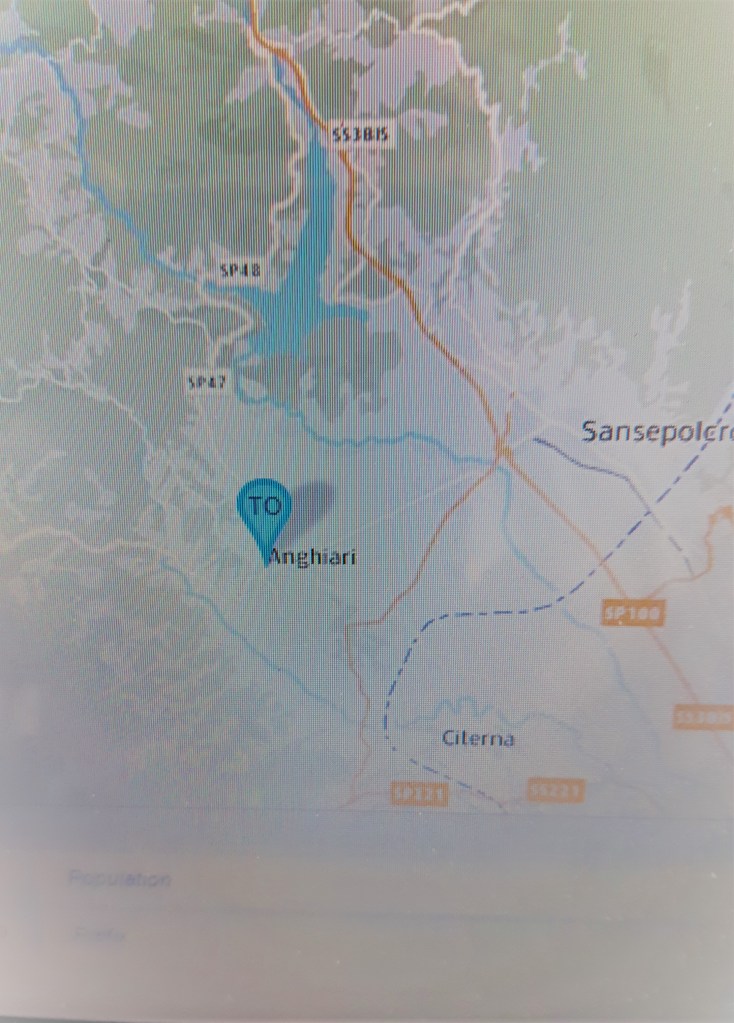
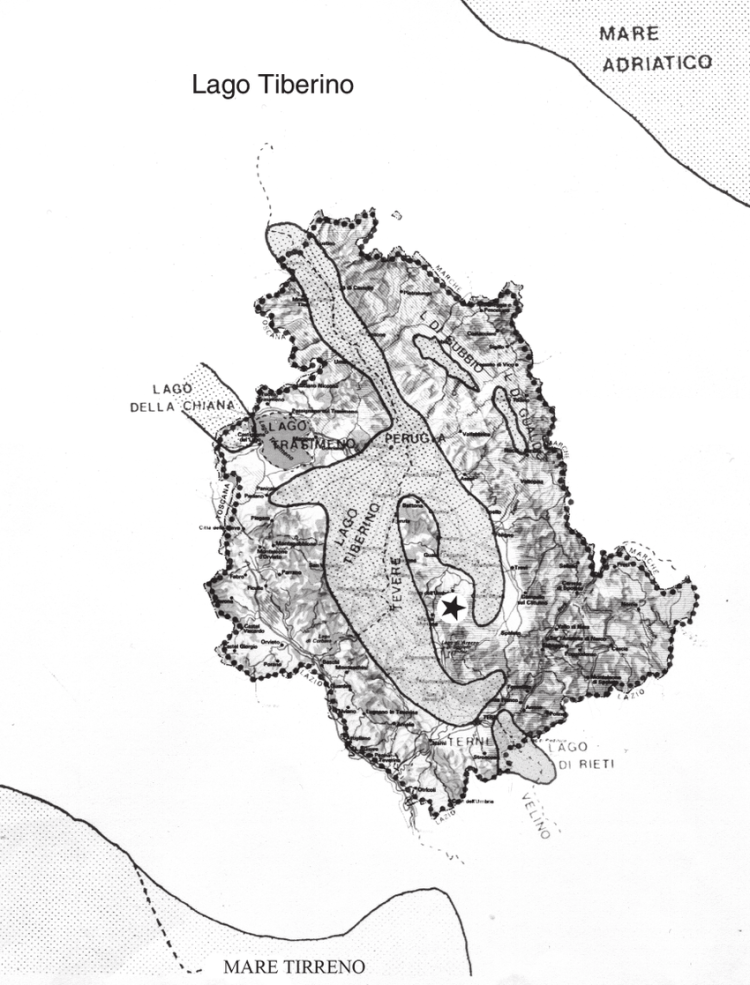

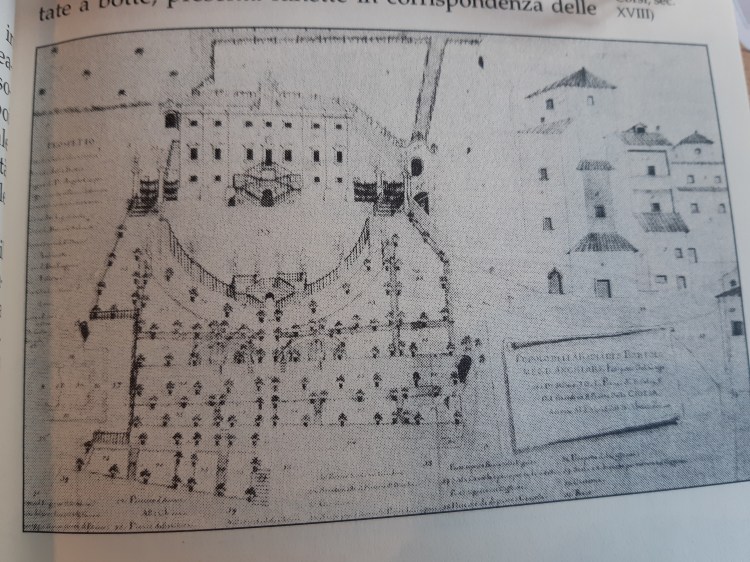
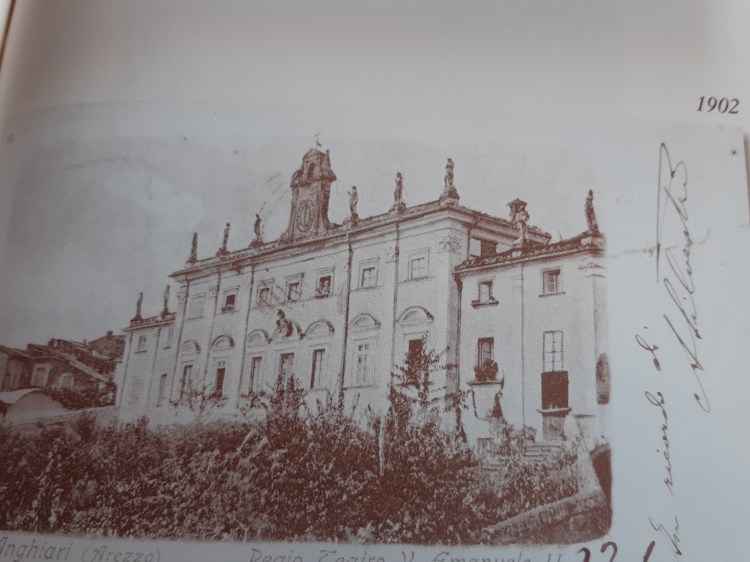
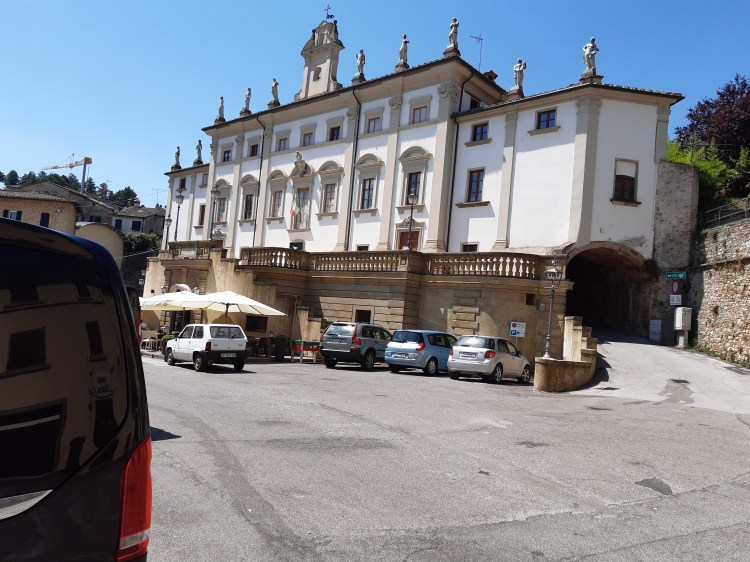
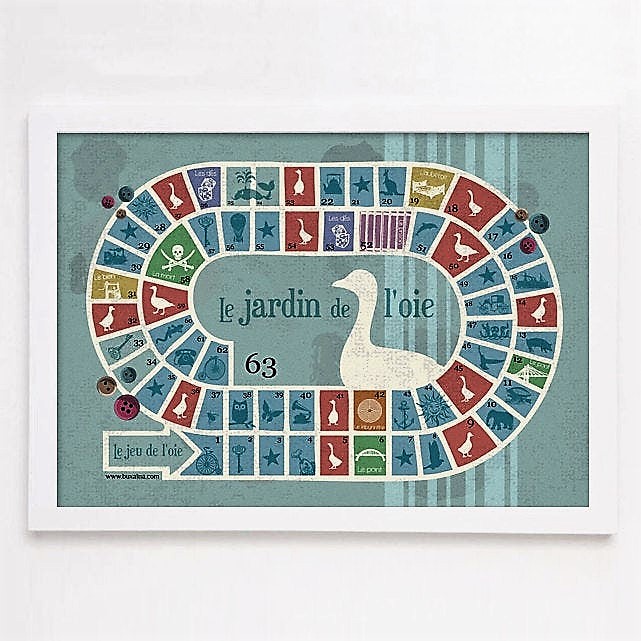
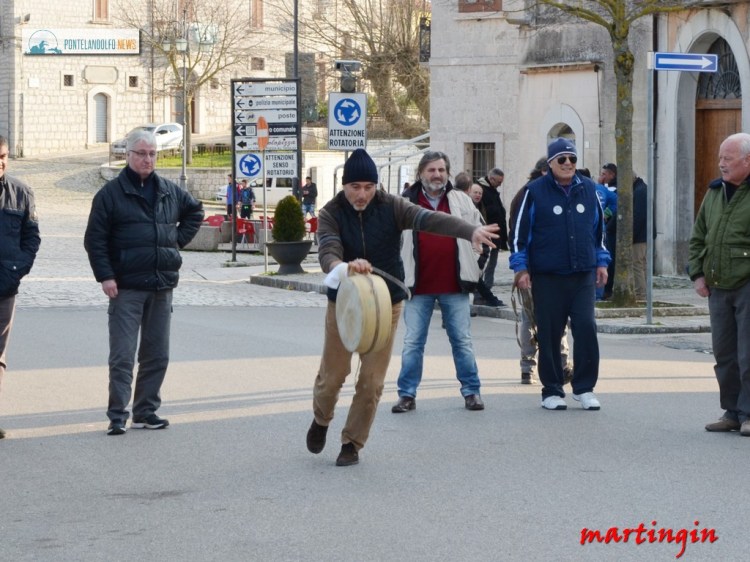
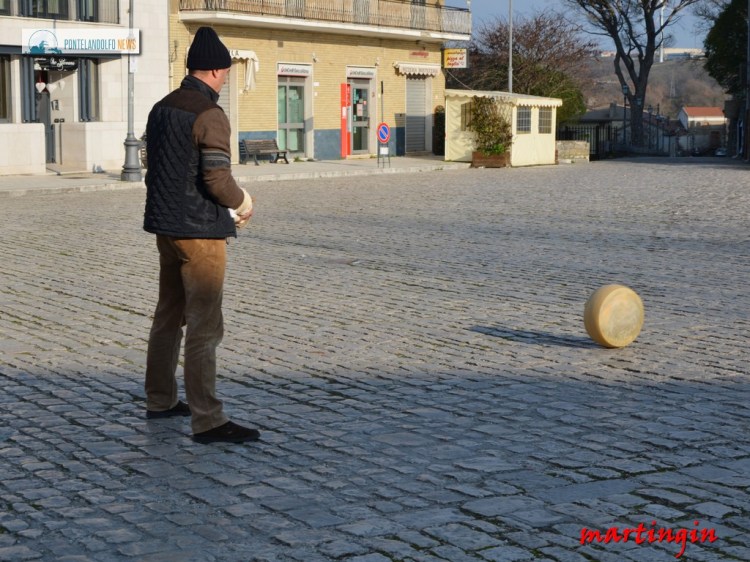
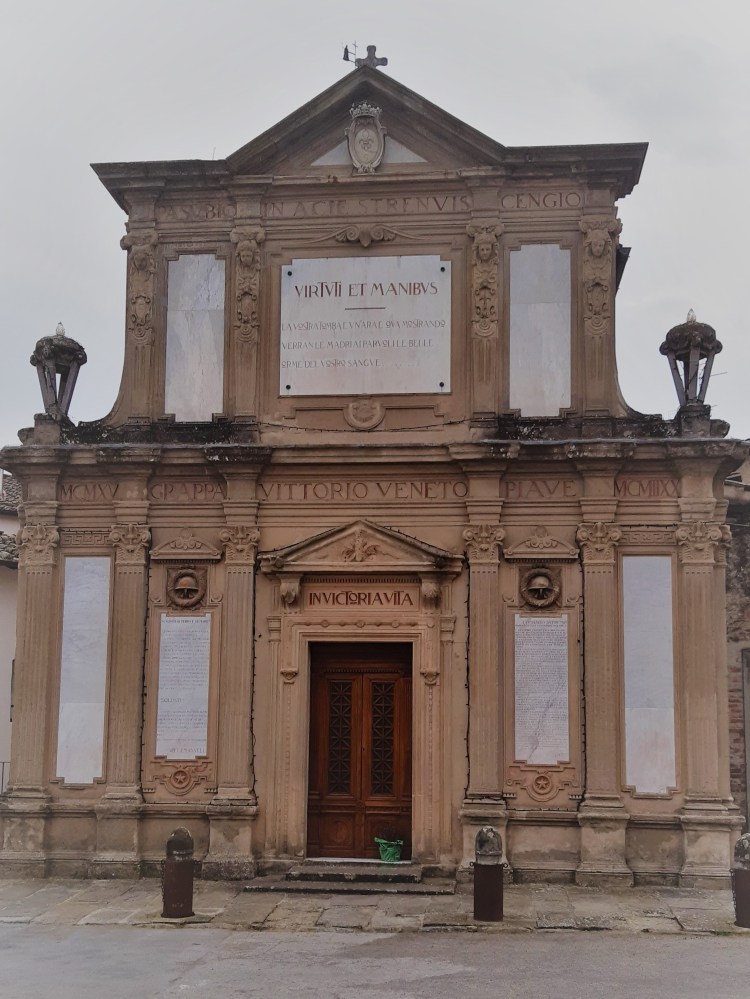
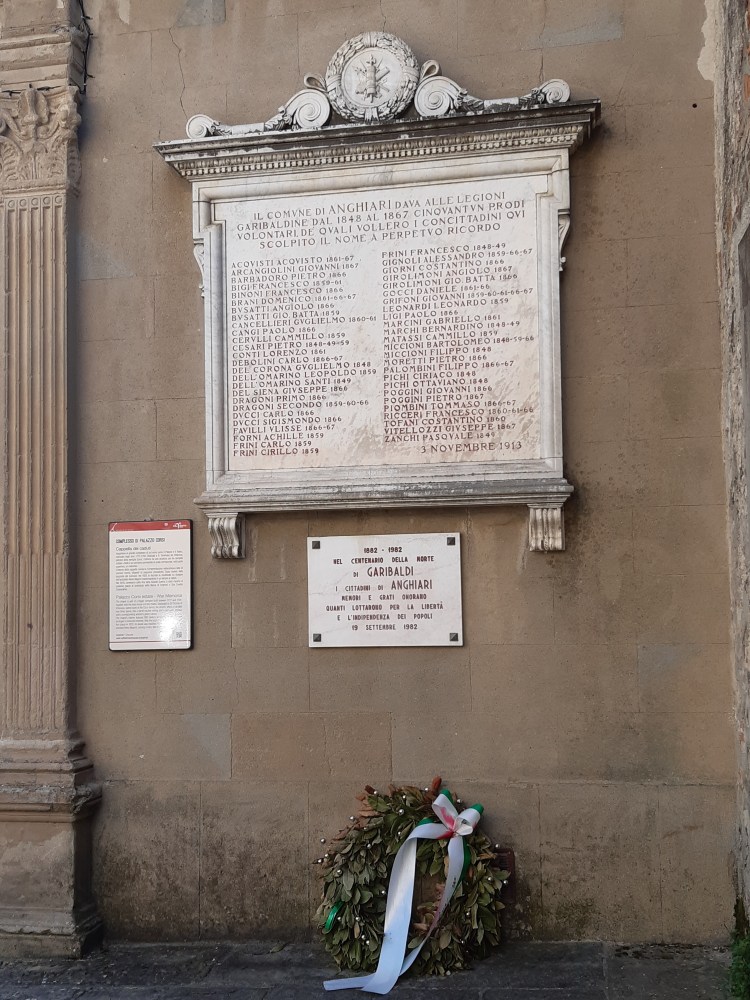
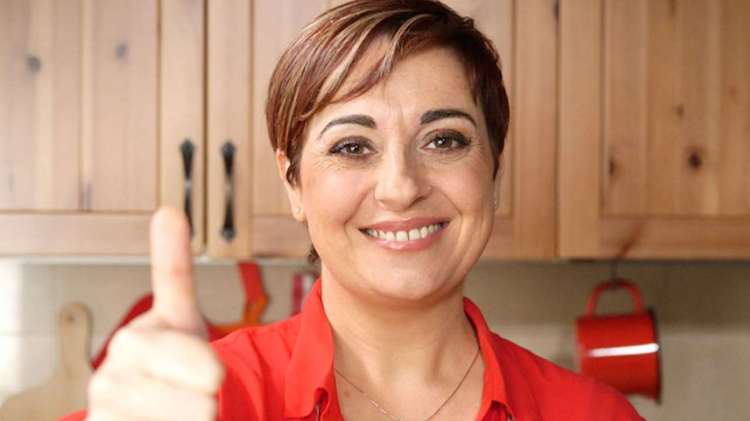

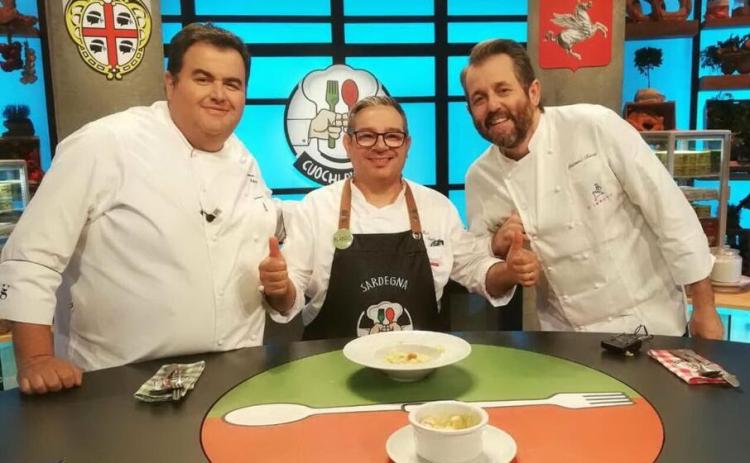

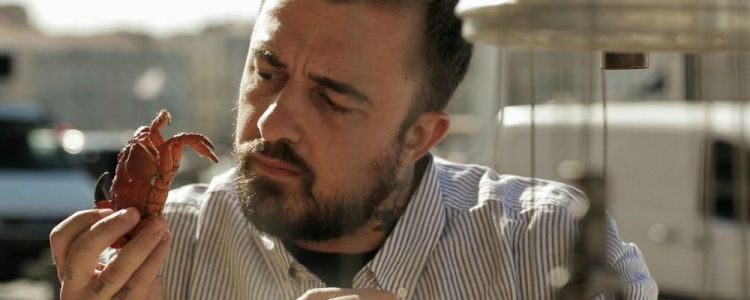

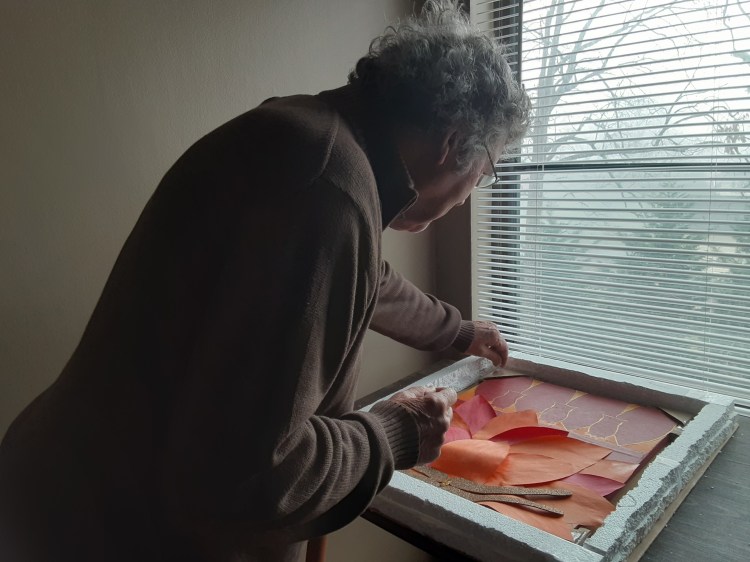
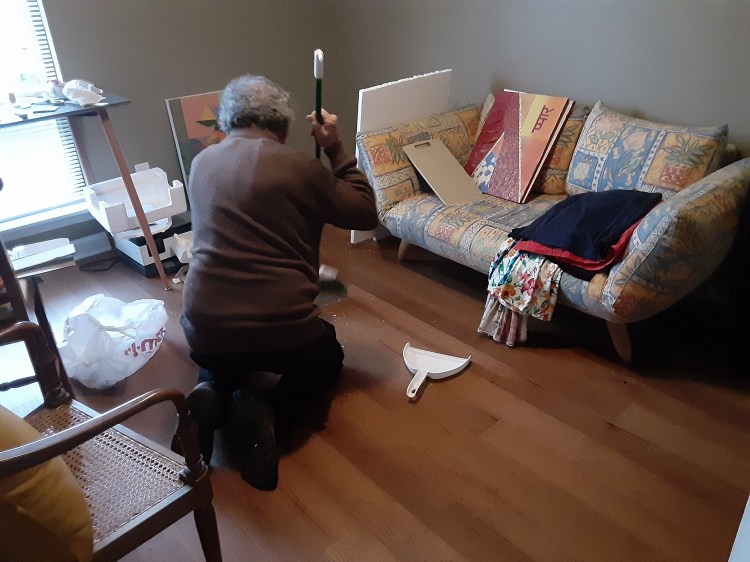

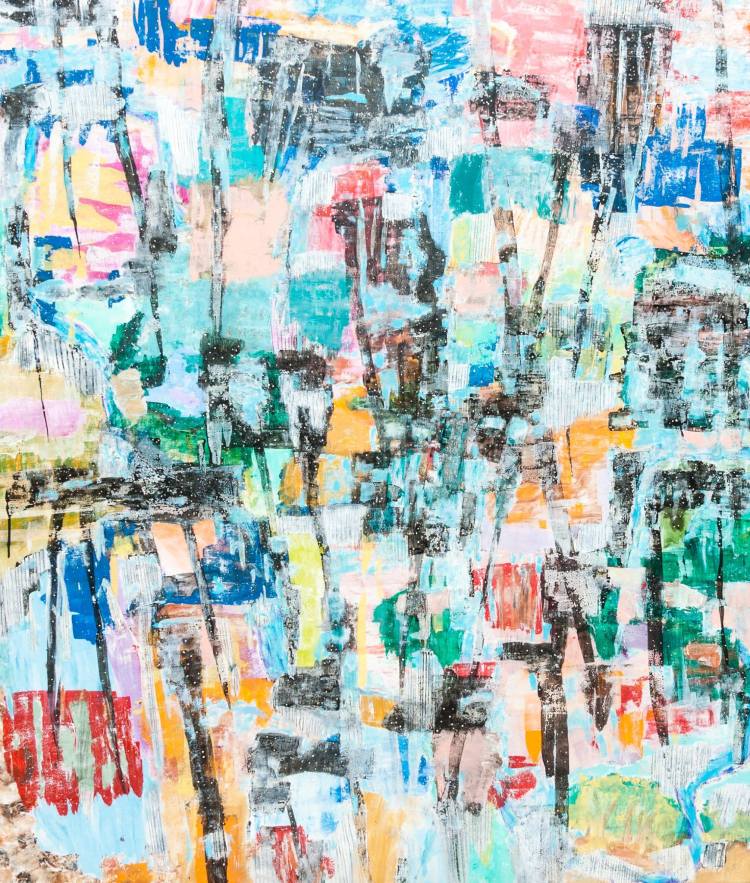
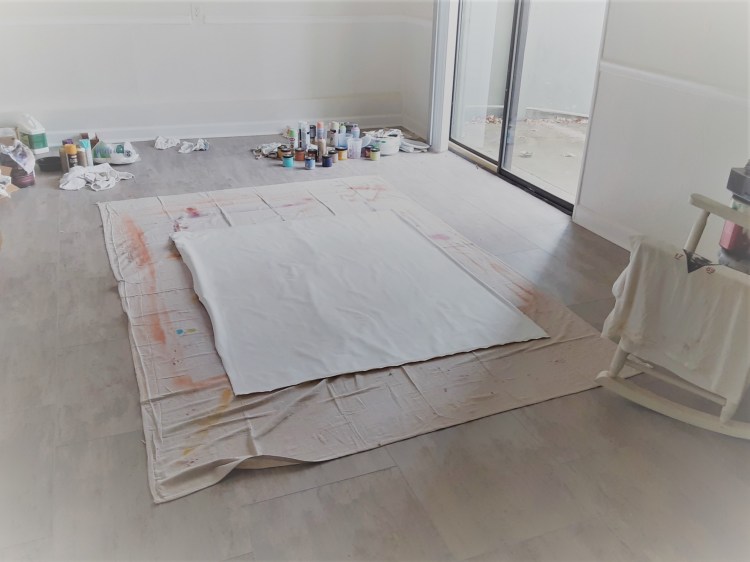
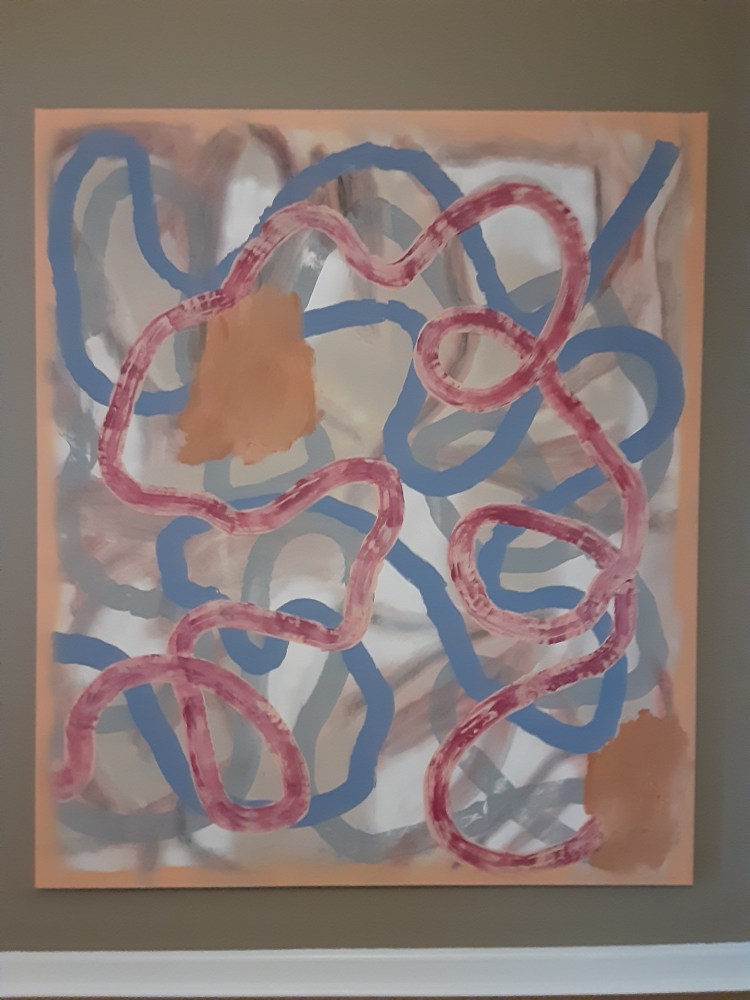
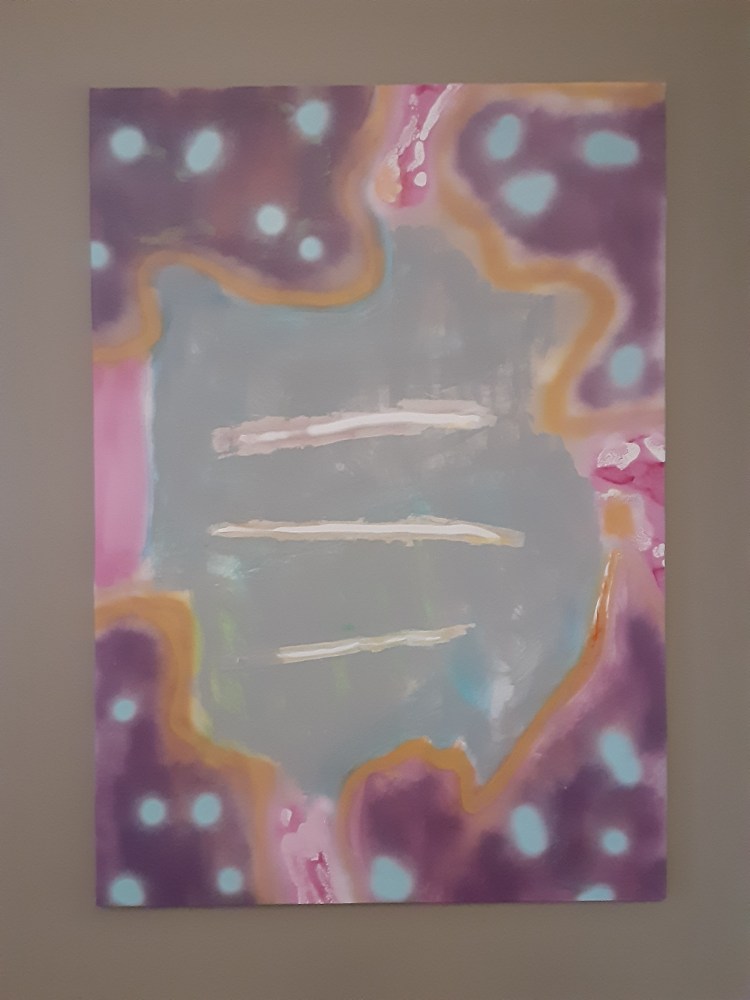
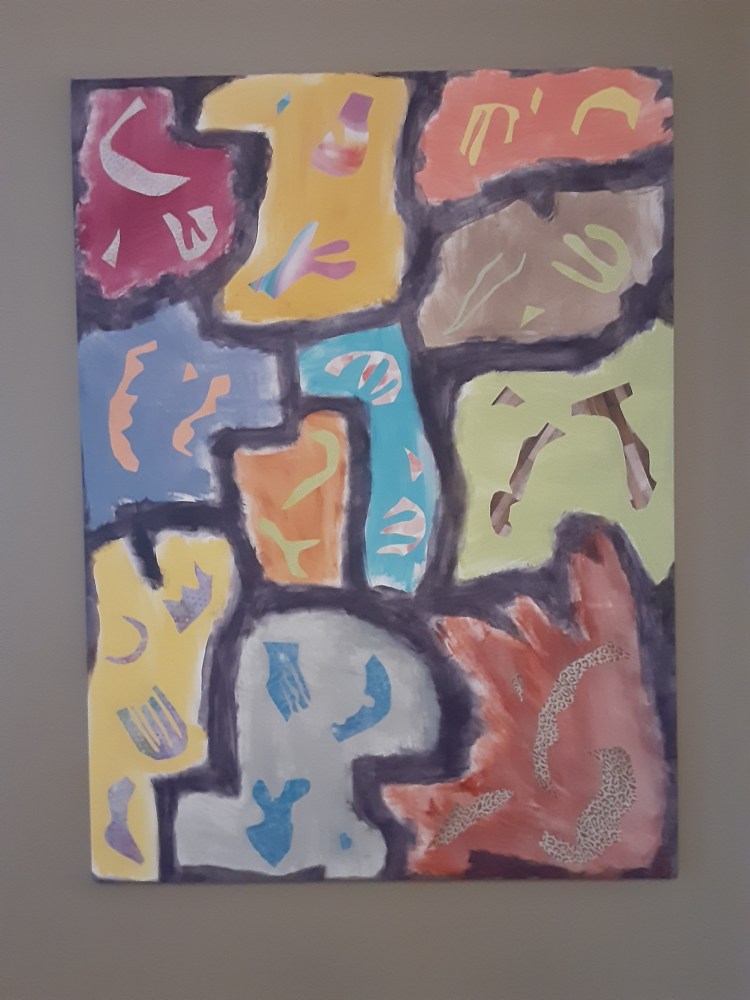
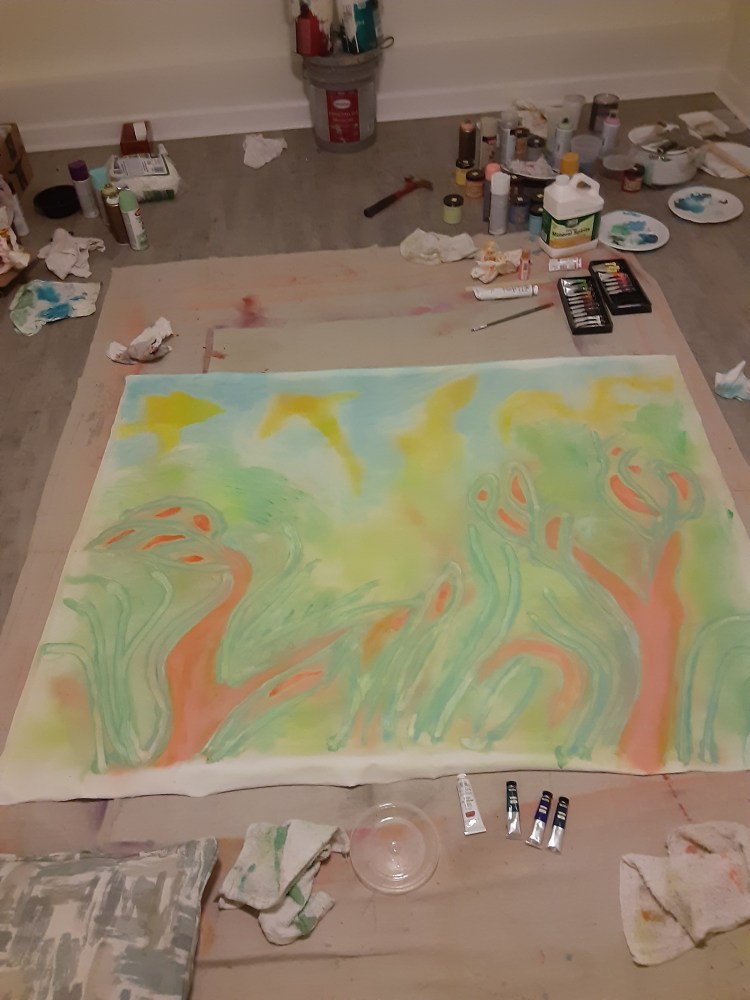
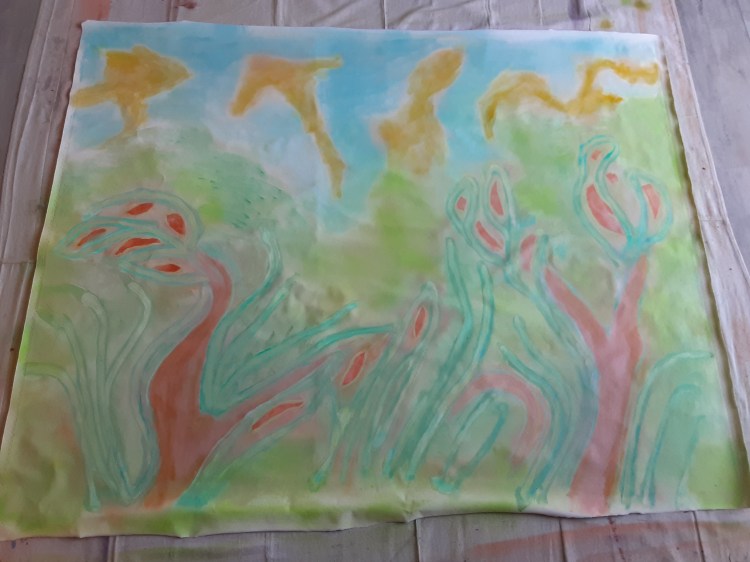
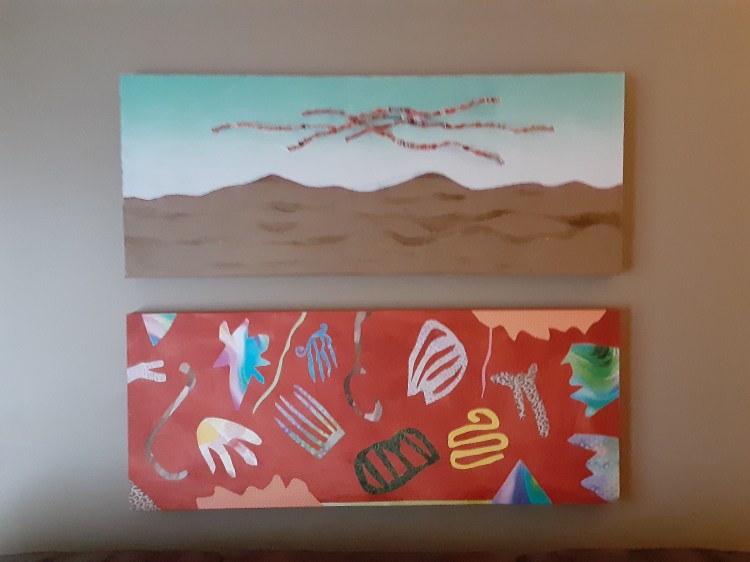
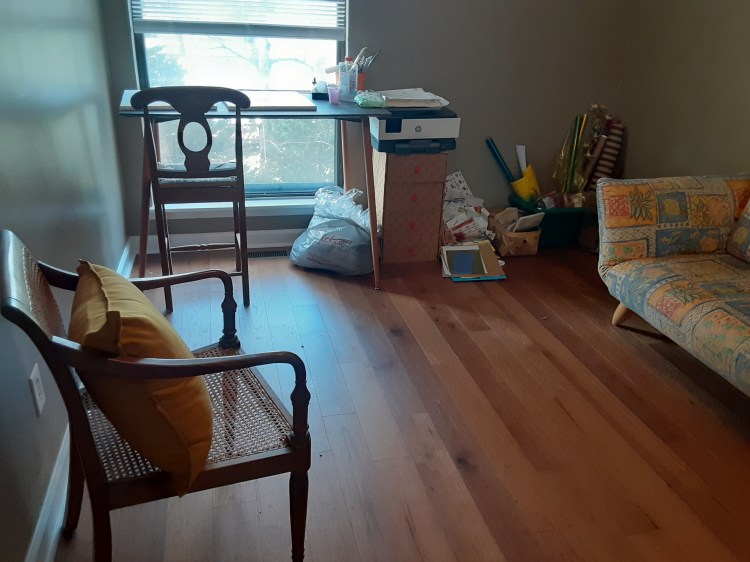
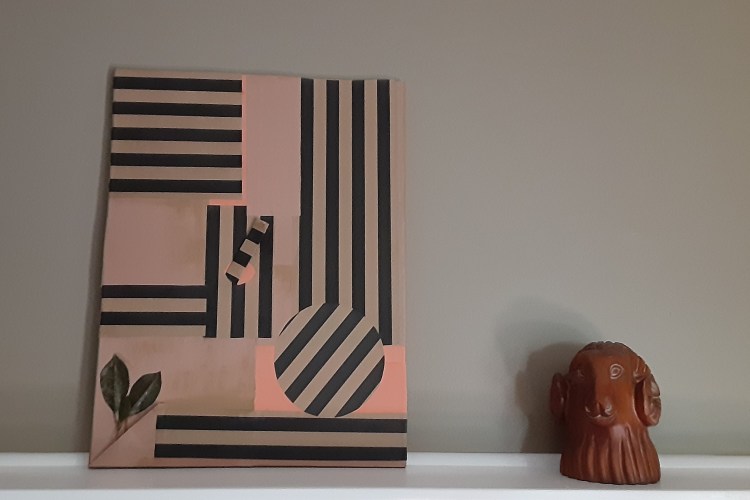
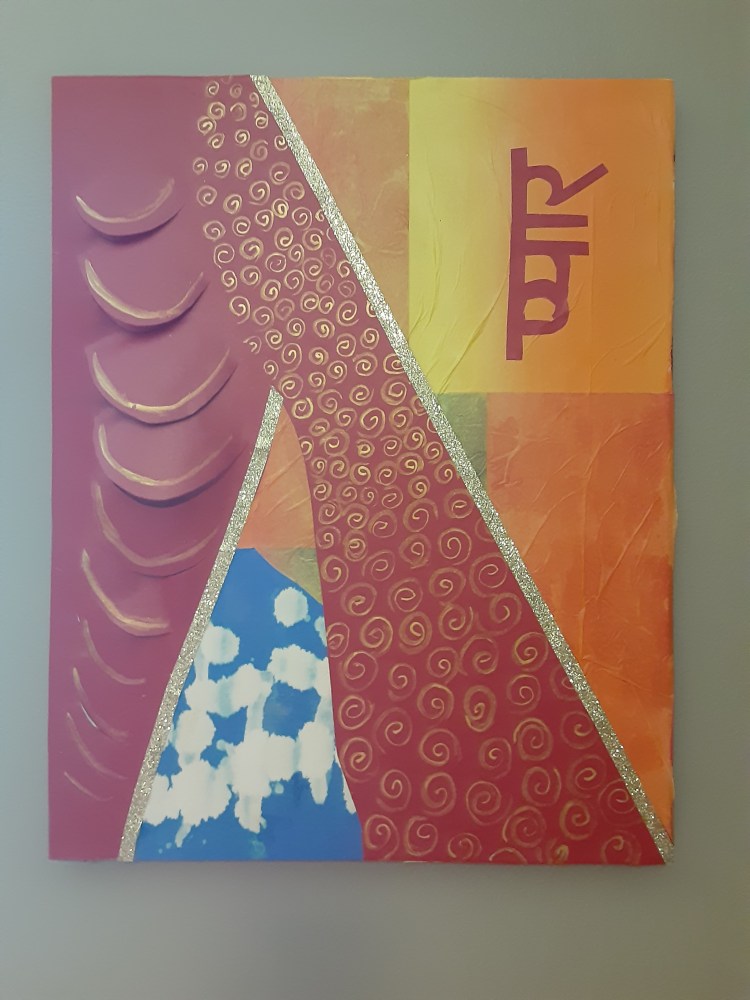
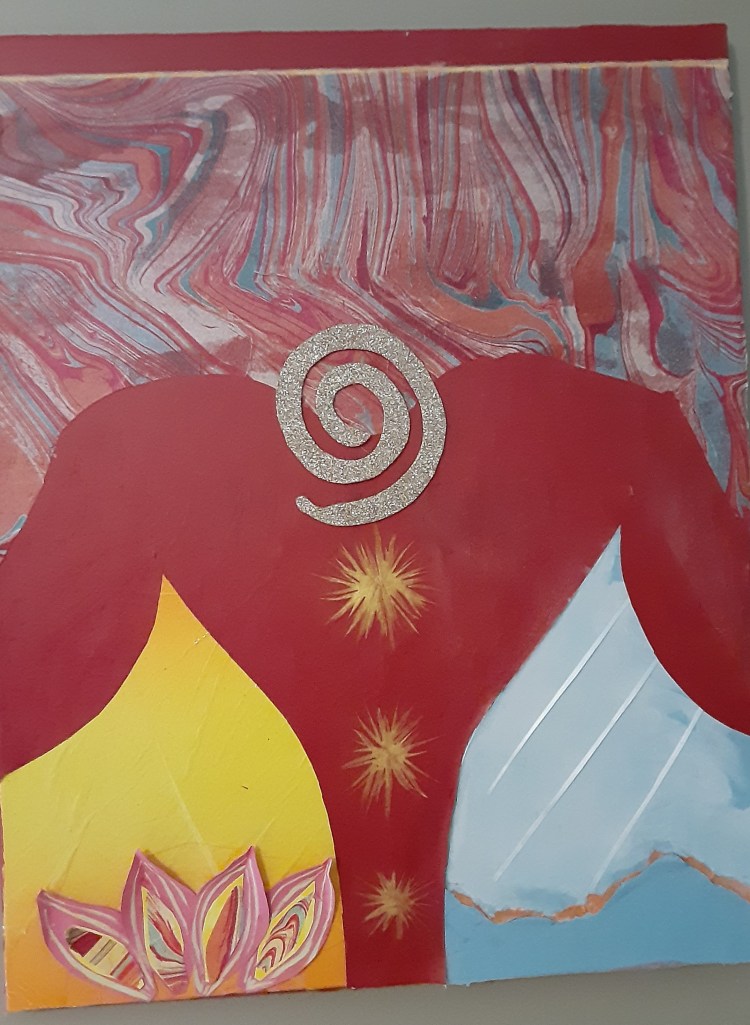

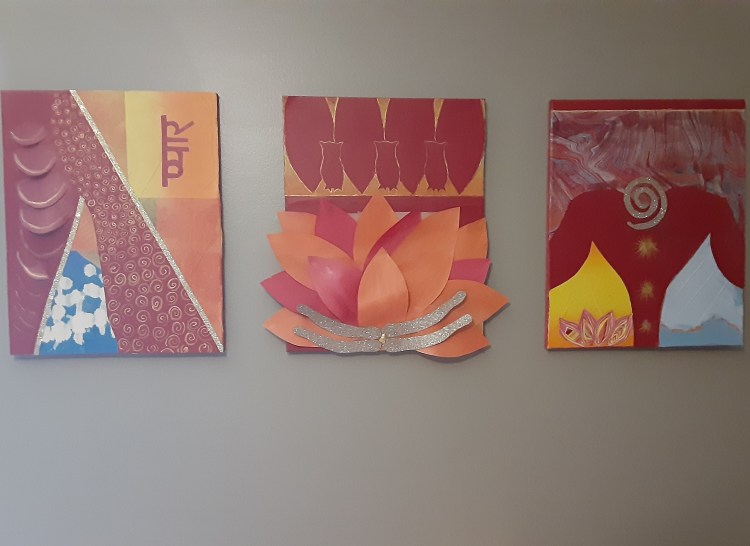
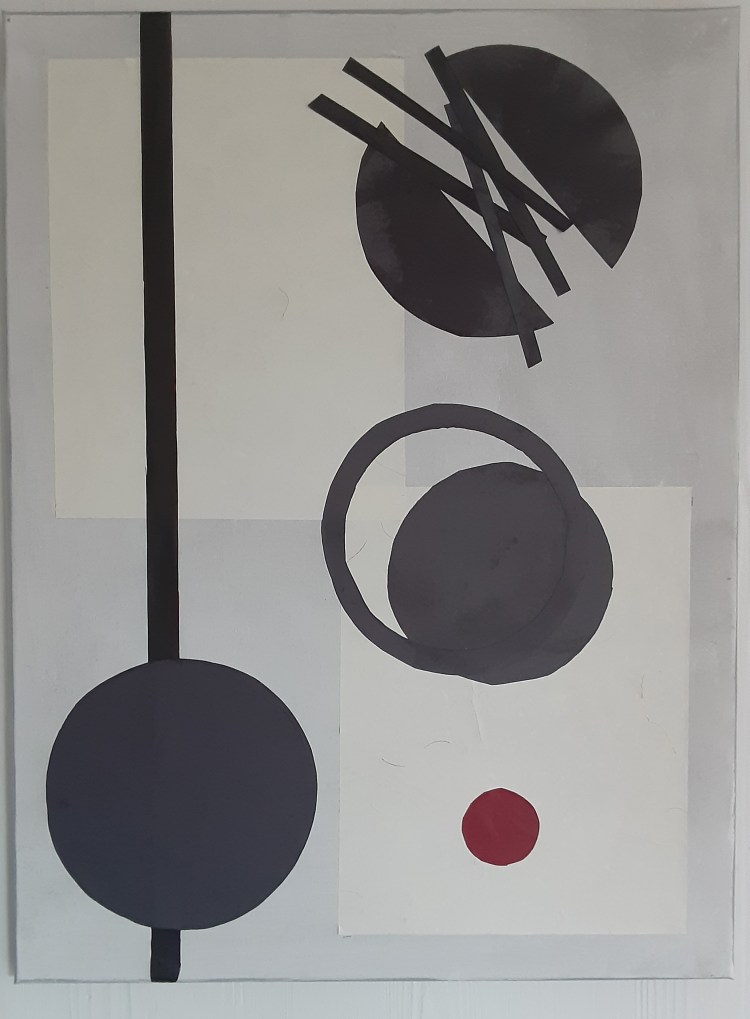
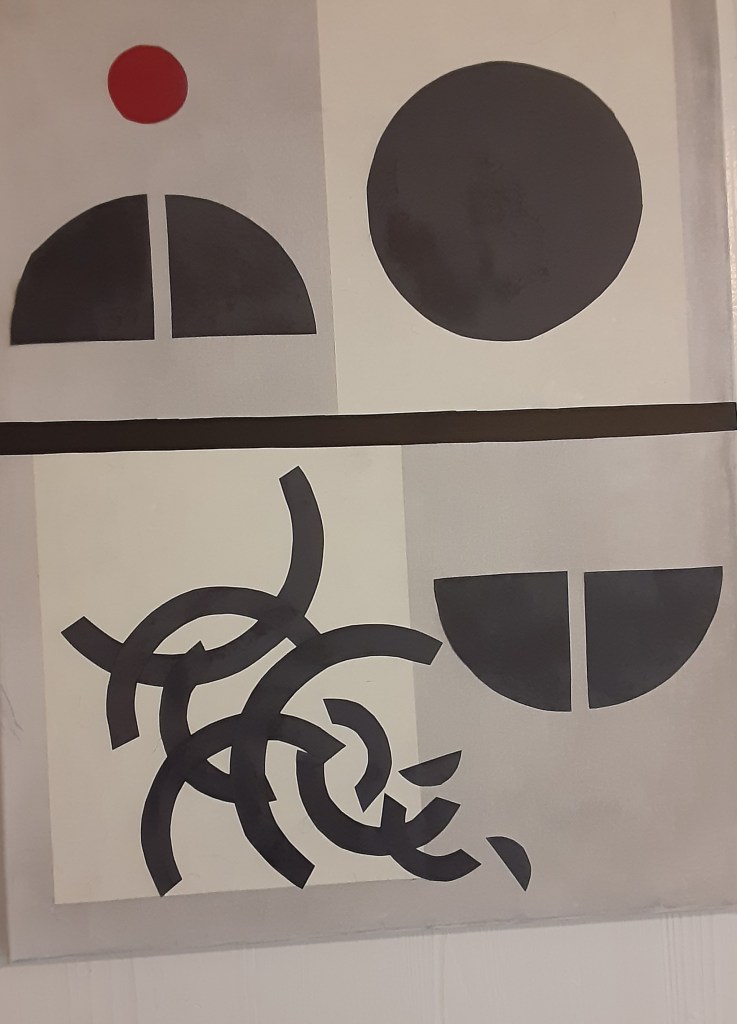
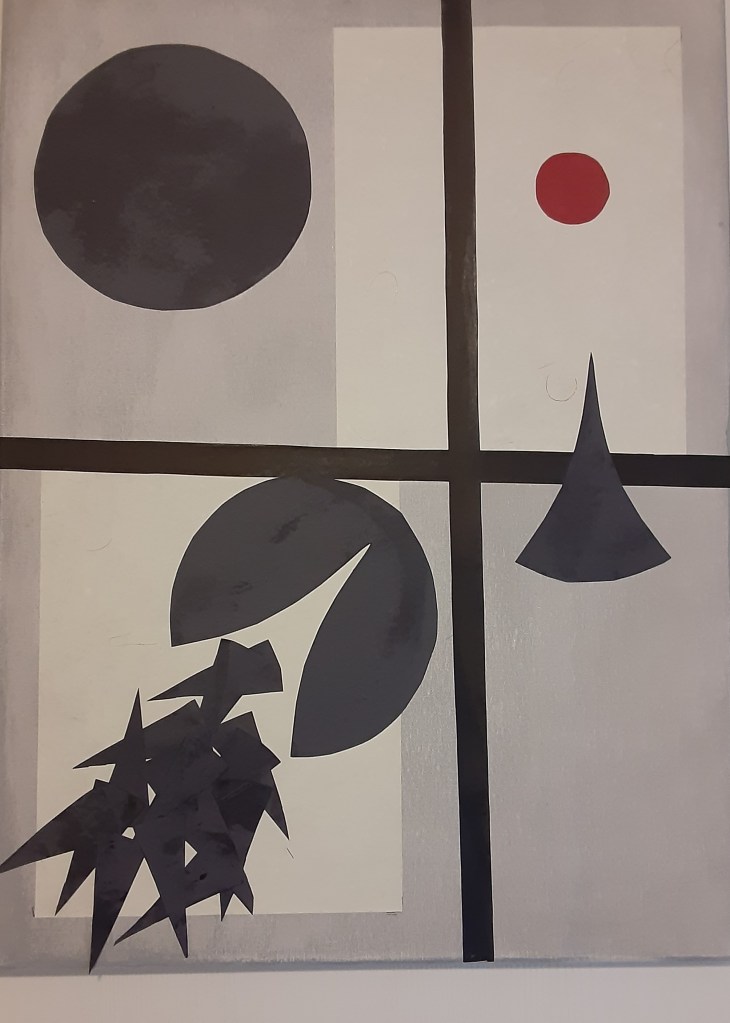
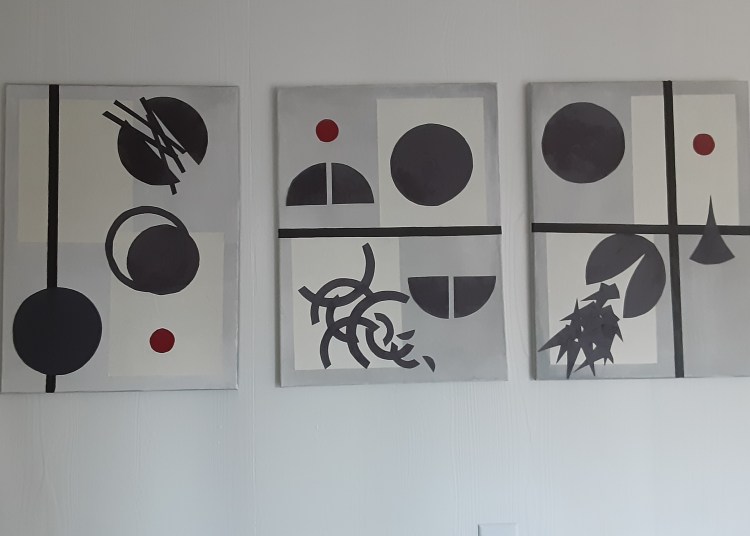
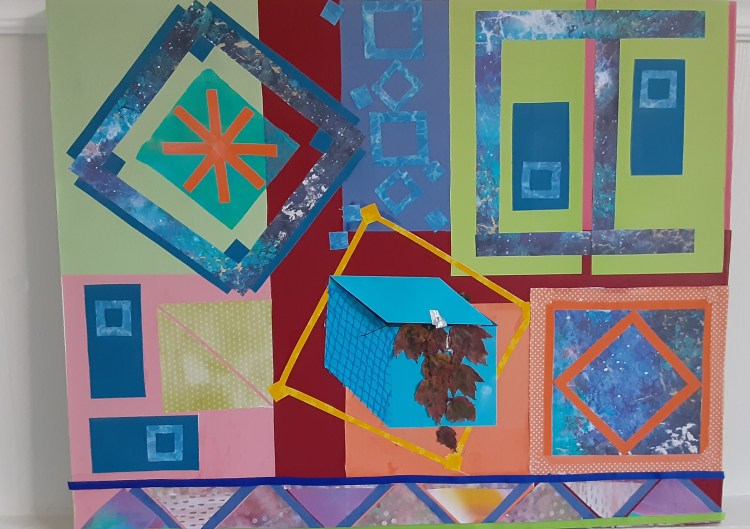
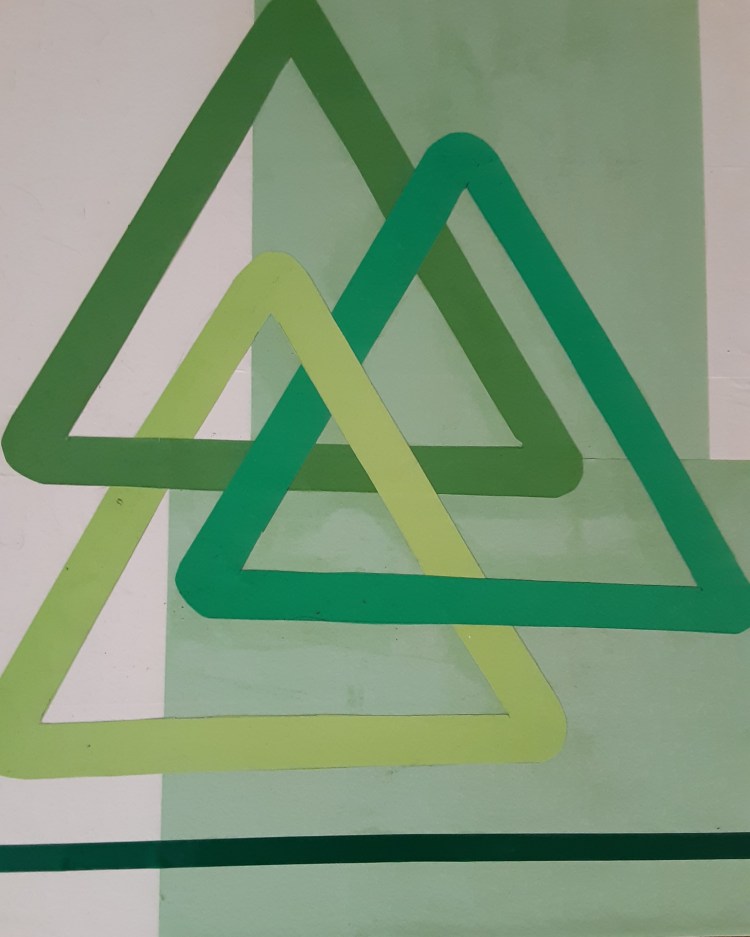
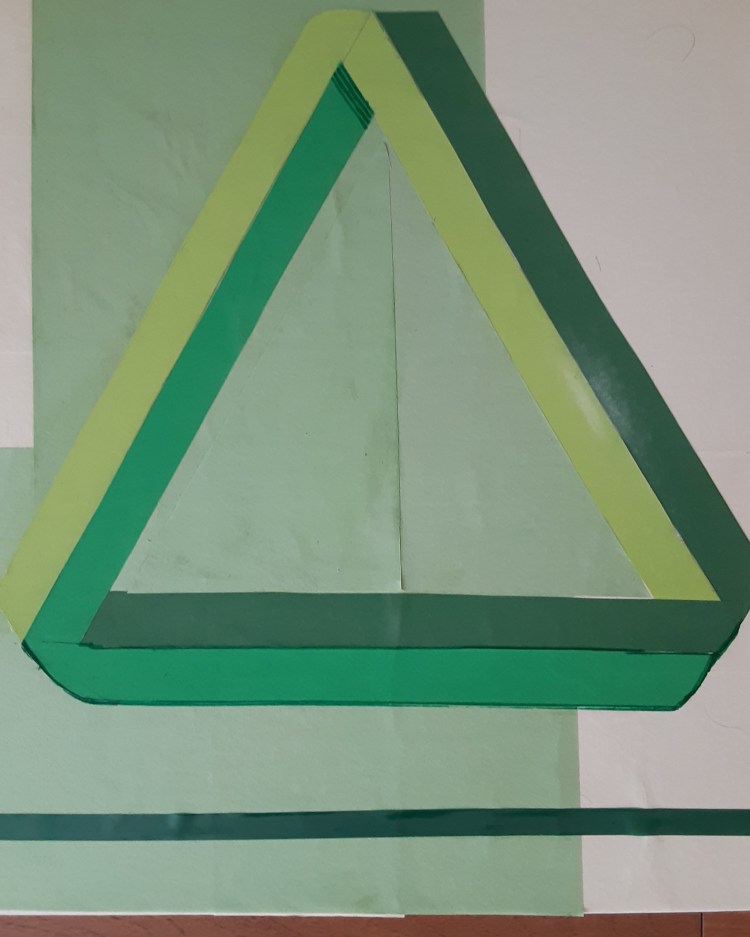


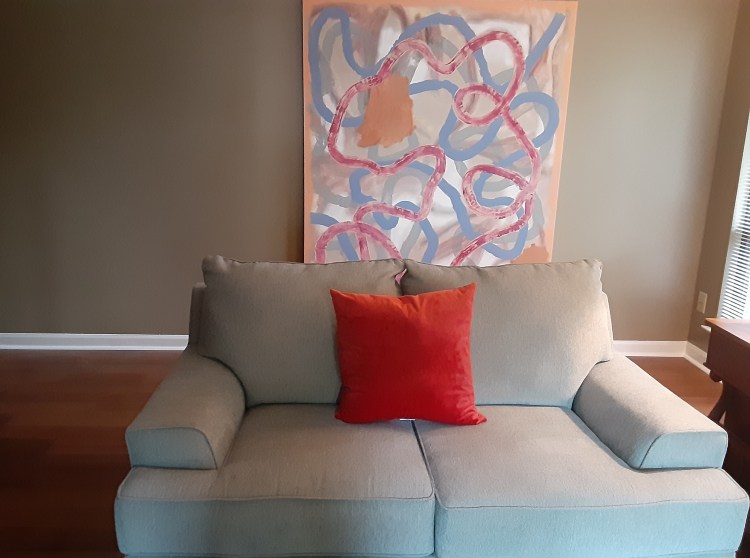
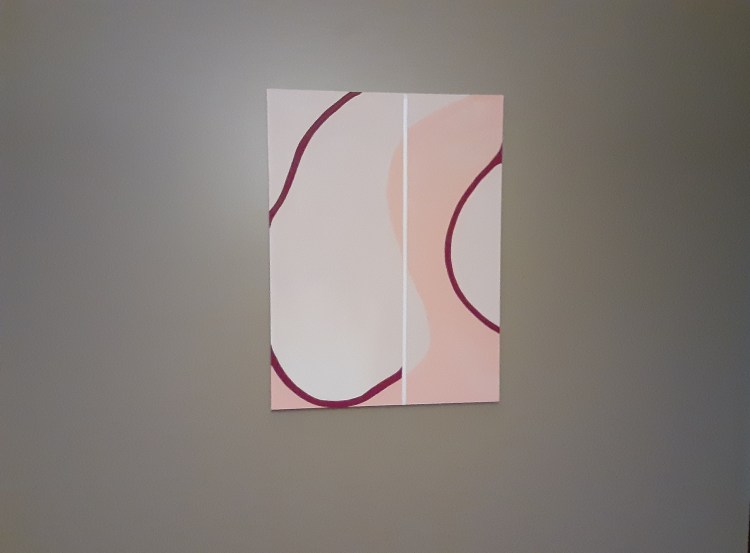
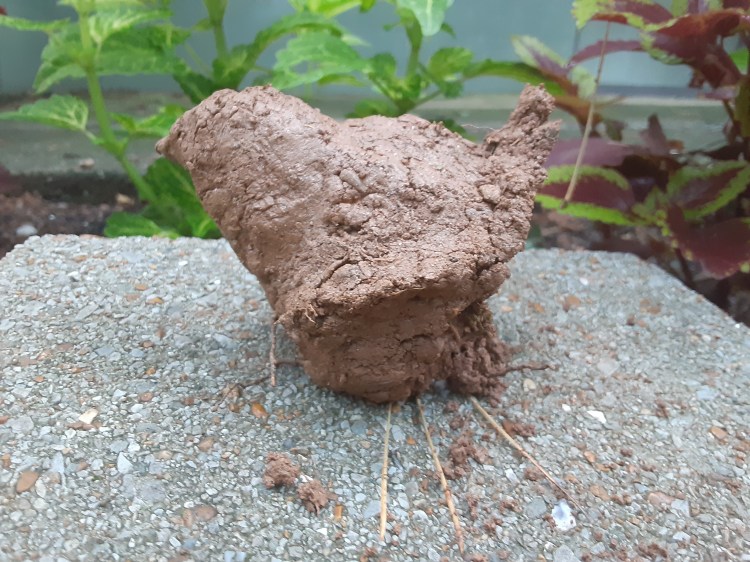



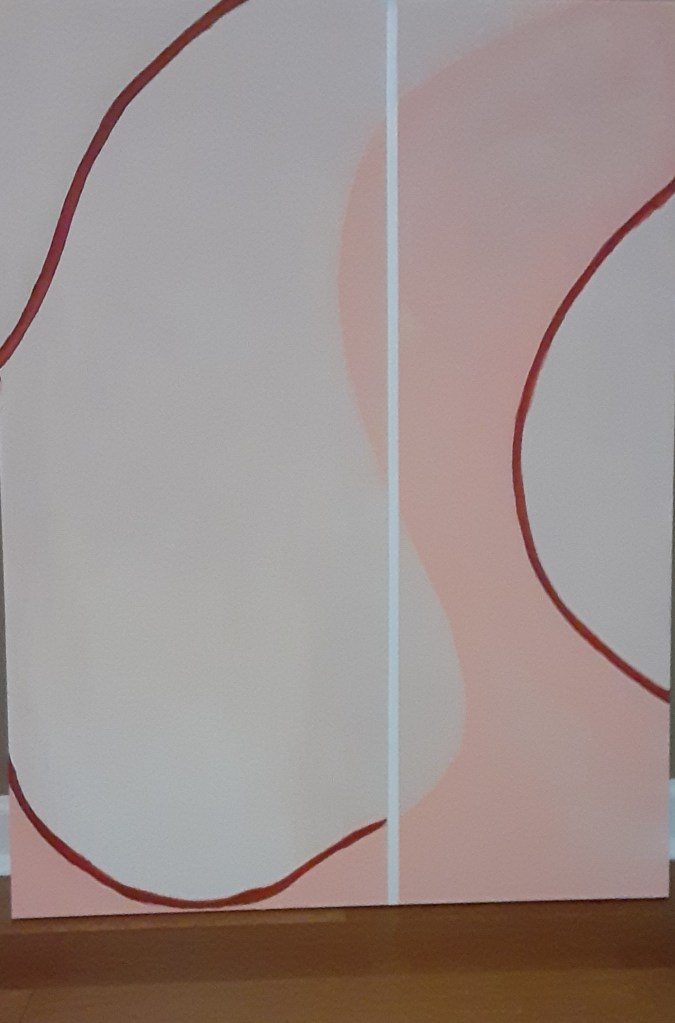






 Lurching towards Italy