
PART I
The War In Ukraine as seen from Italy
For many years I believed that my generation had “caught a wave.” We were kids in the 1950’s when playing outside all day and into the evening was the norm, refreshing. ourselves with drinks of Koolaid made from a packet of dry powder or, if we were lucky, enjoying a cold popsicle bought for six cents. True, around the edges of our lives polio lurked and there were wars threatening enough to instigate “Duck and Cover” drills, though I don’t remember ever taking part in them in my school. But these threats to our wellbeing were, for the most part, little noticed and easily forgotten as time went by. I remember childhood as generally pleasant, benefiting from the fact that neither my immediate family nor friends were seriously affected by either disease or war.
By the time we edged into adulthood in the 60’s, we were speeding towards a Brave New World, sometimes a fearsome one but also one with new and positive possibilities. We built careers, had children, the economy expanded, trips abroad became more feasible and it seemed our journey through life would move along more or less pleasantly without some of the greater challenges suffered by previous generations. When Terry and I moved to Italy it seemed we had reached a pinnacle of ‘the good life’ I could not have imagined when I was young.
But in the winter of 2020, as we were settling into life in Italy, Covid-19 reared its ugly head and it affected everyone whether you caught the virus or not. Following its appearance in China, Italy was hit hard and fast with the number of victims quickly rising and the consequent lockdowns changing nearly everything we had anticipated when moving to Italy.. As we all now know after two plague dominated years, we still are trying to determine how, when and where life will return to something like the normal we once knew.
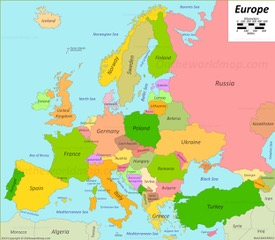
In early winter 2022 a less Covid-restrictive future had just begun to take shape when suddenly Russia’s invasion of Ukraine brought a new threat. While I had not been oblivious to other wars around the world, never before had I lived in such close proximity to one. Not really close, thankfully–the driving distance from our home in Anghiari to Kiev is approximately the same as between Denver, CO and Los Angeles, just over a thousand miles. But still too close.
For many western populations and perhaps especially Americans, recent wars were fought in far off places and while lamentable, had little impact on daily life. Now virtually everyone in the European Union feels affected by this war. We can see its devastation daily online or via TV and we read Putin’s remarks calling Italy an unfriendly country and threatening to cut off gas supplies saying, “Italians will have to get used to using kerosene.” At this moment gas supplies remain stable, if expensive, and we don’t expect to be invaded, but we do feel the weighty atmosphere that a brutal and aggressive government has brought into our part of the world.
From the beginning of the war in Ukraine on January 24, the bombing of official buildings, hallowed sites, and residential areas were shocking in their unrestrained destruction. Weeks passed with no abate in Russia’s apparent determination to wipe out Kiev and other major cities. As millions of citizens fled the country, Ukrainian soldiers and volunteer militia fought with heroic intensity and could claim success in some areas. Eventually, the Russian military began to withdraw, or redeploy at least, leaving cities, including residential areas, in piles of rubble.
But even as they retreated from Kiev and surrounding areas, Russian soldiers had more horrors to inflict. In early April we saw the evidence of savage killings that took place in Bucha, Ukraine. Russia claimed that the bodies, many bearing signs of torture, were a Ukrainian hoax designed to raise antagonism toward the enemy. A few days later we learned of a similar, maybe worse, scene in Borodianka and last week saw the bombing of a railway station where thousands of Ukrainians were waiting to board a train in order to evacuate.
If it seems that the world is united in its condemnation of Russia’s invasion of a sovereign country, that really applies uniquely to the western world. Just as in the Ukraine, the neighbouring country to its west, Moldava, includes a region loyal to Russia. Along the Moldova-Ukraine border lies Transnistria, the separatist region where Russia has long positioned 1,500 troops, describing them as peacekeepers. Though there is some speculation that more Russian troops have been deployed in Moldava to support those already in place, Moldava’s president, Maia Sandu, denies that and, after all, what can Russia gain from tiny, poor Moldava? Well, proximity to the seaport of Odessa.
The capital of Moldava’s Transnistria is Tiraspol located a mere 62 miles from Odessa, Ukraine’s port on the Black Sea. Odessa’s mayor, Gennadi Trukhanov, worries that, Odessa will be “…invaded on three sides, from the Black Sea, from the east, and from the west to be (sic) the breakaway republic in Moldavia, Transnistria.” If his fears turn out to be well founded, as seems likely, how will non-separatist Moldava react, or will there be any reaction at all and how much would it matter?
Not to be discounted are Putin’s friendly relationships with leaders in Hungary (Viktor Orbàn) and Serbia (Aleksander Vucic). Though Hungary is an EU nation, Prime Minister Orbàn, who was just re-elected in a landslide, characterises the Ukraine and the EU as “opponents.” (Rob Picheta and Balint Bardi; CNN April 4, 2022). Hungary is for now disinclined to get involved with the war, and Serbia, though well supplied with Russian weapons and personnel, has likewise made no move toward joining the war. However, Serbia is always more or less combat ready due to its antipathy toward breakaway regions such as Kosovo, Montenegro and Bosnia-Herzegovina and just recently received additional weapons from China. Although Serbia has applied to join the EU its current course doesn’t suggest that it is eager to go forward in its bid, and in fact has tightened its relationship with Russia and China. (Euro Examiner: Jan 3, 2022). Both Hungary and Serbia have to be reckoned as possible players should Russian goals expand.
The news of the past several days promises an upcoming battle that both Russia and Ukraine describe as climactic. Russian forces are in a staging position along the Russian border with Ukraine and a convoy of more tanks and artillery are on their way to augment them. With Ukraine’s weaponry running low, the chances of repelling Russian attacks on the already mostly destroyed port city of Mariupol looks dim. To quote a post on FaceBook: “Today will be an extreme fight….Further is death for some but captivity for others.” Is this the depressing end to phase one of Putin’s plan? If chemical weapons have been used in Mariupol as some have charged, will NATO step in?
Russia seems to have endless resources for continued war, in part financed by EU payments for Russia’s gas. Lithuainia has now banned Russian oil and gas, and Italy has made arrangements to begin importing gas from Algeria to augment supplies but money for oil continues to pour into Russia. Will cutting off a portion of the one billion dollars each day that Russia receives for its oil be effective where sanctions haven’t, or at least haven’t yet?
Continued in Part II
 Lurching towards Italy