
In 1385 the Florentine Republic granted Anghiari the right to hold a market every Wednesday. The grant was confirmed in 1502 and the market continues to this day regardless of season or weather. Originally the market was held in Anghiari’s major square, Piazza Baldaccio; now it spills beyond Baldaccio through the Galleria leading to Piazza IV November and stretches all the way to the steps leading to our front door.
Anticipating the regular market by a day, Stefano Il Pesciaiolo (Stefano the fish monger) shows up early on Tuesday to park in Piazza IV Novembre. By 9:00 people have lined up to buy fresh fish otherwise unavailable in Anghiari. The line doesn’t really abate until Stefano calls it a day about 12:30. In the several hours he is in the piazza he has boned and gutted fish steadily and answered a multitude of questions about the best way to prepare and serve the various delicacies from his stock.
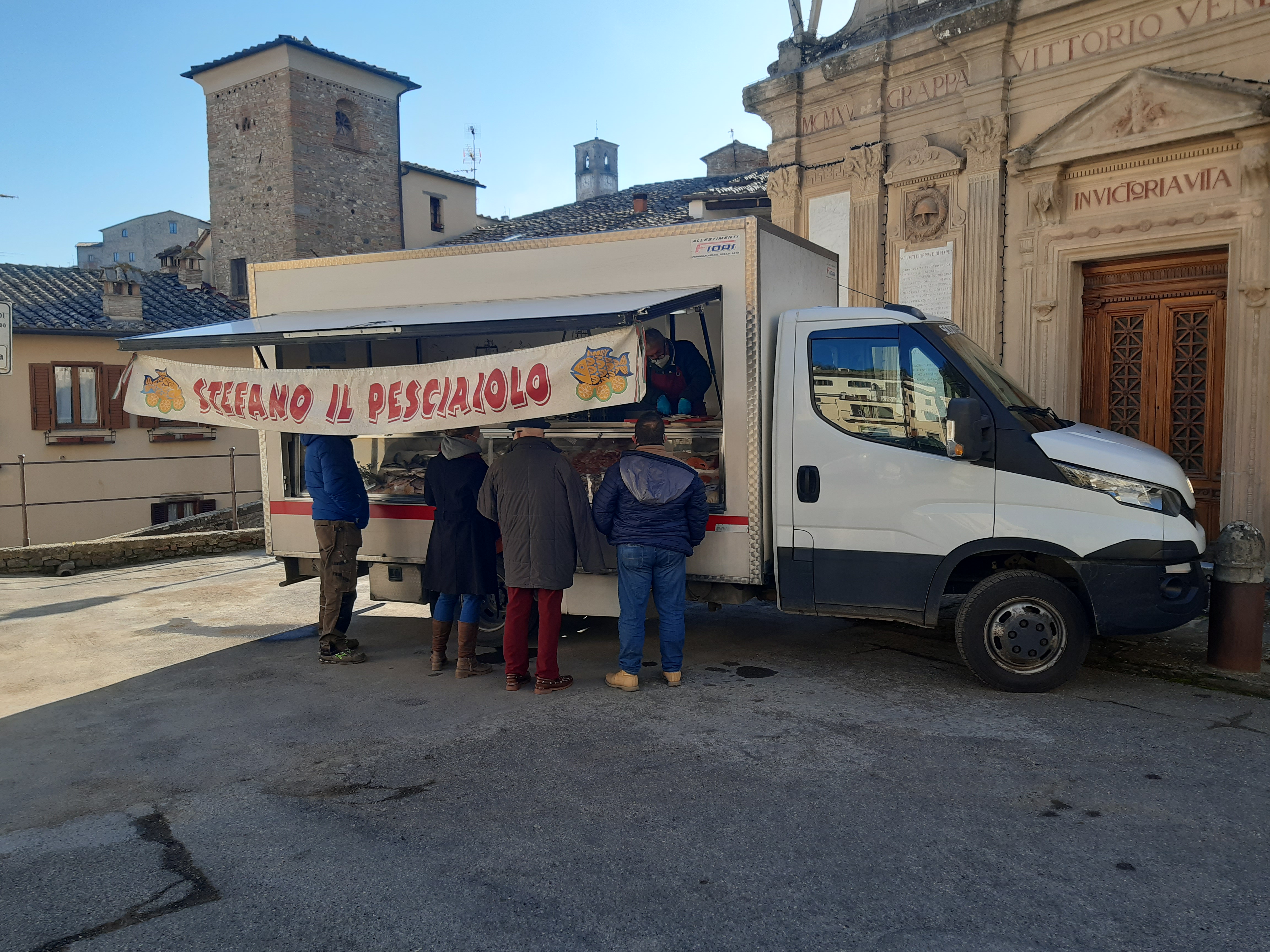
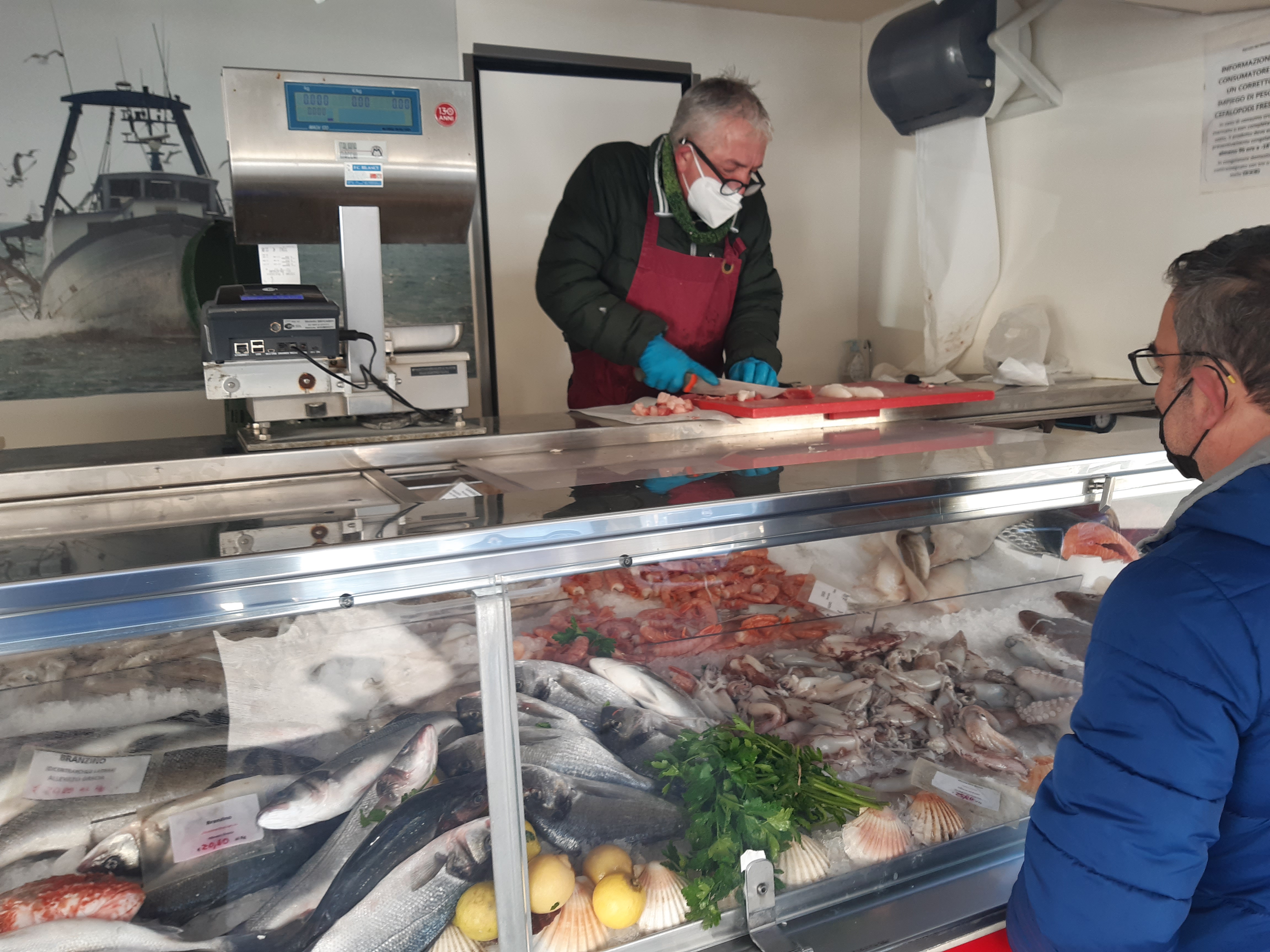
Anghiari lies in the middle of Italy, nowhere near the seas surrounding the peninsula, so Stefano picks up his fish in Livorno, a port city on Tuscany’s western coast. There he will load his “catch” and drive to whatever destination is scheduled that day, a trip sometimes taking more than two hours. For thirty years he has been bringing fish to landlubbers looking for alternatives to the usual Italian fare and we are regular customers.
Then on Wednesday mornings beginning at 6:30, we see the first truck roll into Piazza IV Novembre for the regular market. It is manned by Margarita and her husband who bring pork, rabbit, chicken, sausage and vegetables to be cooked once they arrive. Cold meats like prosciutto and various other charcuterie are also available but most customers, like ourselves, choose the just roasted chicken, rabbit or pork.

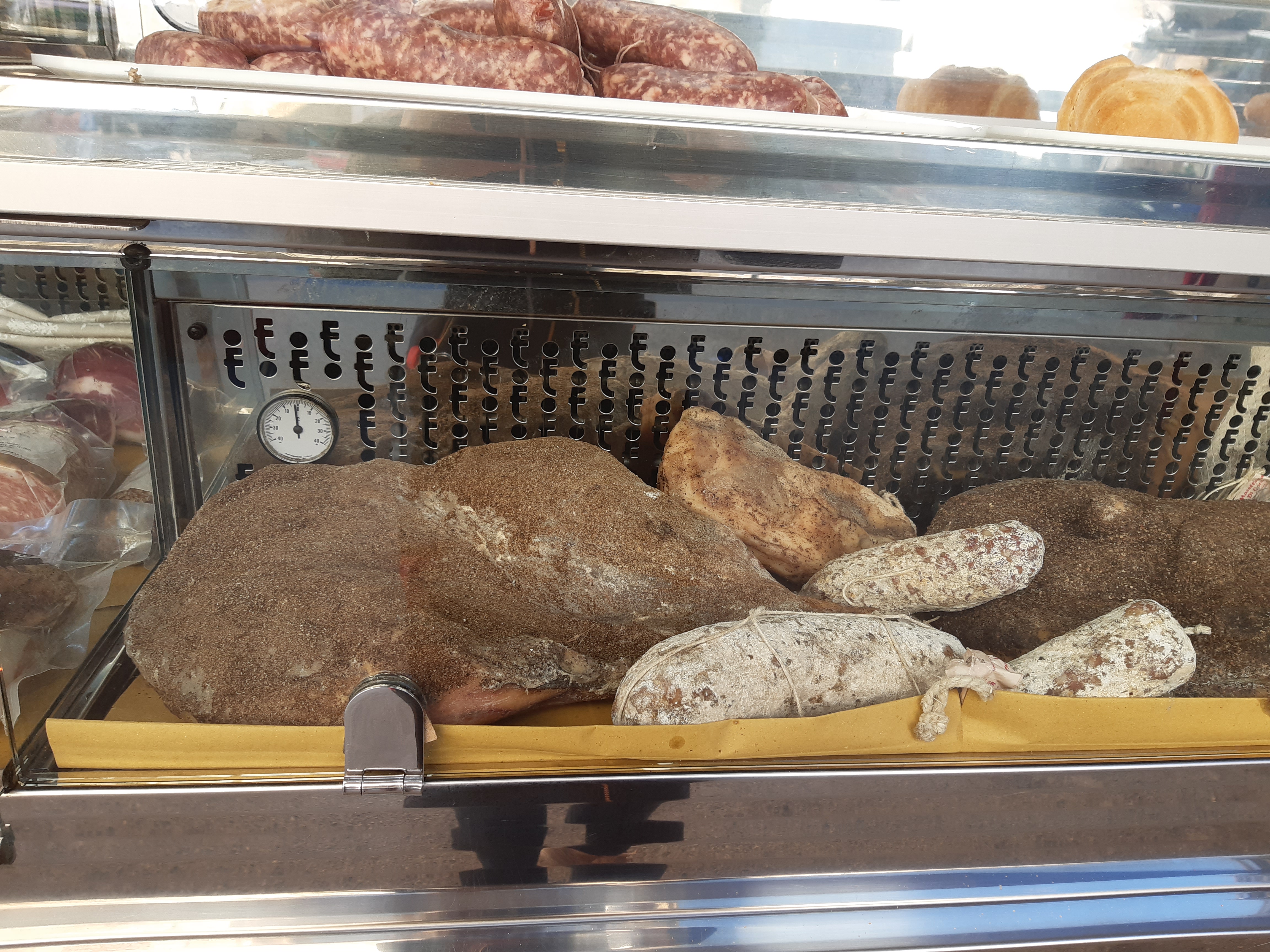
We particularly favour the small roasted chicken, adding a few fried polenta squares and some deep fried vegetables to complete a dinner menu. The chicken provides three meals for us, first as simple roasted chicken, then chicken with pasta or rice and ultimately to make broth I use for tortellini in brodo (tortellini in broth) or as a basis for soup. The proprietors are from Monte San Sevino, Tuscany, and, like other vendors in the market, travel throughout central Tuscany to appear in various town markets across the week.
Usually second to arrive, and our first stop on market day, is the fruit and vegetable vendor, Massimo Mazzi, setting up just a few meters from our door. Not only our first stop but the one place we are sure to visit every week. Topping our shopping list is a supply of oranges because the poor quality of bottled orange juice in Italy inspired me to squeeze fresh juice every morning. January brings Italy’s famous blood oranges to market, which Terry favors, but I like the somewhat more acidic navels and so often use one of each to make our morning juice. More temptations, though, lie in the extensive supply of other fruits and vegetables offering irresistible choices for meals and snacks in the following week.
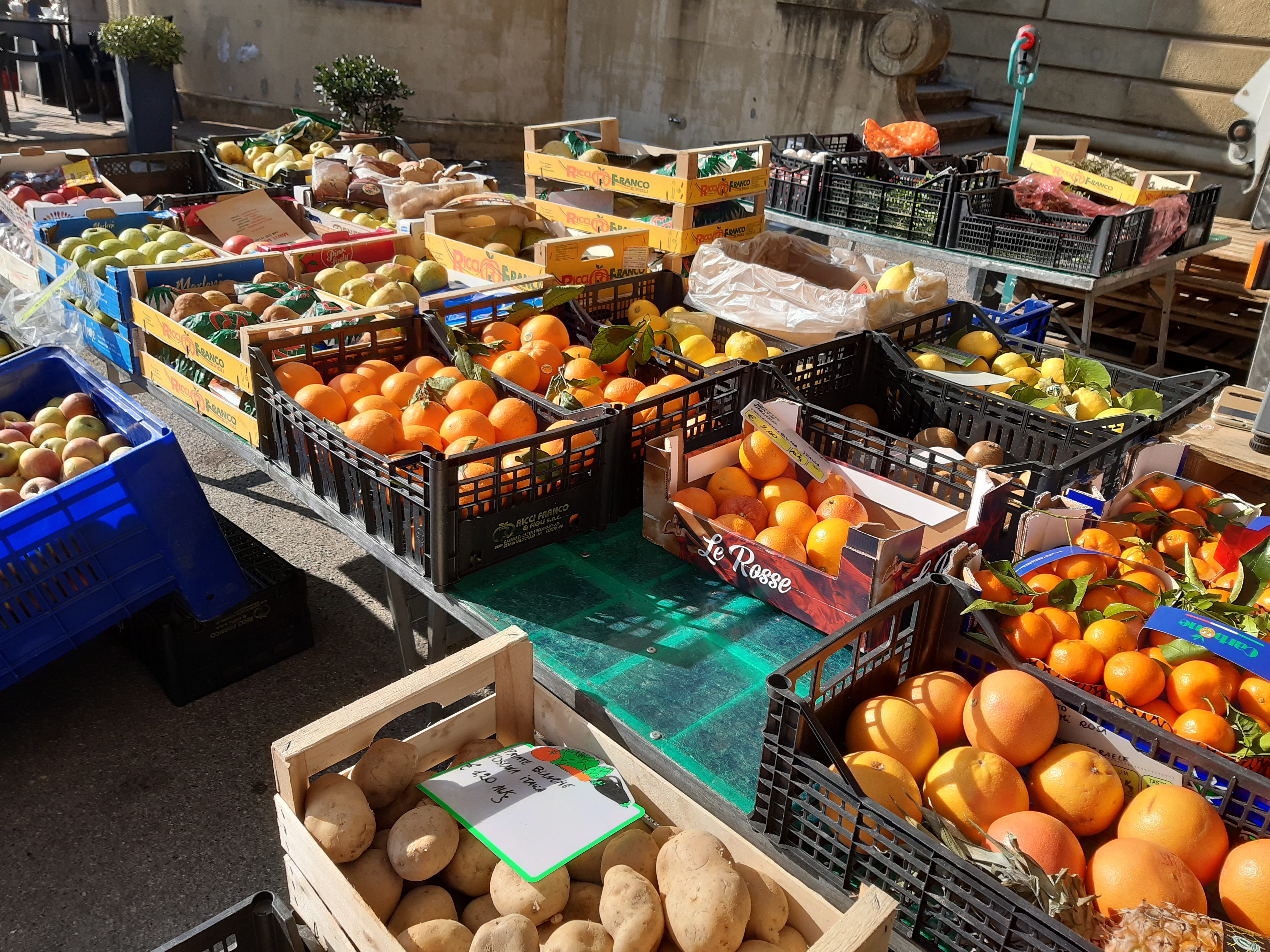
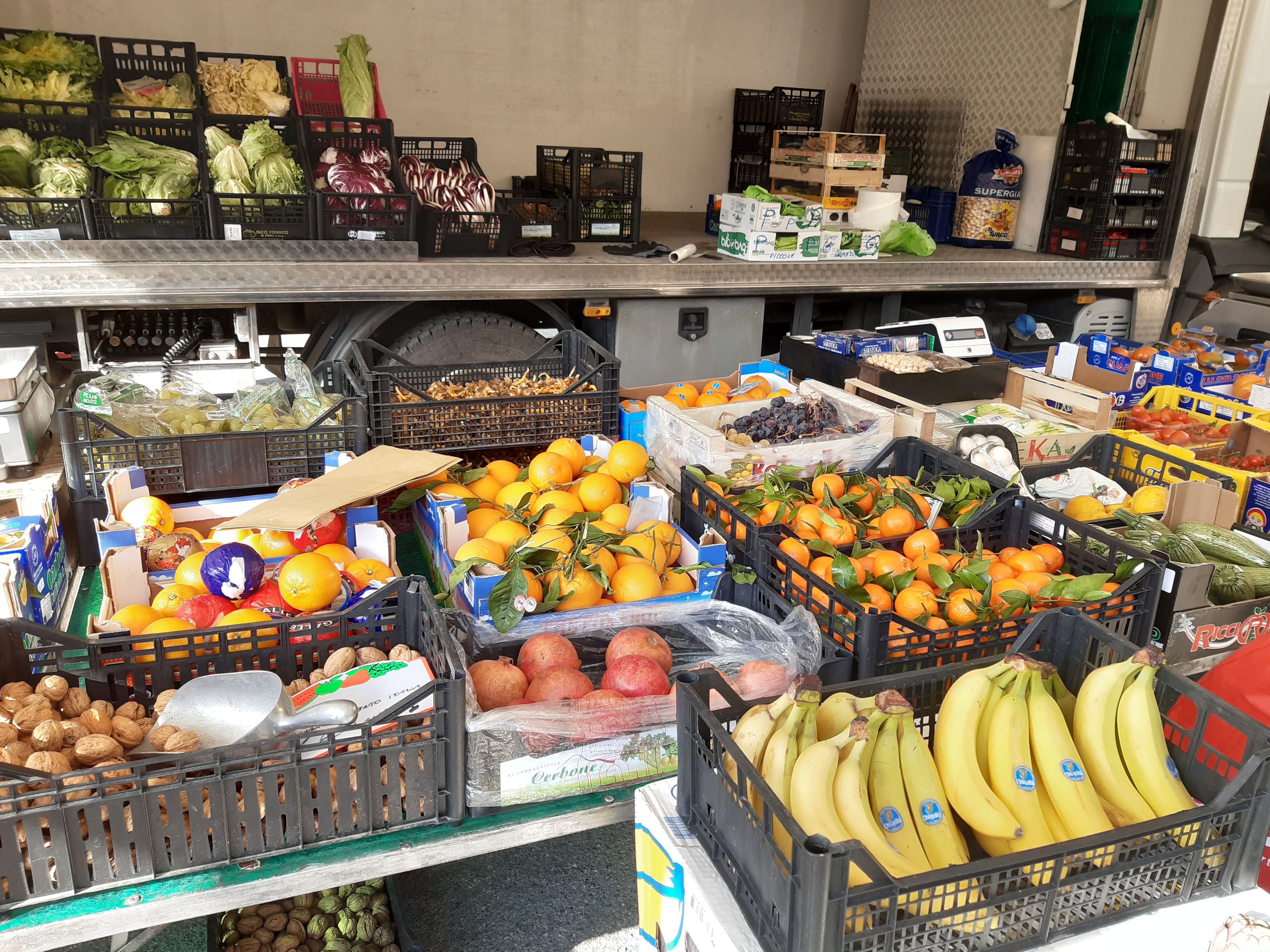
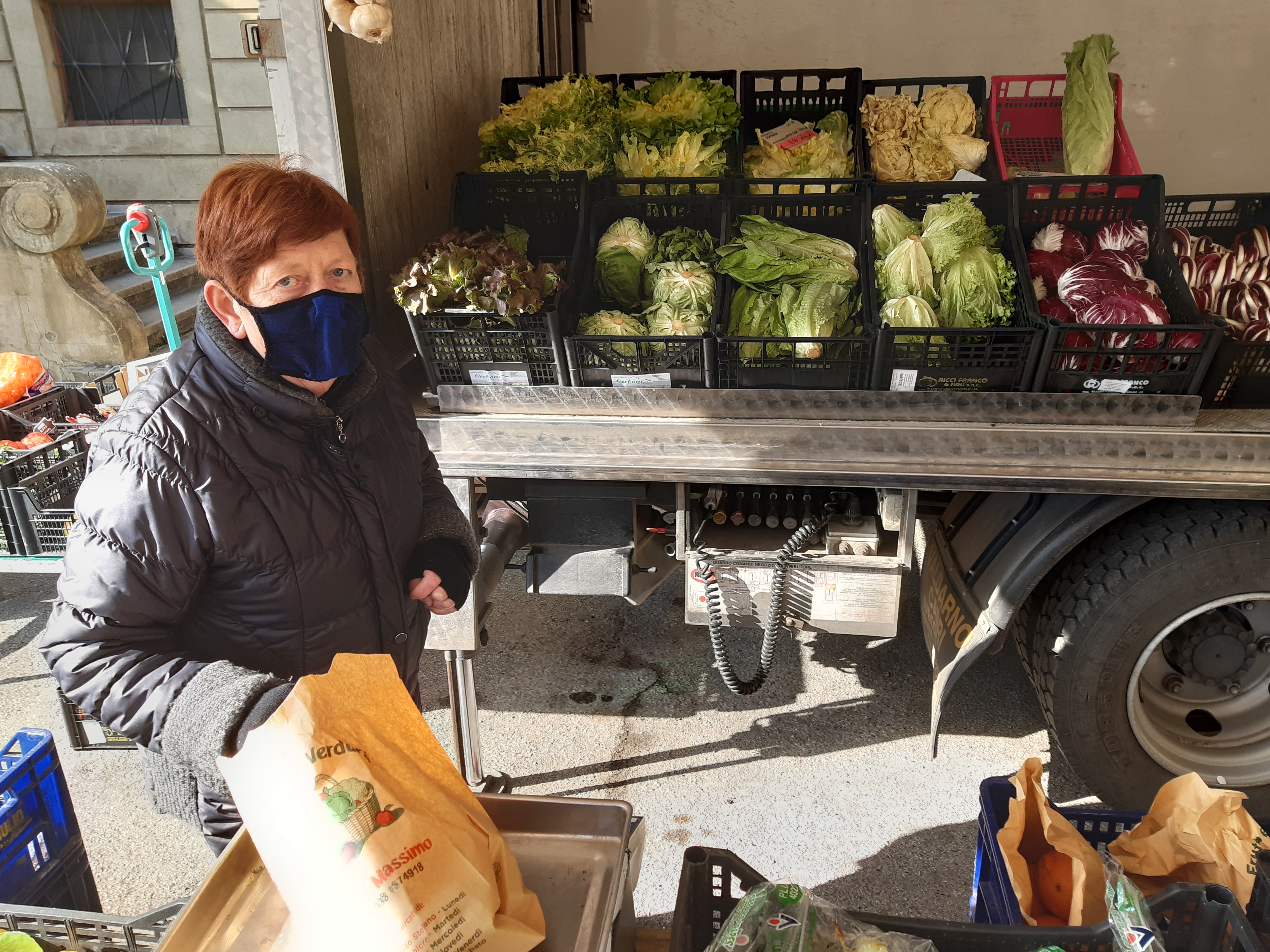
These vendors from nearby Sansepolcro are at a market somewhere six days week, resting only on Sunday. Massimo accepts special orders if one calls the number printed on their paper bags and will deliver it on the next market day if he can get it. Even without special orders, though, the choices are plentiful and relatively inexpensive. Raddichio, for example, is far less pricy than in the U S, available here in its familiar compact form, or a more leafy elongated variety–there is even white radicchio, unknown to me before seeing it in Italy but now a preferred choice for salads. On occasion when the till runs low on coins, we get our change in the form of a bag of extra produce–a large bunch of parsley, a couple of carrots and a stalk or two of celery, begging, it seems, for a soup to be made.
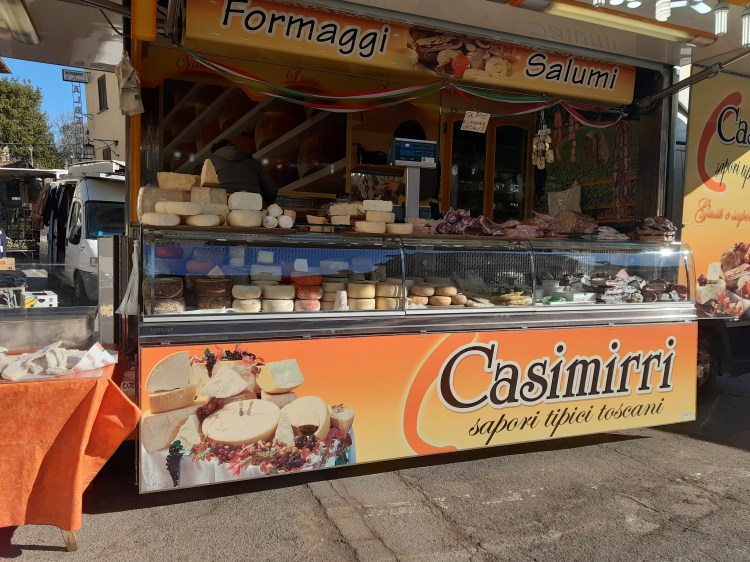
If we have run out of our favorite cheeses we have a choice of two vendors to choose from, one shown below. Candies and cookies are sold nearby though that booth probably sees the least business of any in the market.
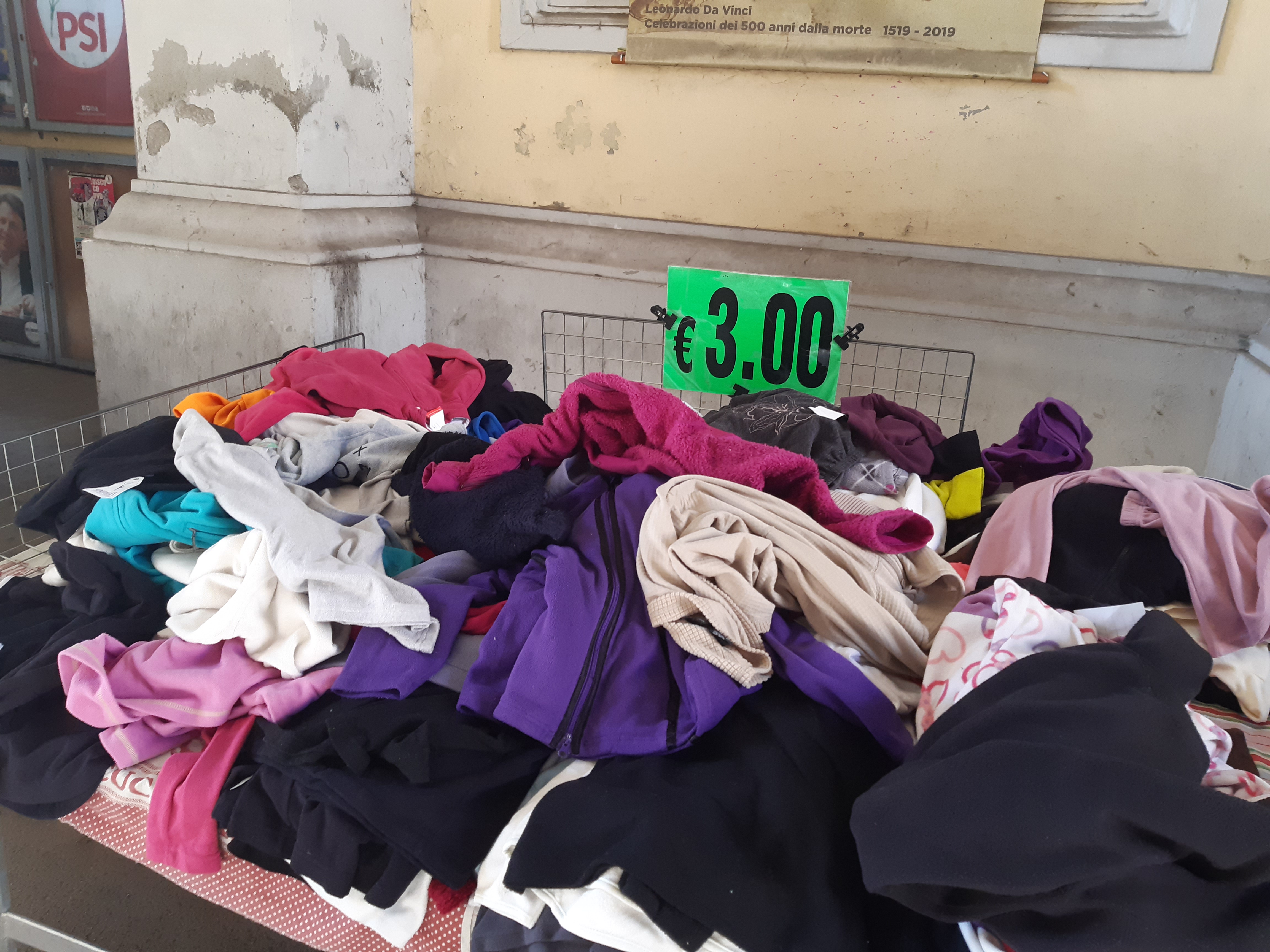
Besides the food vendors, a couple of booths offer a range of clothing, perhaps overstock from bricks and mortar stores. On a few occasions I have purchased a blouse or dress from one of the clothiers–very inexpensive, and more or less presentable.
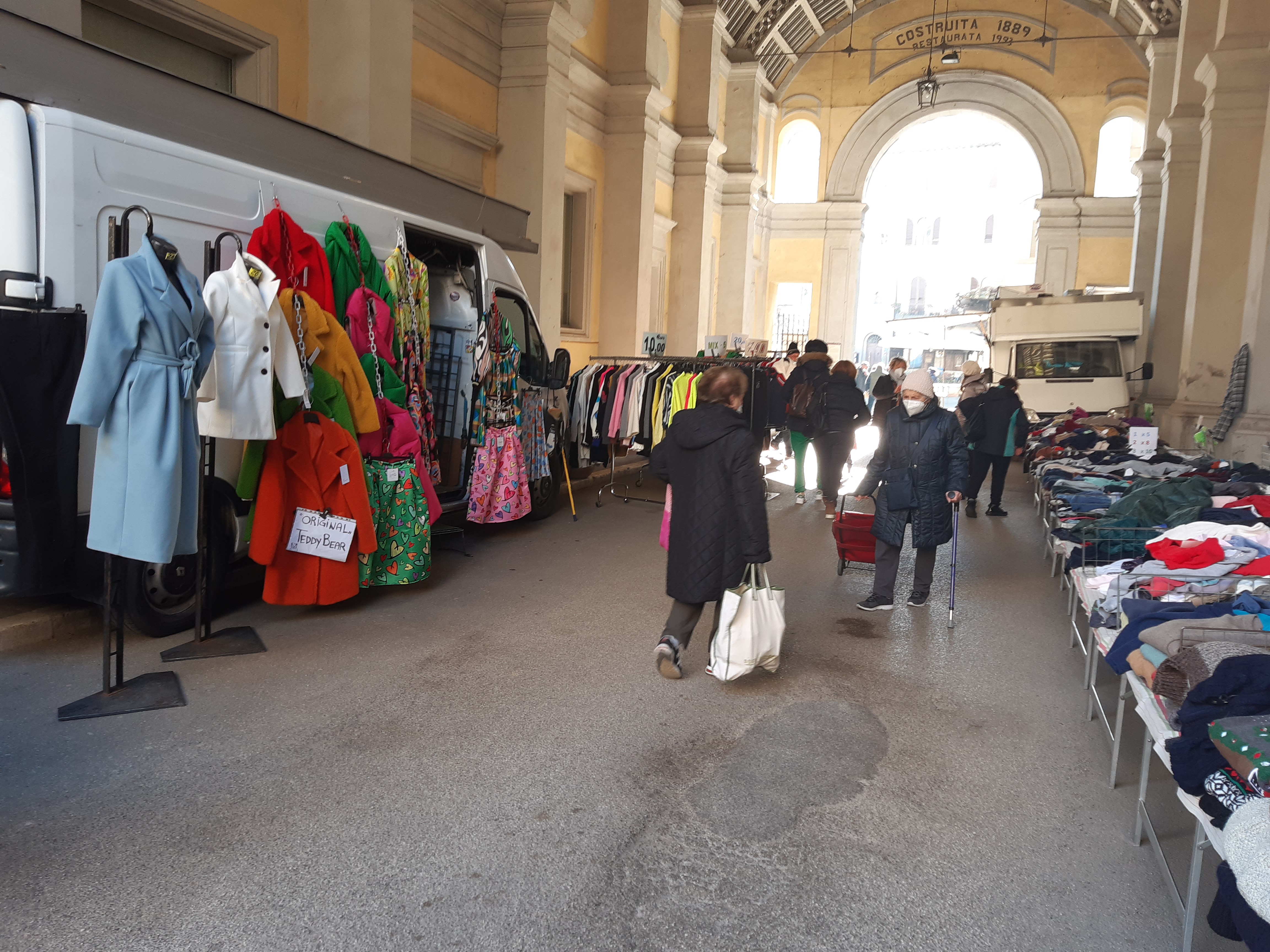
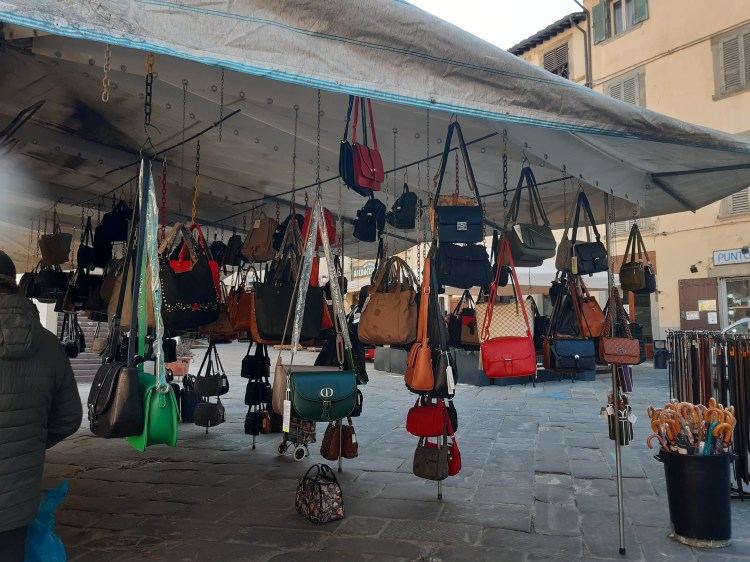
And I recently purchased a leather purse for 20 Euros from this booth in Piazza Baldacchio.
As we walk back through the market to our house, racks of flowers invite us to make one last stop.
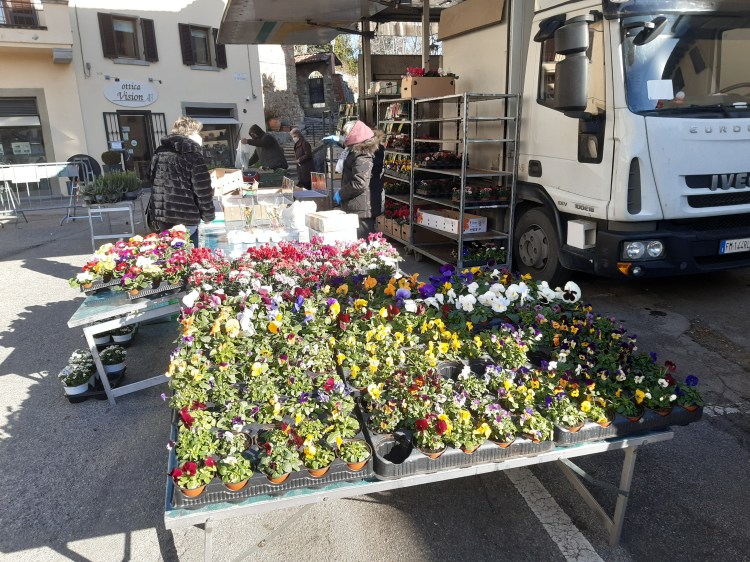
The vendors, Alessandro and Katrina, travel to markets through central Tuscany, but the largest and doubtless most profitable one is in Arezzo where they live. There they have access to greenhouses and benefit from a very large market spanning 900 x 400 meters, open all day on Saturdays when weekend gardeners are eager to buy. Alessandro and Katrina themselves operate four stands at that market.
Now that spring is around the corner we are anxious to add color to our little balcony with flowers that favour cooler weather. This year that meant wallflowers and pansies.
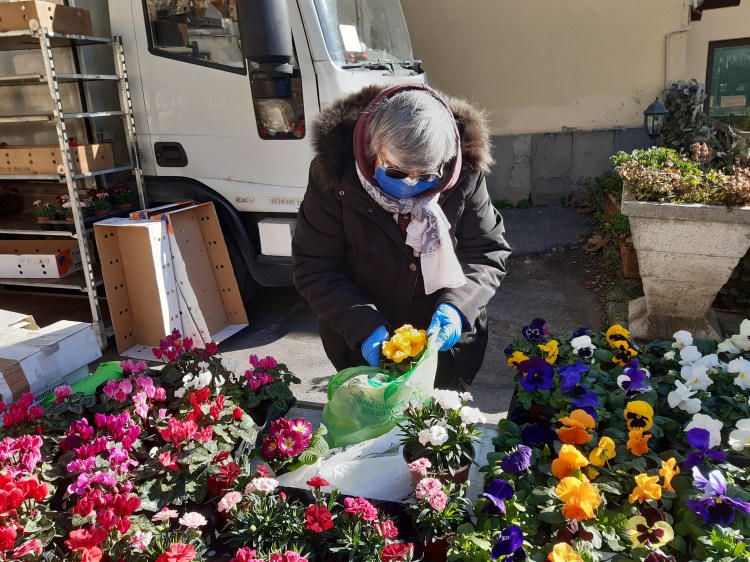
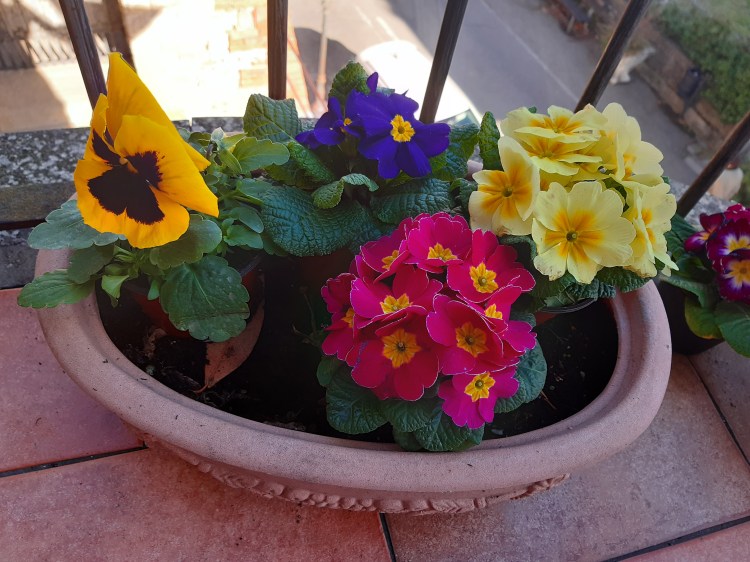
This time we are looking only for flowers but the selection is enormous, including herbs, vegetables, packets of seeds as well as small trees or shrubs. And Katrina adds advice for the plants she sells–“water these in the morning, they need to dry out through the day,” or “be sure that the top of the root is at ground level, not below.”
All of these vendors must be among the hardest workers in the world. For each town market they must first acquire their stock, load it all into vans and start out before dawn to drive to that day’s destination. Once on site, all their products will be unloaded onto tables and bins arranged for display. By 8:00 or so, the busiest booths will be surrounded by those waiting to make their selections and the vendors begin a morning of constant motion, identifying the next in line, gathering the products purchased, totalling the price and packaging each item. And, amazingly enough, the pace of their work does not prevent the small chats, the smile, and a “Buona giornata” when the transaction is complete.
Markets are not just for shopping, but also for socializing, not only with vendors but with neighbors and sometimes strangers, all come to take advantage of market day. Markets everywhere fulfill this combined commercial and social function. This one, though, so close to our house and so varied, seems as uniquely ours as it is quintessentially Italian. And coming mid-week, we are always mindful that it measures our days in this beautiful country.
 Lurching towards Italy