Ferie in Muggia Part I
It would be fair to ask why a couple living in one of the most beautiful towns in Italy, and in fact living in Italy at all, would think a vacation was in order. We had, after all, already spent several months in Balkan countries, returned to the U S for seven months, and then happily flown back to our home in Anghiari. But Terry and I had always planned to see as much of Italy as we could while we lived here. Covid-19 threw a roadblock into our plans, though, and two years had passed since we first arrived in Anghiari without having once traveled around our new home country. So within the first months after we returned last winter, I began planning a trip to the area around Trieste and settled on the seaside town of Muggia, which lies along the Adriatic just a few short kilometers from the Slovenian border. The destination, in fact, was chosen so that we could easily cross for a day trip to the small Slovenian town from which Terry’s grandfather had emigrated.
In a last minute impulse, we decided to stop in Bologna for a night on the way to Muggia. Terry had spent years of his life attending the university there in pursuit of his medical degree and was curious to see how it had changed since he was a student. I remembered it from art history classes as a unique and beautiful city and looked forward to experiencing it as a visitor. And, Emilia-Romagna, the province in which Bologna is located, is often cited as offering the best of Italian food and Terry wanted to treat us to a special dinner in “Bologna La Grassa,” (Bologna the fat) to enjoy its exceptional cuisine.
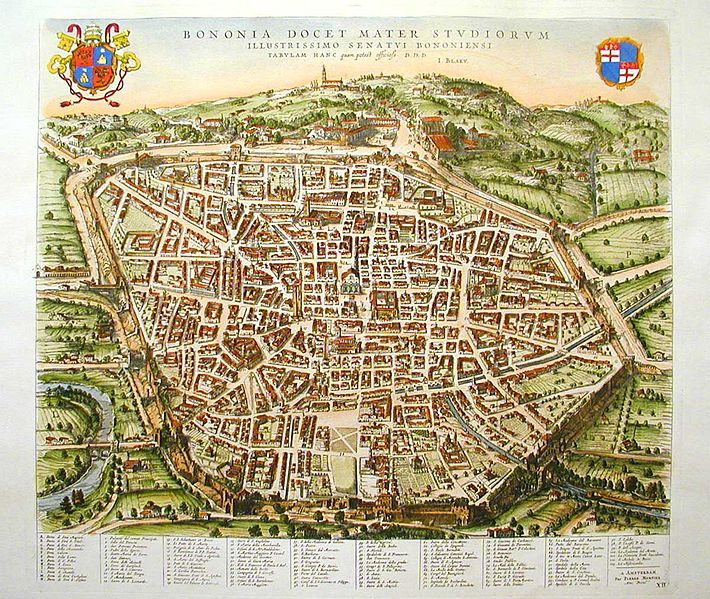
Getting into Bologna, though, was a nightmare. The streets of the city follow those built in Medieval times, creating a maze of one way streets twisting and turning around the pedestrian zone of the city center.
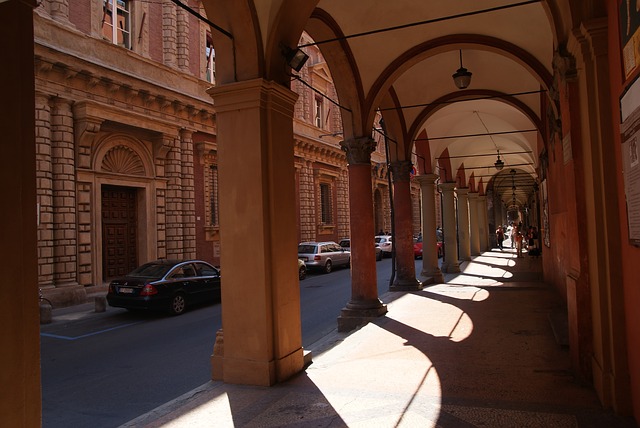
Ultimately we simply found a parking garage and walked to our hotel. After quickly checking in we were back on the streets bustling with students from the university, far exceeding in numbers what Terry remembered from his days there. With no such memories myself I simply enjoyed gazing at Bologna’s beautiful, earthy and unique architecture. Tones of deep rusty reds and ochre dominate and stout columned collonades stretch along many of the streets. The series of beautiful passages serve a practical function in providing shade from the sun or protection from rain but also give Bologna much of its character.
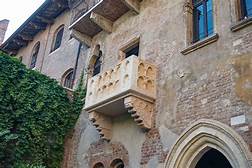
All of this I had seen in slides during art history classes but now I found myself especially noticing the corbels, those crucial architectural elements used to support balconies, roofs and other weighty components of a building. Usually they are sculpted along curved lines and often highly decorative, but in Bologna I saw a number of simple stepped corbels, a restrained version I had only seen before on the villa of our neighbor in Anghiari. I was intriguied by this detail as perhaps only a former student of art history might be. I searched online for the source and history of these corbels, which I thought might be Moorish or deriving from other eastern sources, but was unable to establish any certain links.
Dinner that night was indeed the treat Terry had promised. The tortellini in broth far surpassed any I had ever eaten and the main course, veal in a creamy porcini sauce, was also delicious, though the veal of Serbia still ranks as the ultimate in taste and tenderness in our view. The Lambrusco we drank to accompany dinner was nothing like the product known in the U S but was full, rich and slightly effervescent, a perfect wine for a delightful meal.
With the special night behind us we left in the morning for Muggia where we would spend the next ten days. We arrived soon after noon just in time to witness a wedding celebration in Muggia’s main piazza situated just steps from our apartment. And what a perfect location we had; every restaurant a short walk away, near constant activity in the piazza, and the view below out of our window.
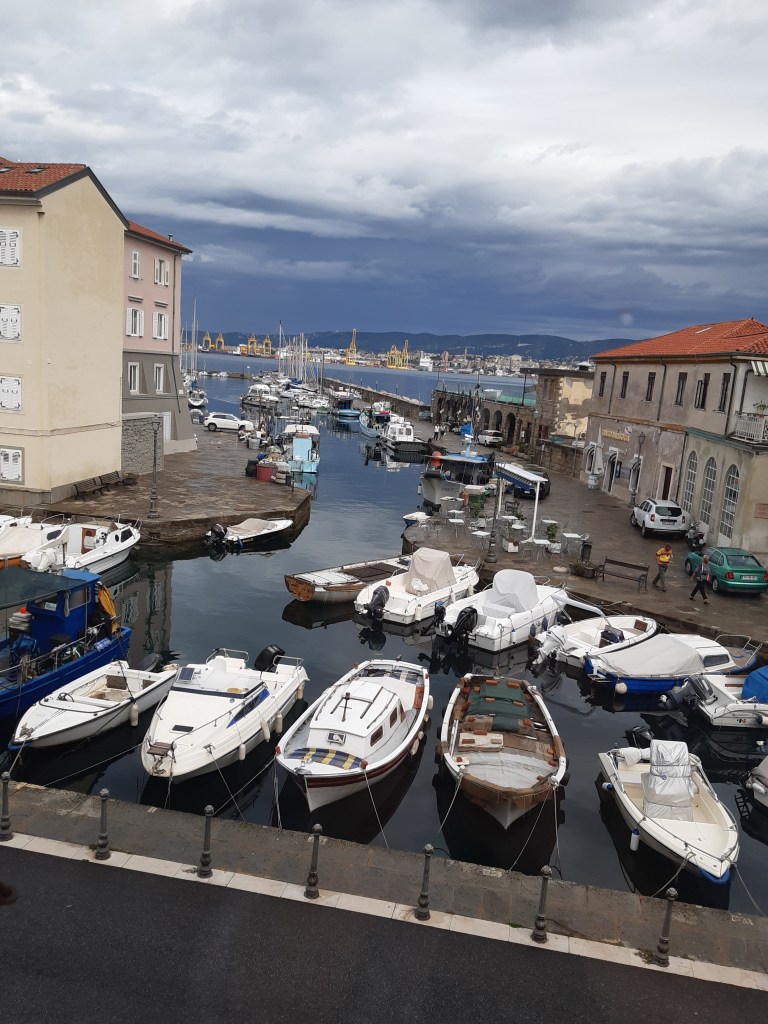
The apartment itself was very open and bright-a pleasure except for the minimal kitchen, which discouraged any plans to cook meals there. Nevertheless, take out and full service restaurants insured we would not go hungry in Muggia. We returned a number of times to an outdoor cafe in the nearby piazza where the food was good and people watching an inevitable pastime. We witnessed several more weddings during our stay and the piazza was always busy with dog walkers, locals, tour groups and young children who took advantage of the ample space to ride trikes, skateboards and scooters while their parents enjoyed a drink at a nearby cafe.
I was struck from our first moments there by the variety of physical types in the crowds of people. In Anghiari there is a real Italianate look: slim, at least for the young, tending toward dark hair and wearing fashionable clothing, usually successfully. In Muggia, faces and bodies reflected the diverse characteristics of Northern Europe or Balkan populations–in general more fair and often more bulky or taller than the people we see in Tuscany. Lanuages varied too; we heard Slavic and German along with the Muggia dialect, which is quite different from the Italian we had grown accustomed to. Since Muggia is a tourist destination, some of that variety can be attrituted to people visiting from other countries but with Muggia snuggled up to the Balkans and other European countries it has been and continues to be a crossroads between east and west.
Tourist town though it may be, visitors sometimes report that Muggia offers little to do except enjoy the fine fish restaurants. However, for those not daunted by a long uphill hike there is an archaeological site in Muggia Vecchia, the original hilltop site of the town. There you can also visit the church of Santa Maria Assunto where fragments of medieval frescoes remain. One other reward for the effort of a challenging walk is a castle from the Medieval period (built 1374) which was eventually abandoned. In 1991 it was purchased by the sculptor Villi Bossi who renovated it and now occupies it as his home. It is opened on occasion for special events, but generally not available for public viewing. We saw none of these as our walk three-quarters of the way up the hill had already proved to be a challenge so we opted to turn back downward and simply enjoy walking through the colorful neighborhoods leading into the harbor area.
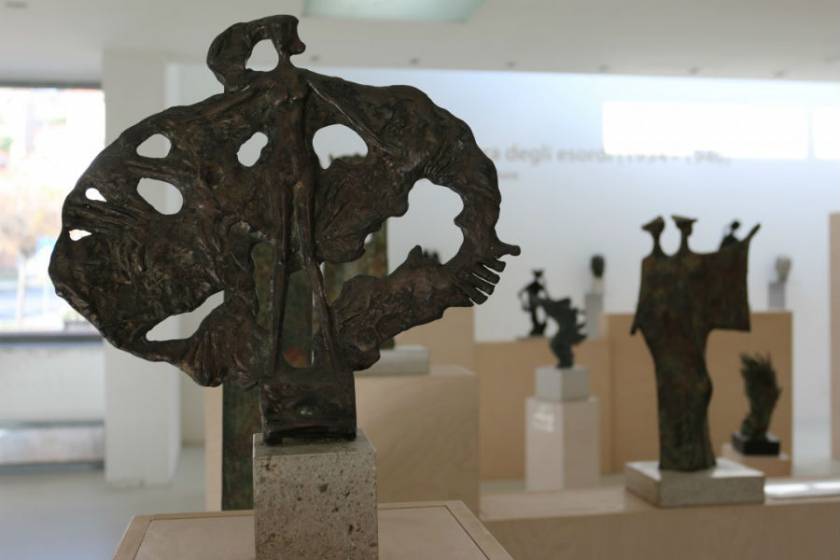
And there were things to do in downtown Muggia. We enjoyed the archaeological museum with its collection of artifacts from Muggia Vecchio and the small but impressive Modern Art museum. The latter featured sculptor Ugo Cara, whose smaller works in metal were treated with an acid wash creating a beautiful vari-colored patina.
For those who like to shop, there are a few clothing and personal accessory stores but options for leaving lots of Euros in Muggia are limited.
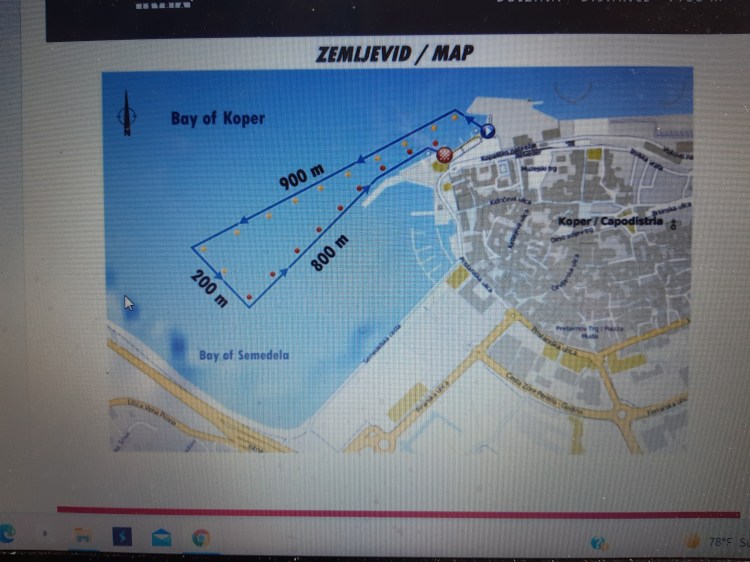
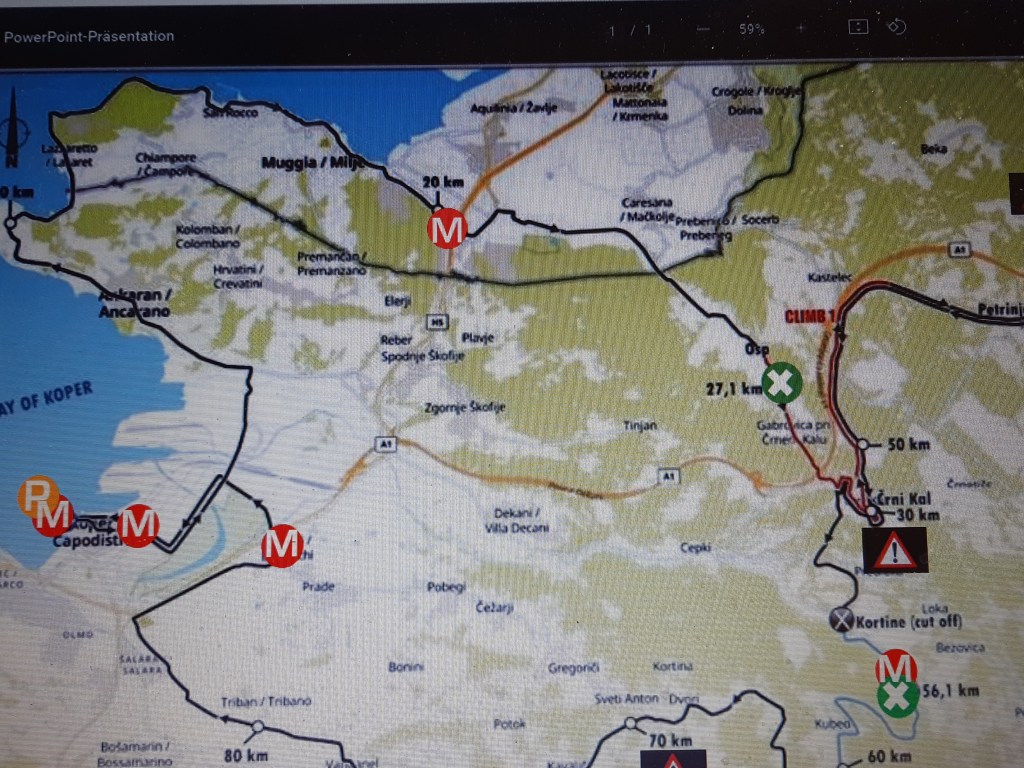
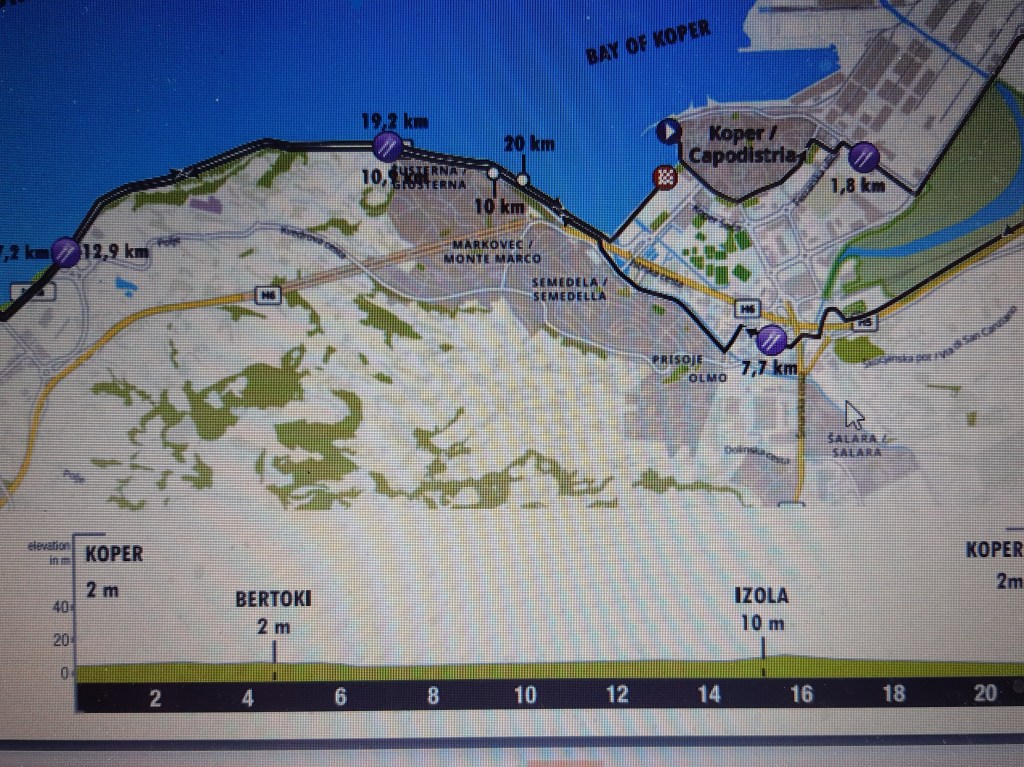
With the high season of summer over, music and other entertainments in the piazza had come to an end. But on the last day of our visit we joined the crowd along Muggia’s main street to watch bikers passing through on the intermediate (and briefly Italian) leg of the “I Feel Slovenia” IronMan competition. The very fit and dedicated athletes, male and female, old and young, had already completed the first phase, a 1 1/2 mile swim in the Bay of Koper at the end of the Istrian Penninsula. Once out of the water they jumped onto their bikes to cycle a loop passing through Muggia, where they were greeted with applause, cheers and the announcer shouting, “Welcome to Muggia.” When the 90 km ride (56 miles) was finished, they would begin the final phase, a half marathon through the old town of Koper and surroundings. The event was a shortened version of the ultimate IronMan with each stage one half the distance of a full course but no less thrilling to those of us who watched.
A rainy week discouraged us from fulfilling plans to take a ferry ride across the bay to Trieste. We had looked forward to walking the city and spending an afternoon in the modern art museum there, but the prospect of a wet boat ride and walking in pouring rain convinced us to abandon the idea. Fortunately one of the highlights we had planned for the week was a one day trip to the tiny village of Hudi Vhr in Slovenia where Terry’s ancestors had lived. Not only was the weather fair that day but it was in every way a delight to be described in Part II.
 Lurching towards Italy