It’s actually a good place to live
Part I
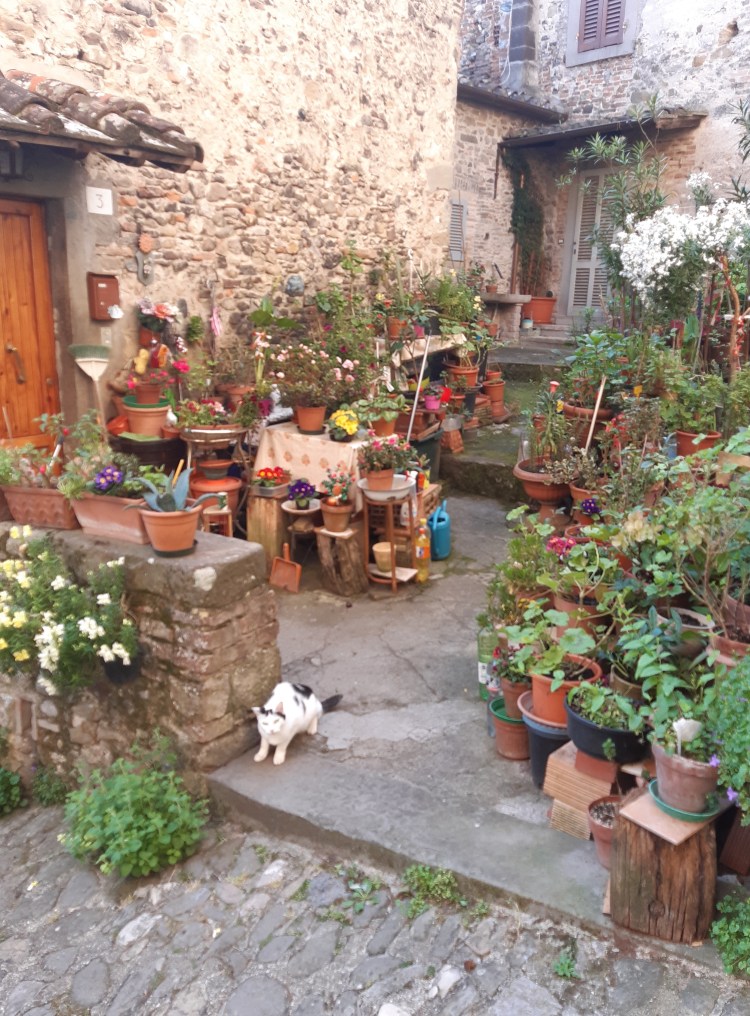
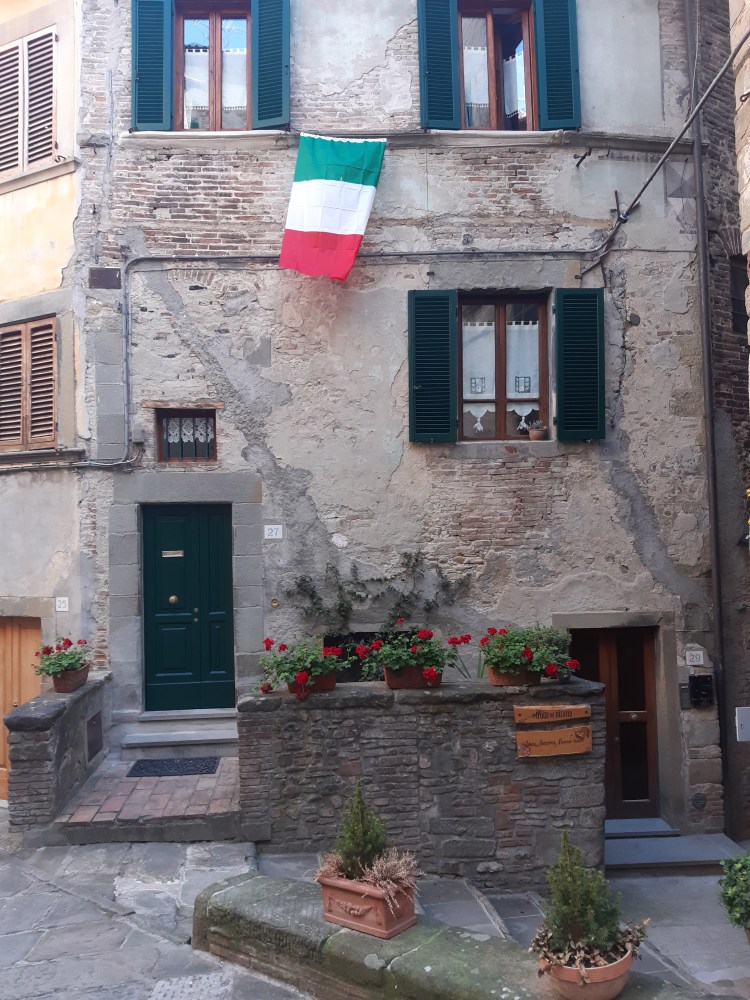
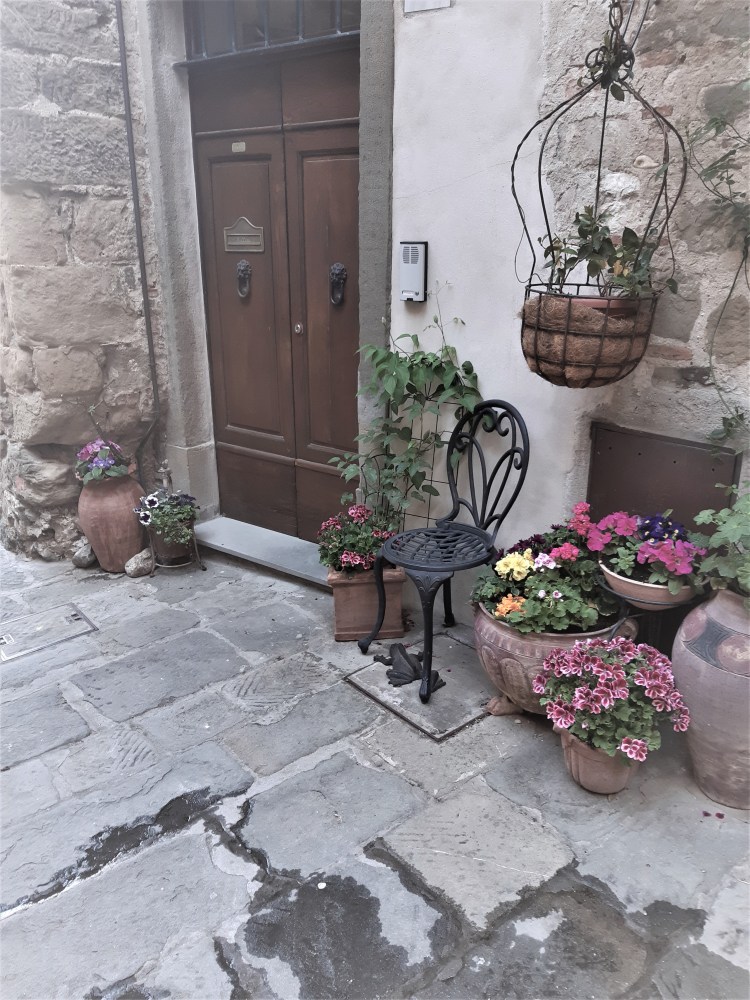
If you search online for information about Anghiari you will almost certainly read that it is considered one of the most beautiful medieval hilltop towns in Italy. It is, and walking through and around the town as I do most days is unquestionably a sensory delight. The ancient stone houses crowding narrow streets never fail to intrigue and regardless of the season many facades are brightened with plants placed around entryways and steps.

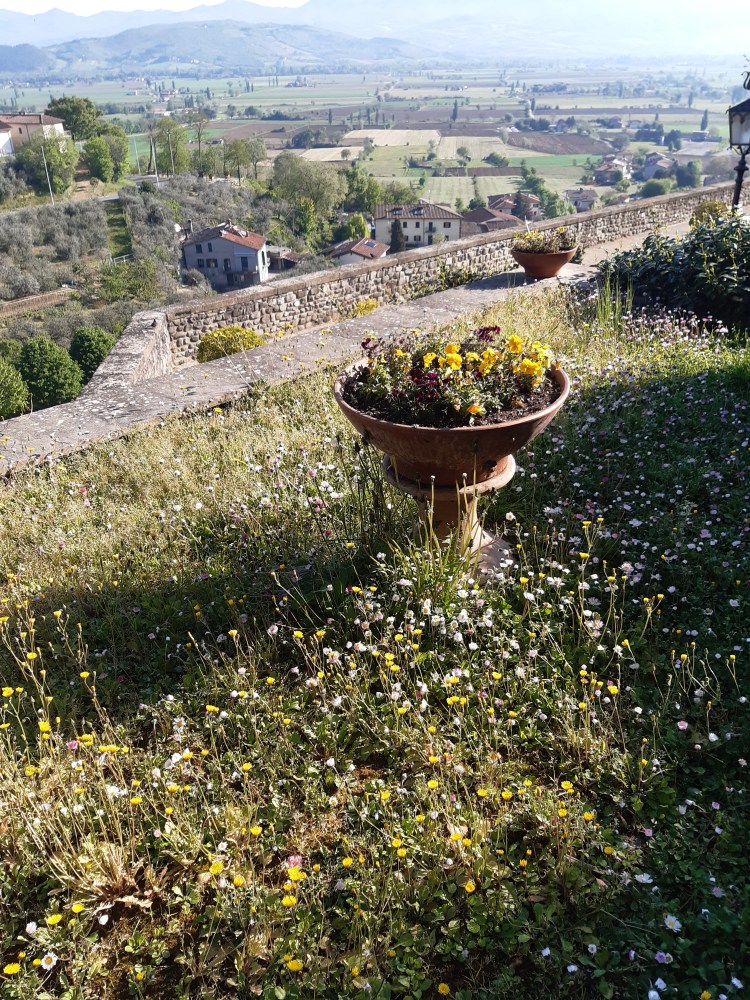
But our decision to move here after Terry’s serendipitous discovery of the town has shown us that Anghiari has much besides beauty and charm to offer. When we arrived last summer, the town was beginning to fill with visitors in anticipation of the Southbank Sinfonia, a concert series held every July. The musicians are graduate students from London taking part in a fellowship program that provides the opportunity to gain experience on their way to a professional career. We went to a number of performances ranging from soloists, to a chorale group, to symphonic music. The concerts, all free, took place in central Anghiari, usually in one of the several piazzas in town, once in a church–settings that could only enhance the experience. Numbers of people from out of town arrange their vacation in Anghiari around this event and we noticed that the conversations around us were in English as often as Italian.
While Southbank Sinfonia is a once a year pleasure, Teatro di Anghiari is a regular source of lectures, plays, readings and classes taking place just steps from our front door. I once slipped into the back of the hall as a reading was underway and though it was in Italian and I didn’t understand the words, I could still appreciate the enthusiastic response of the audience. It was my first sight of the interior of the theater and I was surprised to see that though small, it was as beautiful as most theaters in much larger cities.
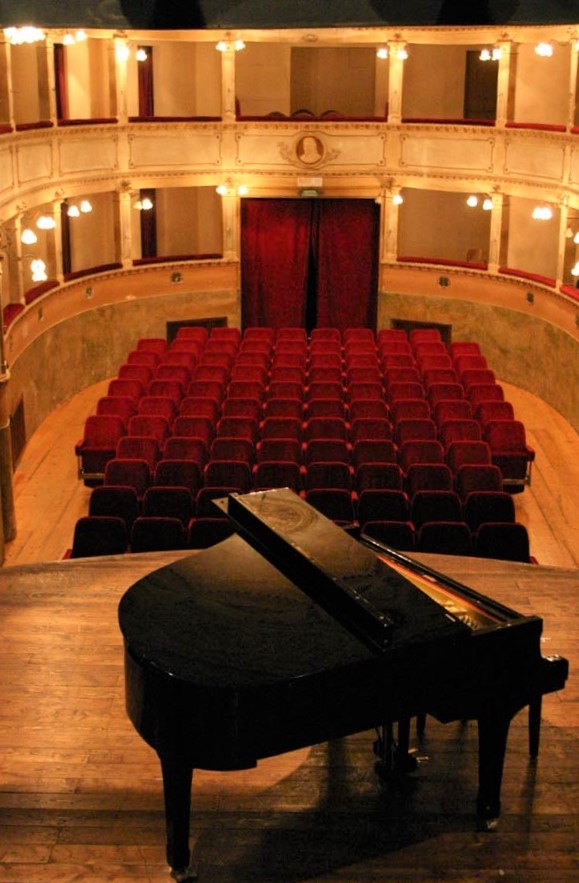
For the major part of the theater season we were either away in the Balkans or the scheduled performances had been cancelled due to the coronavirus pandemic, so we haven’t been able to take advantage of the theater this year. We do, though, look forward to next season’s programs after we return next Fall.
During August, Terry and I could hear applause and laughter from the Checkered Tablecloth or the Tavaglia a quadri, a four course Tuscan dinner accompanied by a theatrical production at the Piazzeta del Poggiolino on the town wall. This week long event has been produced for over twenty years and is attended by hundreds of people seated family style at long tables. It is not expensive, about 45 EU per person for meal and theater. The performers, servers, and cooks are all drawn from town residents; our neighbor, Valerio, by day a furniture restorer, works each season as a server and has been doing it for most of the event’s existence.
And the play may also reflect local concerns as it was in “ci Amazzon.” This performance from 2018 portrayed the impact that online shopping sites have on small shop keepers and artisans who make up the business community in Anghiari. The hearty menu for the production was:
- Pinzimonio dell’orta
- Red and Black Croutons
- Flan with Red Onion Valtiberina
- Bringoli with Fake Sauce
- Chianina Stew with Potatoes
- Cantucci Tuscan
- “Piavesino” del Chieli
and to drink:
- Acqua d’Anghiari
- Red Wine’Farmer’s Vinsanto
- Barley Coffee with Rum
The dishes offered are traditional Tuscan foods, the menu written in a combination of English and the Tuscan dialect.
Pinzimonio dell’orta— an appetizer of raw vegetables served with a dip of oil, vinegar and spices. Red and Black croutons; this is perhaps a variety of breads rather than what Americans consider croutons; Flan with red onion Valtiberina; Valtiberina means Vale or Valley of the Tiber, commonly used to describe the geographical area in which Anghiari sits; Bringoli with fake sauce; spaghetti and red sauce without meat. The dish developed during hard times in Tuscany when meat was an expensive luxury; Chianina stew with potatoes; Chianina refers to the specialty beef cow that produces an exceptionally tender and tasty meat and is largely raised in Tuscany; Cantucci; essentially a biscotti, but half the size and laden with slivered almonds; “Piavesino” del Chieli;” In Italian this might mean either “playing footsie with heaven” or “one step from heaven” and in this context may mean either one or neither but does make some sense as a tasty dessert.
A popular event promoting the tastes of Tuscany is the I Centogusti dell’ Appenino (The Hundred flavors of the Apennines) held in autumn in Anghiari. The festival takes place in the medieval center, offering the opportunity to taste and purchase a variety of locally produced commodities. Agritourism is spotlighted as well, not surprisingly as agriculture is a major business in this part of Tuscany; a patchwork of fields growing sunflowers, vegetables and tobacco lies along the road to Sansepolcro and tractors are not an uncommon sight. No doubt we can thank the alluvial plains of the Tiber for the rich soil and the sumptuous vegetables that grow here.
Anyone who is interested in the literature of biography, memoir or storytelling may know that Anghiari is the “City of Autobiography,” as a sign at the city limits proclaims. The Libera Universita dell’Autobiografia (Free University of Autobiography) presents its major event, the “Festival of Autobiography” in late summer but offers a broad range of classes and events throughout the year. Even while closed due to the coronavirus in March and April 2020 the university solicited stories of living through the pandemic and to date has received at least two hundred personal accounts of the experience.
Further opportunities for anyone interested in the narratives of personal life are available within a half hour drive from Anghiari. A sign at the city limits of nearby Pieve Santo Stefano identifies it as the “Citta del Diario, (City of the Diary), a spiritual sister to The City of Autobiography. The town of little more than three thousand citizens is home to the National Diaristic Archive where over 8,000 diaries of ordinary people are stored. The Little Diary Museum is the interpretive arm of the archives with a collection of diaries available to be viewed by visitors. The diaries are written in Italian presumably, but the museum offers English signage and technological assistance so that Anglophones can enjoy the experience as much as Italians. Pieve Santo Stefano is also home to The “Memory Route” a program offering three to five day seminars combining autobiographical writing and opportunities to experience local culture, cooking and crafts. Truly the possibilities of enrichment through these institutions are so great that I suggest going to their websites where you can see all that is offered here and, perhaps, sign up for a class.
One of the options when doing the Memory Route, is a trip to the Busatti weaving facility, also open to tours for individuals or groups. The Busatti family presence in Anghiari dates to their arrival in 1755, when they purchased the Palazzo Morgalanti, which today remains Busatti headquarters. Forces of Napoleonic soldiers took over the Palazzo in 1797, using the facility to produce blankets and uniforms for the army of Napoleon. The Busattis were able to reclaim their Palazzo in 1815 after the forces left.
The Busatti textile enterprise dates from 1842 when eight wooden looms were installed in the basement of the palazzo to set up a weaving mill . Today, their business is world wide offering high end fabrics and assorted linens including kitchen towels, baby clothes, sheets and virtually any item of cloth you might find useful in your home. When we first arrived, we were told that we should not buy any Busatti products because they would outlive us, I hope a testament only to the quality of Busatti goods, not a comment on our ages. You can learn more of the history and shop their online store at:
http://www.busatti.com/anghiari or http://www.busatti.com/en
Note: Two generations of the Busatti family share the large villa next to our house where they are visited regularly by children, also involved in the business, and grand-children. A furry member of the family is the little brown dog whom I have nicknamed Houdini for his proficiency as an escape artist. He doesn’t stray far and once his wanderlust is satisfied Houdini returns to sit patiently outside the gate waiting to be let in, sometimes getting a little help from a friend eg Terry.
Another family business we have yet to visit is Ravagni since 1421, where olive oil, vinegar, seasoned oils and soaps are made and sold. Visitors can enjoy tours, tastings and light meals along with demonstrations and explanations of the processes. The tour gets rave reviews on TripAdviser with people exclaiming over the olive oil, the lunch and the host, Francesco. The business has a long history, first mentioned in 1421, hence the name Ravagni since 1421. It is set in the countryside on the outskirts of Anghiari where traditional methods are used to press the oil and all products are handmade. Although good olive oil is easy to obtain here, we are eager to try the local oil produced from the olive trees that grow everywhere in this area. This business, too, sells its products all over the world.
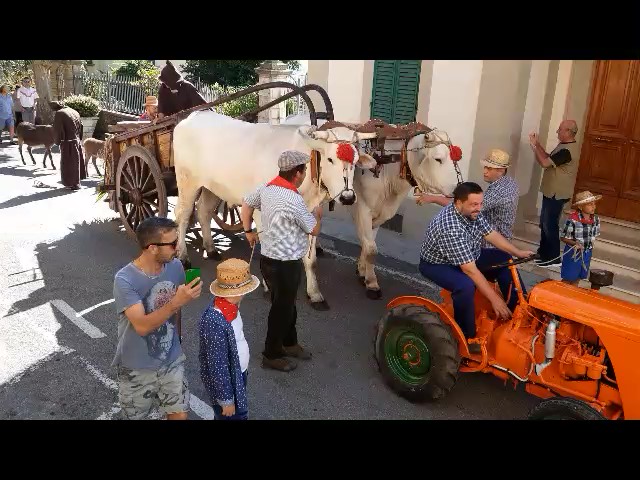
Anghiari loves parades and we are fortunate to live on a street where they pass by so we can watch from our balcony. A day after we moved into our house, we saw the parade pictured below, a celebration of the farming history of Anghiari and surrounding areas.
And shortly after we returned from the Balkans another parade passed by, this one a celebration of Children’s Day.

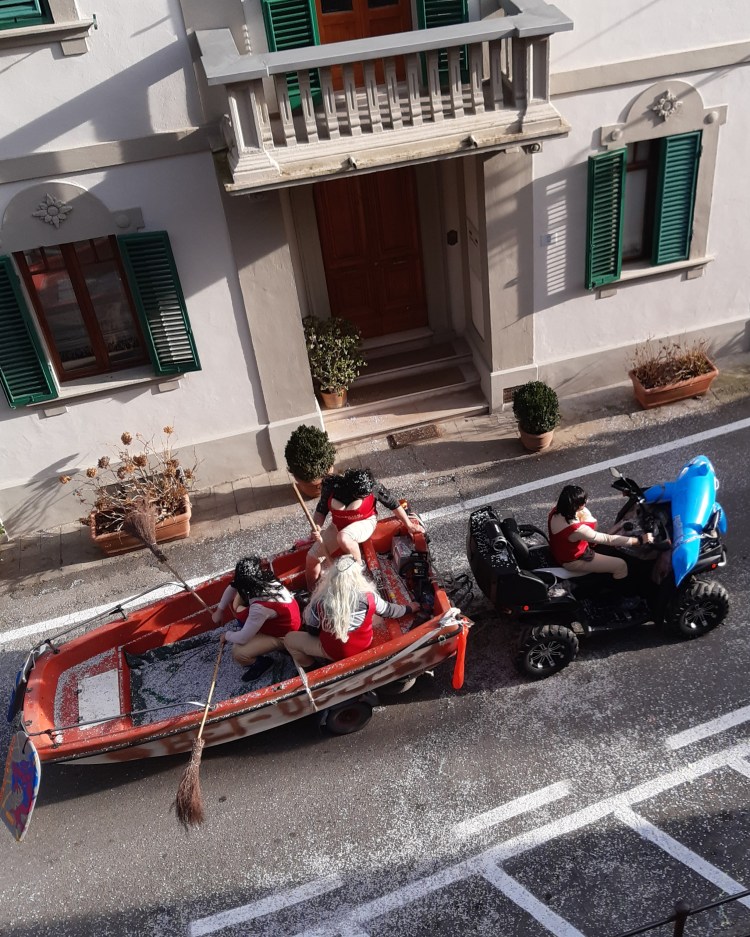
The parade ended in Piazza Novembre IV next to us where the children were treated to a magician performing and kiosks selling all manner of items that could appeal to a child. The parade and Piazza activities were the culmination of several days celebrating Childrens Day, a holiday exciting considerable attention from Italians who seem especially devoted to their youth.
And finally, there are several museums in our town, most notably the Museum of the Battle of Anghiari and the Museum of Palazzo Taglieschi, both located in the Piazza Mameli. Of even greater interest to me are the archives located in our library, where I hope to find further information about the history of not only our house but all of the churches, palazzos, gateways and other architectural features of this ancient town. Due to the coronavirus pandemic, the archives have been closed for much of the time since we returned so that project is another that will be delayed until we return next Fall.
Although we’ve owned our house in Anghiari for three quarters of a year, our opportunities to explore and enjoy all that is offered here have been limited by both the requirement to leave for three months and then the COVID-19 pandemic. Now we anticipate departure in just a short time and with movement still restricted must wait until our return to take in more of Anghiari and the area beyond. We look forward to taking full advantage of all I have mentioned above and all that we have yet to discover.
 Lurching towards Italy